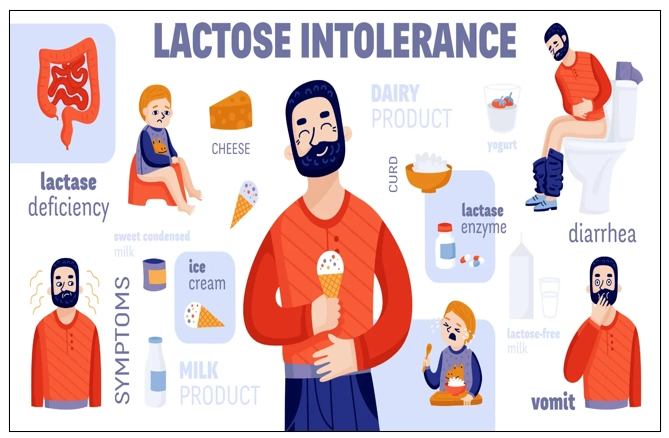

When you consume milk, cheese, ice cream, or other dairy products, do you often feel sick? You may not be able to handle lactose. People often develop this disease when their bodies can’t break down lactose, a natural sugar found in dairy. This might make you feel bad by giving you stomach cramps, bloating, or gas.
Lactose malabsorption is one of the most prevalent digestive problems worldwide, affecting about 68% of the population, according to the NIDDK. Lactose intolerance is seldom harmful, but knowing its symptoms, diagnosis and nutritional treatment may help people feel better and satisfy their nutritional requirements.
What Is Lactose Intolerance?
If you have lactose intolerance, it’s hard for your body to break down the lactose sugar that is found in milk and milk products. When lactose containing foods are eaten or drunk, people who are lactose intolerant often get diarrhoea, gas and bloating. The condition isn’t generally dangerous, but its signs can be painful.
Most of the time, lactose intolerance is caused by a lack of lactase, an enzyme produced in the small intestine. It’s possible to not have enough lactase and still be able to handle milk products. But if amounts are too low, a person may not be able to handle lactose.
Lactose intolerance is something most people can manage without giving up all dairy foods.
How Common Is Lactose Intolerance in India
Lactose intolerance is quite common in India, but the percentage of it varies from one region and community to another. In this condition, the body has difficulty digesting lactose, according to the National Institute of Diabetes and Digestive and Kidney Diseases. Studies have also shown that lactose malabsorption is prevalent among Indian adults, especially in some parts of the country. The condition is more common in Asian populations than in people of Northern European ancestry. Lactose intolerance is a common problem, but it is often undiagnosed because symptoms like bloating, gas and diarrhoea are often blamed on other digestive disorders.
Types of Lactose Intolerance
- Primary: Most commonly, it develops with age as lactase production drops.
- Secondary: Caused by disease or damage to the small intestine (for example, following infections or surgery).
- Congenital or developmental: Not common, but it can happen to babies and is known as lactose intolerance in newborns.
Read also: What causes uterine fibroid and how to deal with it?
Complications of Lactose Intolerance
In most cases, lactose intolerance itself is not a serious medical problem. However, if you do not plan your nutrition correctly, you may face some health issues by avoiding dairy products.
Some possible complications are
Calcium Deficiency
Milk and dairy products are an important calcium source. Long term avoidance may increase the risk of low calcium intake.
Vitamin D Deficiency
Vitamin D is added to many dairy products. This could be because people aren’t using as much.
Bone Health reduction
Low calcium and vitamin D intake can affect bone strength and increase the risk of osteoporosis later in life.
Nutritional Imbalances
Those who reduce dietary categories without replacing them may lack protein, riboflavin and vitamin B12.
Reduced Quality of Life
Daily activities, travel, social meetings, and consuming all be affected by frequent stomach issues.
Read also: How to Improve Your Digestive Health: Complete Guide
When Should I See My Healthcare Provider
Occasional digestive discomfort does not always require a visit to the doctor. However, you should consult a healthcare provider if you experience
- Eating dairy products and gaining lots of weight
- Continued diarrhoea
- Frequent stomach cramps
- Weight loss for no reason
- Symptoms in everyday life
- Nutrient deficiency symptoms
- Symptoms even with dairy avoidance
Medical evaluation is particularly important when they are associated with severe abdominal pain, blood in the stool or unintentional weight loss.
Early diagnosis can help to identify whether the symptoms are due to lactose intolerance or to another digestive condition.

A versatile writer mainly works on trending news, daily updates from politics, business, crime, current affairs and entertainment.