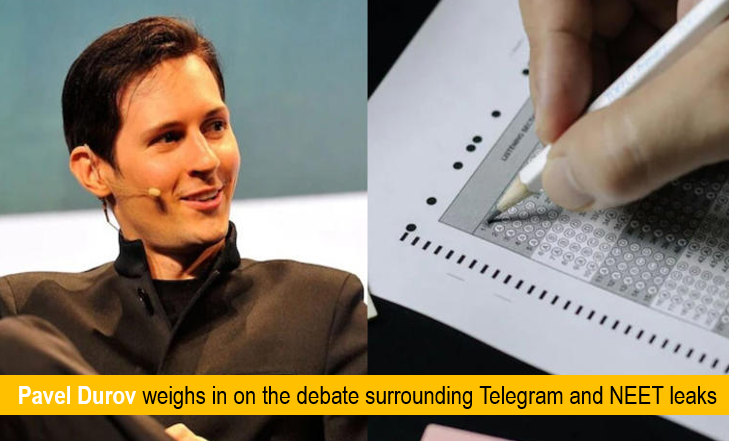

In response, Telegram’s founder and CEO Pavel Durov said that the move has not stopped the spread of secret information. Durov says the leaks have only spread from Telegram to other apps, but the choice has affected millions of regular users.
The Indian government has temporarily banned Telegram to curb cheating and the spread of false information ahead of the NEET-UG 2026 re exam. According to Pavel Durov, the founder and CEO of the chat app, the choice is bad because it affects millions of regular users but doesn’t fix the real problem.
On Tuesday, the Center put limits on Telegram until June 22, 2026. The move is in response to suggestions from the National Testing Agency (NTA) and covers the period between the June 21 re exam for NEET-UG 2026 and immediately after it. The app has already been taken down from Google Play, and Apple is likely to do the same to follow the order.
Pavel Durov criticises India’s decision to block Telegram
Pavel Durov said that the ban has affected many daily Telegram users in India who use the app for everyday tasks, communicating and having fun. He said the ruling affects people who have nothing to do with the alleged wrongdoing.
The CEO of Telegram said the move did not target the real source of the leaked information. Based on his response, the people who were sharing leaks have just changed their actions to other places instead of stopping altogether.
Concerns were raised by Durov’s comments about what would happen if access to a major communication site were limited. He said that a total ban might make things harder for regular users, but people who are doing illegal things might still be able to use other digital avenues.
India Does Something About Exam Leak Fears
The ban was imposed as Telegram was said to be used by groups to share leaked exam material. The authorities saw the site as a way for this kind of content to reach many people fast.
The limit was put in place before a very important test for medical school admission. Officials said the move was meant to prevent cheating and curb the spread of fake or stolen materials that could harm students.
The major channels and group features of Telegram have enabled information to reach many people at once. People and companies can use these features to their advantage, but some worry they could be abused.
Why is Telegram not available to everyone?
The choice comes just a few weeks after the NEET UG 2026 test was scrapped due to issues and claims of a paper leak.
The test, which was scheduled for May 3, was cancelled due to the dispute. The new test is now set for June 21, and security will be tighter than before.
The brief Telegram limit, according to officials, was put in place to stop groups that could be used to spread secret test materials or false information about the test.
Read also: CUET Glitch Triggers Fresh Row Over Exam Management
What did NTA do?
The National Testing Agency said it was pleased with the result and that it would help maintain the integrity of the testing process.
The government says that organized cheating networks have used Telegram to scam people taking the NEET UG exam. India won’t be able to use the chat app until June 22.
What was the reason for the ban?
According to Section 69A of India’s Information Technology Act, 2000, the central government can stop access to online sites for the sovereignty and integrity of India. This is what happened with the block.
In a separate order, the government told Telegram to stop allowing all Indian users to edit messages until June 30, 2026.
Tech giants Alphabet’s Google and Apple were both told by the government to temporarily remove the Telegram app from their app stores, and people familiar with the situation confirmed they will do so.
It was clear that the government knew this step would be inconvenient, but they said it had to be done because other efforts to remove offensive content had not worked.
Read also: Candidate’s Kalava thread cut during UP police exam: Question on a religious symbol
IFF questions the legality of the ban
The Internet Freedom Foundation has serious concerns about the decision. They say that the government has used a law that doesn’t actually allow what it did.
A full statement from the group came out on Tuesday. It said, Section 69A and the Blocking Rules of 2009 made under it allow the Government to block access to certain “information” on a computer resource. They don’t include cutting off a whole middleman or telling a company to rethink its product so that a whole country doesn’t need a certain function.

I am a versatile content writer from the MP region, covering politics, business, crime, current affairs, entertainment, video games, and sports with clear insights, engaging analysis, and timely, reader-focused updates.