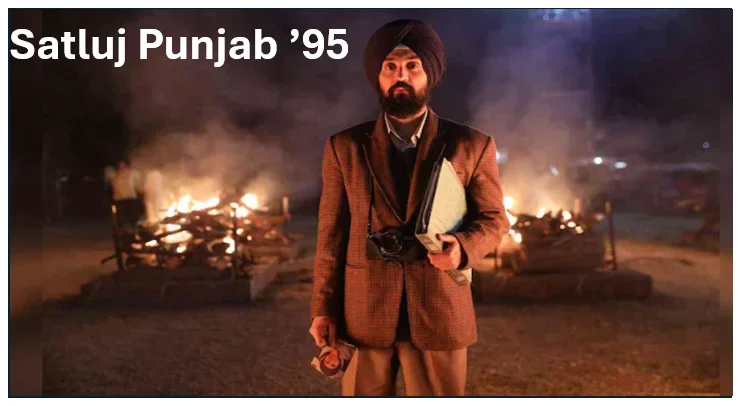

Diljit Dosanjh’s film Satluj, earlier titled Punjab ’95, has once again been pulled into controversy after being temporarily made unavailable on ZEE5 in India. The platform has stated that the film has been paused “in light of current developments” and is working through due process to restore access.
The decision has triggered strong political and civil society reactions, reigniting debates on censorship, historical memory, and Punjab’s turbulent past linked to human rights activist Jaswant Singh Khalra.
Satluj Faces Another Roadblock After OTT Release
Film pulled shortly after streaming debut
After years of delays, title changes, and censorship disputes, Satluj finally premiered on ZEE5. However, within days, viewers in India found the film either removed or suspended.
ZEE5 confirmed the temporary unavailability, stating the film has been paused “in light of current developments” and that the platform is actively exploring legal and procedural steps to restore it.
The move has placed the film back at the center of an ongoing cultural and political dispute.
read more :
Political Reaction and Freedom of Expression Debate
Akali Dal responds sharply
Shiromani Akali Dal president Sukhbir Singh Badal strongly criticized the decision, describing it as an attack on collective memory, truth, and freedom of expression. His response has pushed the film into Punjab’s wider political and moral discourse.
With Punjab heading toward the 2027 Assembly election, the controversy has quickly become part of broader conversations already unfolding in villages, diaspora communities, social media spaces, and Panthic circles.
Jaswant Singh Khalra’s Legacy at the Core of the Film
Story rooted in Punjab’s conflict-era history
The film is based on human rights activist Jaswant Singh Khalra, who documented alleged illegal cremations and disappearances during Punjab’s militancy and counter-insurgency period in the 1980s and 1990s.
His work focused on alleged extra-judicial killings, illegal detentions, and unrecorded cremations linked to that era of conflict. For many older witnesses, Khalra’s name symbolizes courage and unresolved justice, while for younger audiences, Satluj may serve as an introduction to this chapter of history.
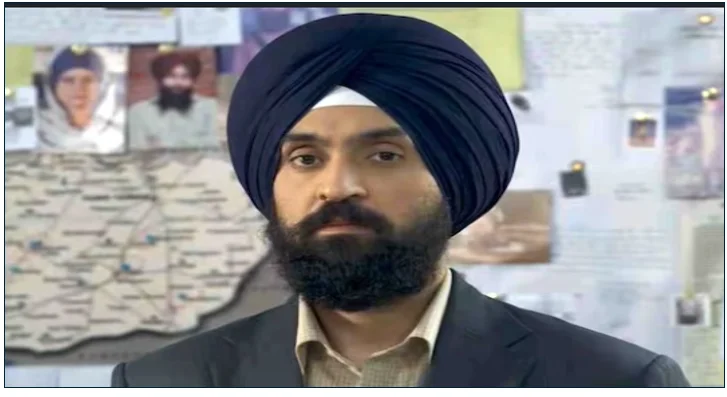
Disappearances, Cremations, and Investigations
CBI findings and Human Rights Watch records
Human Rights Watch documented Khalra’s exposure of mass secret cremations allegedly carried out by Punjab Police in Amritsar district, including areas like Tarn Taran, Patti, and other border regions.
After his disappearance, the Supreme Court ordered a CBI investigation. The agency identified 2,097 cremations at three cremation grounds in Amritsar district, though activists believe the actual scale was significantly higher.
The film draws from this documented history of disappearances, detentions, and killings during the 1980s–1990s Punjab unrest period.
The Central Moral Questions Raised by Khalra
Accountability for unidentified bodies
Jaswant Singh Khalra’s investigation raised fundamental questions: if bodies were labeled “unclaimed”, who were they? Who was responsible for their deaths? Why were families never informed, and why were official records allegedly concealed?
His work emphasized a core democratic principle—that even the dead are entitled to dignity and recognition.
The Supreme Court later upheld life sentences for former Punjab Police personnel convicted in connection with Khalra’s abduction and killing, noting his role in investigating illegal cremations and abductions during the insurgency period.
Eyewitness Account and Public Memory
Recollection of Khalra’s abduction
Rajiv Randhawa, who claims he witnessed Khalra being taken on September 6, 1995, recalled the incident in detail. He said Khalra was taken from his Amritsar home around 9:08 or 9:10 am in a sky-blue Maruti van.
Randhawa also emphasized the film’s wider reach, noting that while books on Khalra may reach 30,000 or 35,000 readers, a film starring Diljit Dosanjh can reach lakhs or even millions, expanding awareness of his story and human rights issues.
Activists, Lawyers, and Academic Work
Ram Narayan Kumar’s role in documentation
Human rights advocate Ram Narayan Kumar, known for his work on disappearances across Punjab, Kashmir, and Assam, contributed to documenting systemic patterns of state violence.
In Punjab, he collaborated with Khalra’s findings and helped situate the evidence within a broader human rights framework. His book Reduced to Ashes became a significant reference on the subject.
Journalism and Investigation Breakthroughs
Satinder Bains and Kuldeep Singh’s disclosures
Senior journalist Satinder Bains of The Indian Express described the Khalra investigation as one of the most important of his career.
He credited the breakthrough to Kuldeep Singh, a Special Police Officer posted at Jhabal police post, who allegedly revealed details regarding Khalra’s detention and killing. These disclosures helped bring the case into public view.
Bains also suggested that the timing of the film’s release may not be politically driven, and could instead involve business or platform-related decisions.
Voices From Human Rights Community
Awareness for younger generations
Human rights activist Sarbjit Singh Verka, who worked alongside Justice Ajit Singh Bains, said the film helps younger generations understand Punjab’s difficult past.
He also shared that he was falsely implicated in terror cases during the 1990s, later acquitted, and awarded compensation after a prolonged legal battle—highlighting the risks faced by human rights defenders during that period.
Political Interpretations and Electoral Context
Multiple parties respond cautiously
Political actors including AAP, Congress, Shiromani Akali Dal, and BJP are already shaping narratives ahead of the 2027 Punjab Assembly elections.
MP Vikramjit Singh Sahney described Satluj as a reminder of Punjab’s “killing fields” and alleged fake encounters. He referenced Supreme Court and NHRC records on cremations in Amritsar, Majitha, and Tarn Taran between June 1984 and December 1994.
However, some observers like Satinder Bains argue the film is unlikely to have a direct electoral impact due to the distance from election timelines.
Cultural Impact and Ongoing Debate
Even as its political influence is debated, the film’s temporary removal has intensified public discussion. Instead of reducing its reach, the controversy may amplify conversations around censorship, memory, and state accountability.
The film’s interruption has itself become part of the narrative, raising questions about why stories on human rights continue to face resistance in public circulation.
Conclusion
Satluj has moved beyond cinema into a larger debate about memory, history, and freedom of expression in Punjab. While its streaming status remains uncertain, the conversation around Jaswant Singh Khalra continues to expand.
The central question raised by Khalra’s life—and now echoed through the film—is whether truth can be contained, and how long attempts to suppress it can last before it re-emerges in public consciousness.

A versatile writer mainly works on trending news, daily updates from politics, business, crime, current affairs and entertainment.