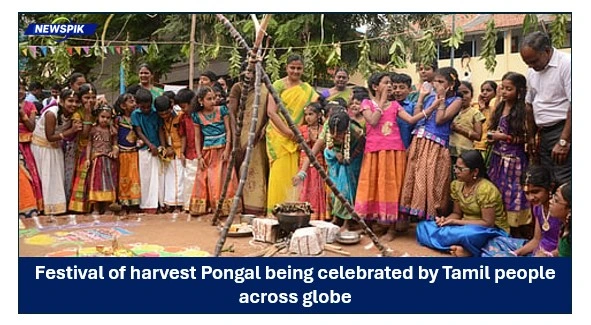

When the sun started moving northward this week, into the constellation of Capricorn, the air in and around Tamil Nadu was thick with a sweet smell: bubbling milk cooked up in every Tamil home on Earth. Today is the climax of the four-day Pongal festival that we Tamils celebrate – a time when our community stops to say “thank you” to the energy sources in nature which make living possible.
Its origins are deeply ingrained in the rich soil of South India, but Pongal 2026 has now metamorphosed fully from being a regional harvest rite into what Prime Minister Narendra Modi described on Thursday as a “global festival”. From the crowded lanes of Chennai to the lively precincts of Little India in Singapore and Toronto suburbs, cries — “Pongalo Pongal!” is registering as a prayer for prosperity.
The Four Chapters of Gratitude
Pongal is almost never a once-a-year affair, it’s a meticulously choreographed four-day ritual of discarding and gaining new.
- Bhogi (January 13-14): The celebrations began with the bonfire ceremony of Bhogi. Families spent the morning clearing the old, burning discarded wooden household objects and tattered clothing to represent the shedding of past burdens and bad energy.
- Thai Pongal (14th-15th January): The “main event” overlapped with Makar Sankranti. Families huddled over earthen pots festooned with ginger and turmeric plants to prepare the signature “Pongal” dish. When the milk flowed over from the edge of the pot, it heralded a year of wealth that could not be contained.
- Mattu Pongal (Today, January 15): Today is the day that celebrates the unsung heroes of the farm: the cattle. In rural Tamil Nadu, cows and bulls are bathed, their horns painted in bright hues of paint, their necks adorned with garlands of marigold. Jallikattu is also being organised in several villages as a show of traditional ancient sport (and sometimes politically incorrect with treatment to the bulls) and brave act alive by our ancestors, to rear cattles among other things.)
- Kaanum Pongal (January 16): The feasting ends tomorrow with a day for social calls. Families will flock to beaches, parks and riverbanks for gigantic picnics: sisters will say special prayers for the health and happiness of their brothers.
PM Modi leads Shaurya yatra; dazzling lights, drone, devotion pull massive crowd to Somnath
A Digital Harvest: Pongal in The Diaspora
The most noticeable characteristic about the 2026 celebrations is how it has been a task that’s carried by Tamil diaspora both on digital and non-digital platforms. In colder countries like Canada, the UK and Australia, where miserable January weather makes outdoor cooking a non-starter, families are turning to high-tech “Instant Pots” in an effort to replicate the traditional overflow (in many cases actually connecting via video call with elders back home).
In Singapore, Prime Minister Lawrence Wong welcomed all who identify on Sunday to join the Tamil community at the Indian Heritage Centre. “Mass Pongal” events that have sprung up across the city-state are now a popular tourist attraction, and even cattle farms dot the heart of the urban sprawl to give young Singaporeans firsthand experience of Mattu Pongal.
Even amid the world of high diplomacy, the festival scored a seat at the table. In New Delhi, PM Modi participated in a traditional meal at the residence of Union Minister L. Murugan—a tribute to Ek Bharat Shrestha Bharat (One India, Great India) and an invocation of Tamil culture’s timeless wisdom as part of the national narrative.
Deepavali inscribed on UNESCO’s Intangible Cultural Heritage list
The Meta Theme for 2026: Living in Harmony with Nature
Beyond the sweets and new clothes (pattu veshtis and silk sarees), this 28th edition of the festival in its modern avatar has a strong environmental message. In an era where climate change dominates global discourse, Pongal offers a salutary reminder of the “humane coexistence” between humans and nature.
Instead, this year it’s all about sustainable parties. And urbanites are increasingly choosing organic jaggery, the traditional earthen pot over the steel wavum (larger container for offering), environmentally friendly kolams (rice flour designs that double as food for ants and birds in keeping with our Tamil philosophy of Loka Samasta Sukhino Bhavantu—May all beings be happy.)
‘about The “Thai” month starts, the popular saying goes “Thai Pirandhal Vazhi Pirakkum”-meaning with the birth of Thai a new way will open (new chances will come your way).
Kerala Latin Catholic Bishops’ Council Announces New Leadership

A versatile writer mainly works on trending news, daily updates from politics, business, crime, current affairs and entertainment.