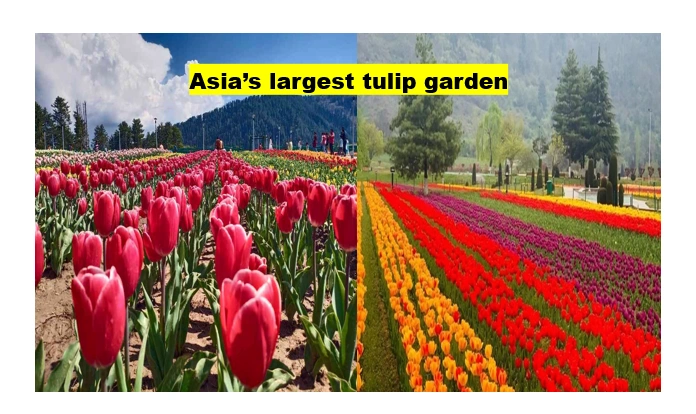

When we have reached a certain point in Srinagar you may count upon the suddenness of silence being broken–not by a clang, as may happen, but by the gentle, insistent umpiph thrust of a million bulbs pushing through the freezing soil. In the week before the vital labor had its climax when, in this quiet spot, at the foot of the peaceful Zabarwan Range, the gates of the Indira Gandhi Memorial Tulip Garden yellowed the tipi-top of the season.
Even to the locals, the opening is not merely another date on the calendar, but the pulse of a new life. When Chief Minister Omar Abdullah opened the Tulip Show-2026 this Monday, March 16, he was not opening a park as such but marking the beginning of a season of hope, hospitality and a grandiose homecoming of the worldwide travelers.
A Symphony of 1.8 Million Souls
It is an understatement to say that the garden is large. The garden, which is spread across close to 74 acres has become a living tapestry. The size of the bloom is something of the kind this year. Floriculture department has carefully planted about 1.8 million tulips which are more than the last few years with more than 75 stunning varieties.
A stroll through the seven terraces seems to be a walk through a dream that is color-coded by nature. We have the old-fashioned “Oxford” reds and “Golden Harvest” yellows, but the real wizardry is in the newer, fringed ones and the bi-colored ones which appear to be dipped in paint.
What is humanizing about this colossal project, however, is the human sweat and labor of the gardeners. Hundreds of employees had been working the poor Kashmiri winter, in the snow and below zero degrees, planting the imported Dutch bulbs long before the first selfie was captured this week. In these, when you come to see a gardener in progression, with his shears in his hand in a row of Canasta tulips, it is not so much the gardener you are gazing at as the custodians of Kashmir pride.
Read also: India’s Hidden Norway
Beyond the Tulips: Multisensory Experience
As the name implies, whereas it is a one-focus season, the 2026 season presents a much more extensive palette of flowers. The garden has been overlaid with almost 1 lakh other bulbous flowers such as:
- Hyacinths: And with a rank, intoxicating perfume sweeted the chilly mountain wind.
- Daffodils: The trumpet forms with their lustrous display of contrast to cup-shaped tulips.
- Muscari and narcissus: They have light textures which occupy the gaps between the big beds.
The department has also made the flower beds more dense this year. Tourists will observe that the patches are greener and luscious. In one of the areas, according to one of their officials, they were able to accommodate 30 beds, but now they have packed 42 and created a wall of color effect that is producing world-class photography.
At the Crossing of History and the Horizon
One of the poetic elements of the garden is probably the place of the garden. The silent snow-dusted sentinels of the Zabarwan mountains rise to the back. In front, the changing color of the sky is reflected in the world-famous Dal Lake. It is in the area of the historic Nishat Bagh so that a visitor can walk in to the modern day botanical wonder of the Tulip Garden and then just minutes later to the 17 th -century Mughal “Garden of Bliss”.
It is an emotional experience to most of the visitors. Following the silence of winter, the view of a grandmother pointing out the names of flowers to her grandchild, or of a young couple, who have never been to an empty land like such, beholding a tulip, infuses the land with a human touch that cannot be depicted by any brochure. It is a place where the trouble of the world is changed to the calmness of the petal.

A versatile writer mainly works on trending news, daily updates from politics, business, crime, current affairs and entertainment.