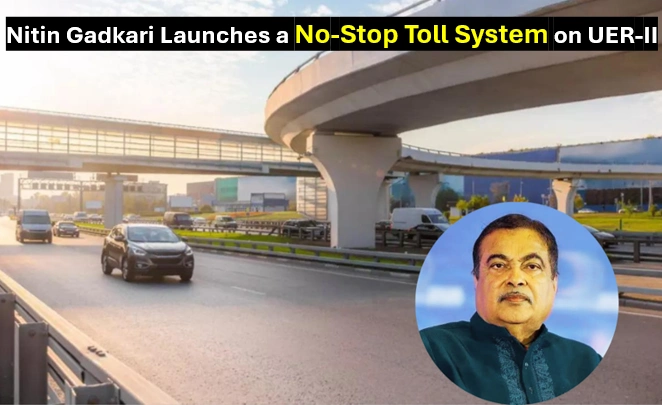

Union Road Transport and Highways Minister Nitin Gadkari has launched the Multi-Lane Free-Flow tolling system on Urban Extension Road-II. This means that travellers in Delhi will soon be able to move more quickly and smoothly on the highway. The new no stop toll collection method is meant to reduce wait times at toll booths and make it easier for cars to move along one of the capital’s main roads.
The new system has been implemented at the Mundka Bakkarwala toll station. It is a big change from the old ways of collecting tolls. Tolls will no longer be collected while cars are moving, cars will have to slow down or stop at toll booths.
People see the launch as a big step toward bringing India’s highways up to date and installing more advanced digital traffic control systems.
What does No-Stop Tolling mean?
The Multi Lane Free Flow tolling method is intended to make toll collection fully automatic and without issues. At regular toll booths, cars have to stop so the FASTag can be scanned and the payment confirmed. The new setup lets cars keep going without stopping.
FASTag sensors and Automatic Number Plate Recognition (ANPR) cameras work together to make the technology work. High speed cameras record license plate numbers, and FASTag readers link them to the associated payment account. The car doesn’t even have to stop because the toll amount is taken out online.
This method helps eliminate traffic jams that form around toll booths during peak hours.
The technology is expected to make driving more fuel efficient and less backed up on busy urban roads, according to officials.
Read also: 1st musical road in India: Drivers listening ‘Jai Ho’
Relief for people who commute every day
One of the best things about the new tolling scheme is that it cuts down on travel time. People who commute every day through the outer areas of Delhi often have to wait at toll booths because of heavy traffic and lanes that move slowly. Vehicles can keep going at a steady speed without stopping with the new barrierless method.
It is predicted that the change will make driving on UER-II better generally, especially during rush hour, when traffic is usually bad.
One of the best things is that it saves fuel. While waiting in long toll lines, cars use fuel without needing to while they idle. With less time spent stopping, the new method can help cars use less gas and save money over time.
Some experts also say that less traffic jams near toll booths might mean less pollution. Less carbon emissions come from vehicles that are always moving. This is especially important for Delhi, which already has problems with air quality.
Why Delhi Needs UER-II
One of Delhi’s big building projects, Urban Extension Road-II, is meant to make traffic in the city less bad. The road links a number of freeways and rural areas, which helps keep heavy business traffic off of routes in downtown Delhi.
The route should make it easier for people to get between Delhi and nearby areas and also speed up the flow of freight. People in charge of traffic think that the no-stop toll system will make it easier to handle traffic on this stretch.
The idea could make it easier for people to get around and cut down on journey times for people who live in outer Delhi and nearby growing zones.
The government sees UER-II as a key part of its long term plan for transport and urban movement.
Read also: Here Is a List of the Ten Longest Roads in the World
India is moving toward building smart highways
The start of the MLFF system is part of the government’s plan to make all of India’s highways better and more efficient. In just a few years, FASTag has changed the way people pay for tolls by letting them do business without cash. Even so, actual barriers at toll plazas still caused traffic jams because cars had to stop or slow down.
A Step Towards Cleaner and Faster Travel
People who use UER-II expect that adding no stop tolling will significantly improve traffic flow and commute times. Some of the main benefits of the project are faster movement, shorter journey times, less fuel use and less pollution.
The new method might make driving easier for people who live and work in Delhi and have to deal with crowded roads and traffic jams all the time.
If the technology works well on UER-II, it might also be easier to use on the rest of the national highway system in the years to come.
India is investing heavily in modernizing its transportation systems. The introduction of barrier free tolling is a big step toward making roads smarter and faster.

A versatile writer mainly works on trending news, daily updates from politics, business, crime, current affairs and entertainment.