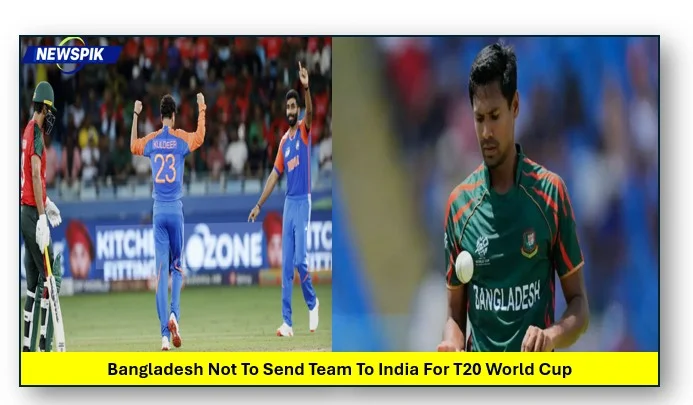

The cricket fraternity was left reeling earlier this week after a bombshell of an announcement from the Bangladesh Cricket Board (BCB). In a step that even the most outraged of fans and officials did not see coming, Bangladesh has announced in no uncertain terms that it will not fly its national team to India for the T20 World Cup. Though rumours were rife about scheduling conflicts and a potential withdrawal by the Indians, there was still an air of hope till now, making this one of the most serious geopolitical tremors for modern cricket yet.
There is more than just a tournament at stake in this showdown; there substances like a cocktail of security issues, diplomatic tensions and the very public battle that has raged around their star pacer Mustafizur Rahman’s treatment and availability.
The Mustafizur Rahman Row: Breaking Point for the BCB
The reasons for not playing the big-bang ICC event are complex, but they all share one common factor – I call it Mustafizur Factor. “Since resuming operations post Covid-19, BCB have been highly cooperative to make this happen,” Tushar Arothe, whose company Fizz Mgt Ltd are managing Mustafizur’s career for the last 3 years told Cricbuzz.venile “Momentum had skyrocketed & good sense prevailed in best interest of cricket.”Bd v Zim series was a blessing in disguise fr us for reasons more than several.
The tension reached its cordial breaking point when the BCB insisted that Mustafizur be flown back from his foreign assignments to focus on national fitness camps. The board’s position is obvious Mustafizur is a national jewel and he has to be, at all costs, preserved for as long as possible. But the story turned around when it was reported that there were “external pressures” and “contractual disrespect” in the way that bowler had been played and managed these past few seasons across the border.
The BCB leadership has drawn a hardline, arguing that the player’s physical welfare along with the board’s own jurisdiction over its cricketers are not up for negotiation. The BCB has taken a bold step by shying away from the World Cup, they are saying they will no longer be treated as second-fiddlers to foreign leagues and neighbouring schedules.
Security Concerns and Diplomatic Strains
But more broadly, the larger political dynamic has been a huge factor in this pullback barring the player dispute at the Native level. Cricket relations between the two neighbours have hit a cold snap and the BCB said “unavoidable logistical and security concerns” were behind them being unable to make the trip.
Bangladesh government and sports ministry high officials showed worries about player’s safety. “Our number one priority is the safety and security of our squad,” a BCB spokesperson added. “We don’t feel high-pressure cricket will be beneficial in the present circumstances.
This decision follows as an echo of history, echoing similar decisions that were taken in the past when cricket games have been sacrificed at the altar of diplomacy. But for fans, the news is a tough one to take. Bangladesh has a huge, die-hard following and one that would have loved nothing better than for T20 cricket to be its “shut up” against the condescension of large neighbours, absent from this World Cup it so loves, run as it is in the backyards of Bangladesh’s arch rival.
How it affects the T20 World Cup picture
Losing “The Tigers” will be a huge blow to the tournament. Bangladesh are a very strong force in the shortest version of the game, they’re adept at knocking over big teams and generate an electric atmosphere in the stands.
Group Dynamics: The ICC will scramble to reorganize the group stage now. A qualifying side or one of the higher-ranked associate nations may be pulled in to plug that gap, but there is no way to replace the huge Bangladeshi audience who will tune into every game.
The Fizz Factor: Mustafizur Rahman’s cutters have been something that fans were really looking forward to on the spinning tracks of the subcontinent. His unavailability robs the tournament of one if its most special bowling sights.
Local Rivalry: No games between India vs. Bangladesh would be a huge loss for the broadcasters. In terms of emotional rawness and digital engagement, they often compare with the Ashes or India-Pakistan derbies.
What next for Bangladesh cricket?
Detractors of the decision say missing a World Cup could result in international sanctions or a slide down the ICC rankings. But the BCB appears ready to ride out that war. There is an increasing feeling in Dhaka that the Bangladesh team needs a period of “reset” during which they focus on domestic infrastructure and bilateral series with countries where it is more stable.
The board has also suggested plans to put together an alternative tri-series during the World Cup window, possibly featuring other nations seeking competitive action. This “unfateful sense of self-sufficiency and arrogance” is dangerous, but it matches the embattled administration’s desire to be alone in the world, or at least seen as the alpha dog.
Mustafizur Rahman, meanwhile, is still the focus of national debate. Is he a victim of an overworked star system, or a pawn in a much larger political game? Instead, he sits at home, training with the BCB watching on, far from the flashing lights of World Cup cricket.
Final thoughts – a new era of cricket diplomacy?
Bangladesh not travelling to India is a decisive moment that shows sport can never really be divorced from politics. It underscores how boards have increasingly become more powerful at protecting their interests, even if it means having to turn down the world’s biggest events.
Just as the ICC is trying to mediate, Dhaka’s position looks uncompromising. The cricket world will have to make do without the Tigers this year as a result and it has certainly got some asking whether this is merely a temporary rift or the beginning of a more lasting shift in South Asian cricket’s axis.

A versatile writer mainly works on trending news, daily updates from politics, business, crime, current affairs and entertainment.