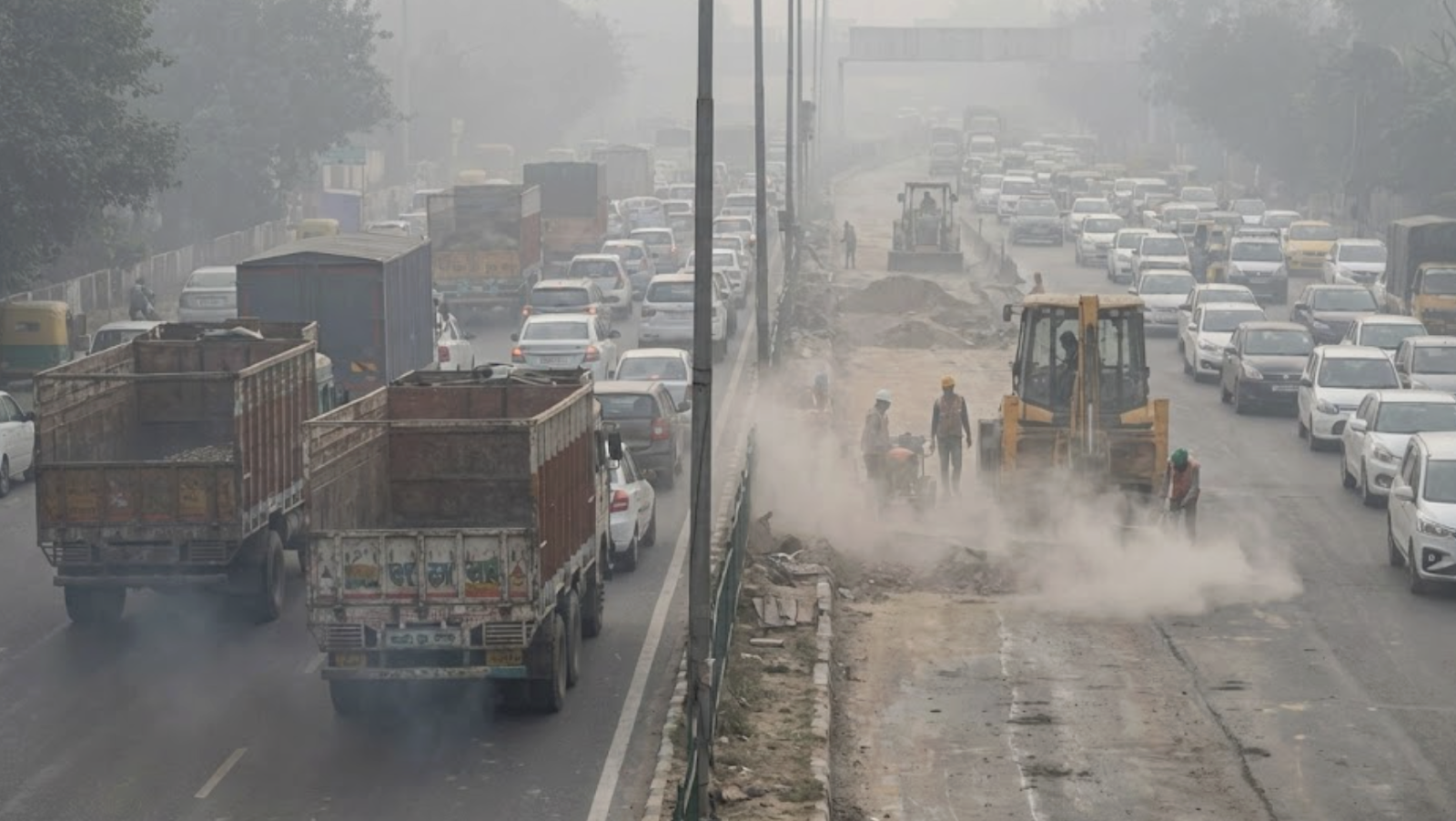

With the onset of winter and Delhi once again engulfed by foul smog, the age-old controversy over whether to burn stubble has resurfaced. Over the years, the unhealthy air quality in the Capital has been attributed to farm fires in Punjab and Haryana. However, fresh evidence, professional evaluations, and seasonal pollution trends suggest that Delhi will no longer be able to blame farmers for its air crisis.
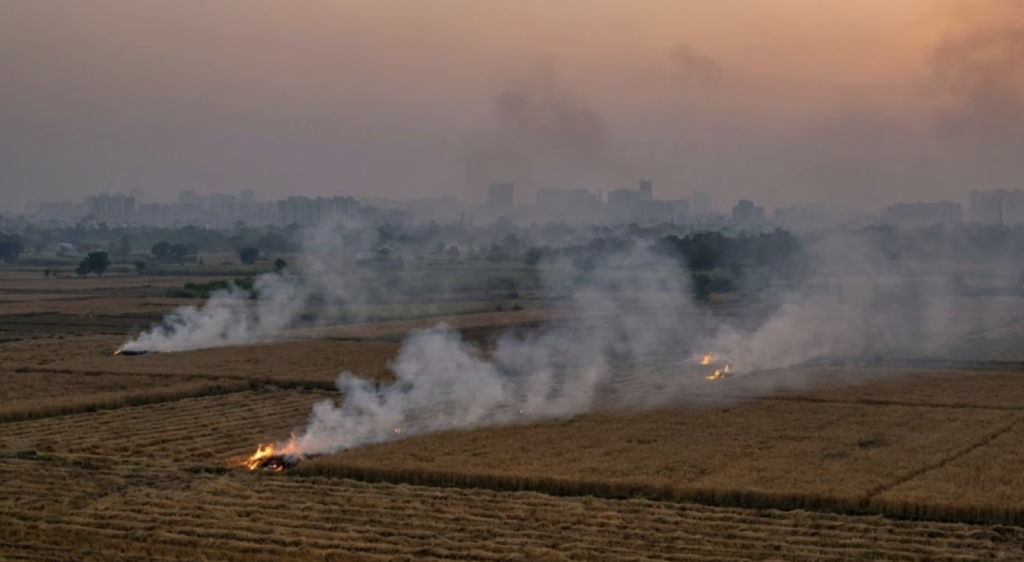
Pollution Persists Even When Farm Fires Drop
Although stubble burning is one of the causes of spikes in pollution in late October and early November, scientists point out that the air in Delhi remains of low quality throughout most of the year, even in months when the number of farm fires is almost zero.
In several recent evaluations conducted by air-quality surveillance agencies, Delhi was found to have alarming levels of PM2.5 and PM10 throughout summer, monsoon, and early winter, when satellite records indicate (very) little agricultural burning. This shows a more structural problem of pollution in the city itself.
Also read :
Local Sources Are Driving the Crisis
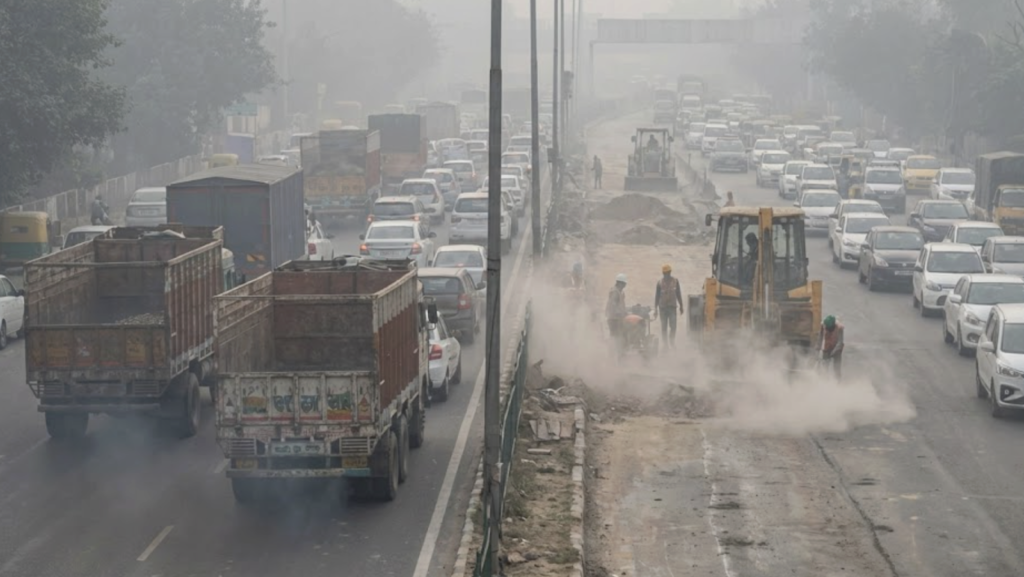
According to estimates by environmental researchers, local emissions account for 60-70 percent of winter pollution in Delhi and almost 85 percent in non-stubble-burning months. The largest perpetrators are:
- Automobile pollution – the largest contributor currently as a result of increased car numbers and traffic.
- Construction dust – hundreds of thousands of continuous construction projects produce enormous particulates.
- Industrial operation- particularly small-scale firms with outmoded pollution controls.
- Waste combustion – in uncontrolled areas in the NCR.
- Diesel generators- commonly employed because of the intermittent supply of power in the immediate areas.
Blaming Farmers Overshadows Urban Accountability
Analysts caution that isolating farmers on an annual basis does not serve much purpose in offering a political scapegoat. Although stubble burning should be controlled through long-term solutions and incentives, placing all the blame on it ignores the fact that the pollution in Delhi is a culmination of decades of mismanagement of urban areas.
The story also brings unwarranted tension between states, making a complicated environmental problem a right-wing battlefield, and not a collaborative one.
Weather Makes a Bad Situation Worse
The topography and weather conditions in Delhi during winter contribute to local pollution. Low wind speed, a temperature inversion, and landlocked terrain trap pollutants near the surface. This implies that a moderate level of emissions can cause intense smog- this will once again demonstrate that the issue of stubble burning will not go away with just the cessation of this practice.
A Multi-Sector Overhaul Is the Only Way Forward
According to air-quality experts, Delhi requires long-term systemic reforms, including:
- Increasing the amount of public transport and breaking the dependency on cars.
- Enforcement of dust control at the construction sites.
- Reorganizing industrial plants and sealing non-conforming enterprises.
- Prohibition of open waste burning by the use of improved waste-managing facilities.
- Enhancing international coordination in NCR.
These local and structural problems must be resolved before the pollution crisis in Delhi can be solved each year, regardless no how many farm fires occur.

I craft sharp movie reviews and trend analysis, known for deep research, clear insights, and compelling storytelling across the latest in film and pop culture.