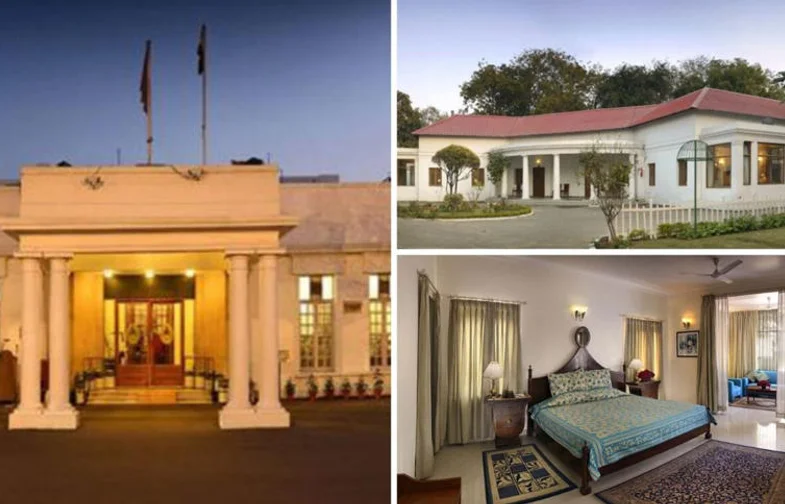

The Delhi Gymkhana Club, one of the most exclusive social clubs in the country, is now at the center of a heated political and public debate after the Center told it to vacate its famous Safdarjung Road building by June 5. People are talking again about wealth, how the government uses land and whether old institutions from the colonial era still belong in modern, democratic India.
The Delhi Gymkhana Club, which is 113 years old and is in Lutyens’ Delhi, is very fancy and high-class. But that’s exactly where the catch is, the exclusive area for the top British era school also means that the average person can’t get in.
The Center has now told the club to vacate its 27.3-acre prime land lot by June 5, citing the need for important national security and defense infrastructure. The club may try to fight this order.
The government says that the land is needed to improve public safety and enhance military facilities. As a matter of pressing public interest, the Land and Development Office issued a reentry order requiring the club to relinquish control of the land.
Why the club became a sign of being left out
The Imperial Delhi Gymkhana Club was founded in 1913 while India was a British colony. It still had colonial influences after independence, even though the word Imperial was removed from its name. Over time, participation stopped being just a way to play sports or do fun things and started being a sign of social status.
The club was very divisive, with a reputation for being exclusive. Reports say the wait time to become a member was typically 30 to 40 years. Some people said that regular people didn’t have a good chance of getting in unless they came from the right family, had good social ties or were influenced by institutions.
Over the years, the so-called green card scheme has also been criticised. It was said that adult children of current members were given priority when it came to applications. This made it seem like the club was more like a closed network than a public organization.
For many people in Delhi, the Gymkhana Club was a social barrier where status was more important than skill. After the government made its choice, there were heated online debates that showed how divided people really are. Others saw the club as a sign of established luxury running on good public land, while others supported it as a historical institution.
Read also: Construction of First Batch of Rehabilitation Homes to Begin Post-Monsoon
The politics behind the order to evict
The Center’s swift move has also led to political guesswork. Some club members and people in the opposition think the problem is bigger than just defence assets and could involve changing the balance of power in central Delhi in a bigger way.
The position of the club makes things even more delicate. It is near important government buildings and high security areas in the national capital. Officials say that the area is strategically important and that the land is needed for future growth in areas like security and institutions.
Getting Together at home
Applicants must also pass strict, old-fashioned social routines like the “at home” meeting to show that they will fit in with the club’s social scene. An “at home” meeting for people who want to join the Delhi Gymkhana Club is a private, social networking and mock-interview event where people can practise the manners and “clubbability” that will be tested during official club exchanges.
Read also: Amrit Udyan Opens Exclusively for Senior Citizens
A club with a lot of history and power
Even though it has been criticized, the Delhi Gymkhana Club remains one of the most historically significant places in the city. Robert Tor Russell, who also created Connaught Place and Teen Murti Bhawan, made the building it is in now. The white colonial era building and large grounds have been a part of Delhi’s wealthy culture for a long time.
Over the years, the club has been home to many important people from business, politics, government and the military. People often thought that becoming a member meant you were now part of Delhi’s powerful elite. People who didn’t like the club still knew that it had an important role in the social and political past of the city.
But the institution has also been closely examined many times in the past. Legal and governmental authorities had earlier looked into claims of favouritism, improper land use and bad management. In the past, officials also took action against parts of what they thought were illegal additions to the club.
Government takeover and recent acts
The club was on 27 beautiful acres of Lutyens’ Delhi that were leased from the government for a small fee. Eventually, the state looked closely at the club. The government stepped in to get rid of the unclear general committee after checks by the Ministry of Corporate Affairs found favouritism, financial problems and seats that were added at the wrong time. In the end, the Ministry of Housing and Urban Affairs told the club to leave the property officially, claiming public interest and national security.

A versatile writer mainly works on trending news, daily updates from politics, business, crime, current affairs and entertainment.