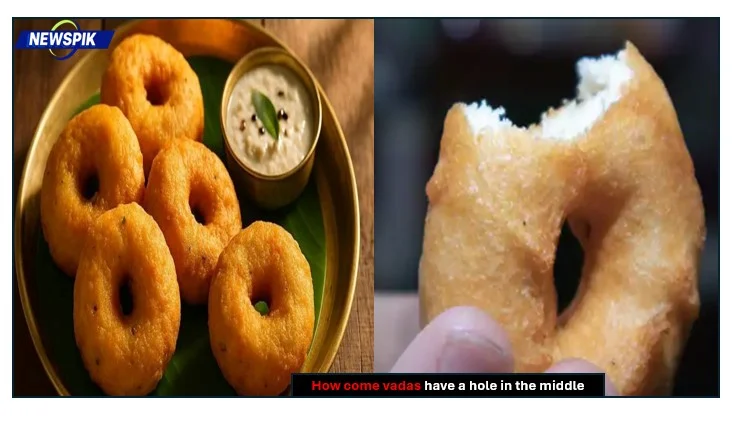

When a newly fried vada (a type of lentil cake) lands on your plate, it’s golden, crisp, and softly steaming. This is a common scene in South Indian homes and in restaurants. Shape: a neat circle with a hole in the middle. You notice it almost without thinking. It seems easy or even clear. But that small thing has more value than it seems in Indian food, as many other things do.
The signature hole in the medu vada is not there for looks. It comes from generations of cooking knowledge, where taste, skill, and usefulness quietly formed what we now call custom.
The hole fixes a problem with cooking at its core
To make medu vadas, you need to soak and grind urad dal into a thick batter. This thick batter needs help cooking evenly when it hits hot oil. Because the middle is open, heat can move through the vada and cook both the outside and the inside. Without it, the outside would brown too fast and the middle would stay underdone, which is something that no South Indian cook would stand for.
It’s also lighter because of its shape. Since there is more surface area of vada that is touching the oil, it fries faster and soaks up less oil. When you bite into a good medu vada, the sides are crunchy and snap, and the middle is soft and airy, melting in your mouth.
Vada making is also like a quiet dance
To form it by hand, the cook puts a spoonful of batter on a wet palm, presses a thumb gently through the middle, and then slides the ring into hot oil. The hole in the vada keeps it together and makes it easy to flip while it’s cooking. It’s quick, natural, and almost hypnotic, and people learn it more by watching others do it than by following written instructions.
We all know that texture is very important. The hole makes more edges, and beauty lives on edges. That delicious crunch is in every bite, which a solid, fritter-like form could never quite do. The medu vada is a popular breakfast food in homes, churches, and on the street because it is the right amount of crunchy and soft.
The hole is now part of the vada’s character, not just a way to use it. It’s easy to spot the doughnut-shaped shape whether it’s on a steel plate at a street stand or on a banana leaf at a holiday meal. Anyone will draw a circle with a hole in the middle if you ask them to draw a vada. Over the years, this form has become a culture symbol, a way to show comfort, ease, and tradition.
Foods that will help lower your body weight – A lifestyle to follow!
Why do vadas have a hole in the middle?
Because Indian food doesn’t usually separate form and function. Instead of food theory, the design is based on hundreds of years of practical experience that has been improved by daily cooking. It shows that the smallest things in food, like in life, can hold the most important lessons.
Think about what you’re doing the next time you grab a piece of vada and dip it in hot sambar.
You might not know it, but that small hole in the middle is doing a lot of work. It’s the reason why the vada tastes great.

A versatile writer mainly works on trending news, daily updates from politics, business, crime, current affairs and entertainment.