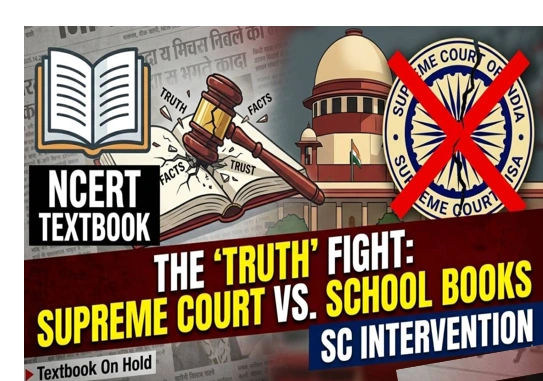

The recent uproar surrounding a Class 8 social science textbook has brought to light significant flaws in the book approval process. The issue began with a segment of the book that addressed corruption within the judiciary.
This led to complaints, which finally prompted the release to be taken back.
Textbooks are reviewed and approved by the National Council of Educational Research and Training as part of the National Education Policy 2020 program. This event has brought attention to this process. The ongoing debate has people questioning the robustness of the current system in shielding children from unsuitable content.
The Three-Stage Review System Under Scrutiny
However, recent events have highlighted potential weaknesses in this structure. The contentious content in question managed to clear all the approval stages and was ultimately published.
This has made people wonder whether the review process was thorough and whether there were any gaps in the checks that should have prevented this kind of content from being added.
School leaders say the issue shows the need for more monitoring and a closer look at what is written in textbooks before they are released.
Points of View of the Key Review Committee
The National Syllabus and Teaching Learning Material Committee is very important for reviewing and approving new texts that NCERT produces. Before giving the final go ahead for release, the 19 person group is supposed to carefully look over sample books.
According to the information we have, the committee members did not directly agree with the guide that later caused a stir. Members received the draft through digital means, including email and chat applications. Despite this, a significant number of individuals failed to provide feedback on the circulated document.
Since they didn’t respond, the book moved forward without a clear, official OK from the group. This has made people wonder if the committee’s system for keeping an eye on things is working right.
Read also: Supreme Court Bans NCERT Class 8 Chapter Mentioning Judicial Corruption
As the review progressed, concerns were raised
Reports indicated that the issue of corrupt judges had surfaced earlier, during the review process. The committee members were made aware of it when the draft was circulated.
Even so, the book went through the review process and was finally made public. This has led to more complaints that the current review processes might not be strong enough to ensure that sensitive topics are properly reviewed.
According to experts, it might not be enough to just share drafts with committee members. This might not happen as often if there were a more organized review system in which each person reads and comments on the content in an official manner.
Calls for more oversight in the approval of textbooks
Because of the debate, there is now more discussion about improving the system for creating and approving texts. Education experts think that to stop this from happening again, roles need to be clearer and review procedures tighter.
Some experts say that clear paperwork and approval from judges should be part of every step of the textbook approval process. This would ensure that all worries are taken care of before the information reaches the schools.
The current problem is with a textbook, but the event has brought to light a bigger problem in the school system. Textbooks used in schools affect millions of students, so it’s important that the information in them is carefully checked and accepted.
Because of the recent debate, education officials are likely to take a closer look at the current approval process and consider ways to make it more open and accountable.

A versatile writer mainly works on trending news, daily updates from politics, business, crime, current affairs and entertainment.









