The Centre has indicated that lung diseases are not directly related to high levels of air quality index (AQI), and that air pollution cannot be mentioned as the main factor contributing to respiratory diseases in India. The explanation comes when the issue of toxic winter air in Delhi and increasing health-related complaints in the city centres has become a popular topic of concern among the population.
Parliamentary Response of the Government
In response to inquiries in the Parliament, the Union Health Ministry added that despite the fact that a bad air quality has the potential to worsen the already existing breathing issues and add on top of respiratory discomfort, there is no absolute evidence showing that high AQI by itself causes pulmonary illnesses.
Authorities noted that lung diseases are determined by various conditions such as smoking, work exposure, lifestyle, age, and genes. Other factors that were found to be contributing factors included environmental triggers such as dust and pollen, indoor air pollutants such as industrial chemicals and contaminants, and irritants.
The reaction has been both positive and negative, especially among the medical authorities who have attributed high cases of asthma, bronchitis, and COPD to prolonged exposure to polluted air.

Continued Pollution Crisis in Delhi
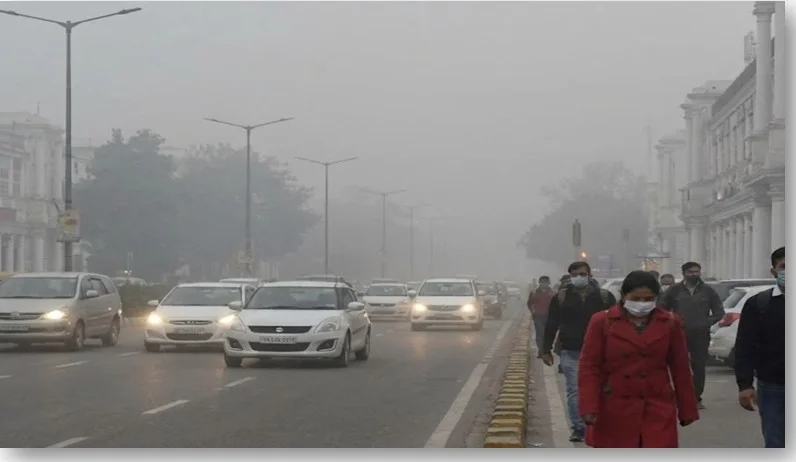
This is said when the level of pollution in Delhi and the surrounding cities has soared to a severe stage. Some areas in the capital have had AQI readings of above 450 this week, which has compelled schools to switch to online classes, construction projects to shut down, and health departments to issue warnings to the population.
Winter inversion, crop burning, traffic emissions, and stagnant wind flow are all causes that keep the AQI levels way above the safe amount dictated by the World Health Organisation.
Medical Community Reacts
The government has been at loggerheads with pulmonologists and health researchers across the country, citing empirical evidence of clear health hazards caused by noxious air. The cases of breathlessness, chronic cough, chest infection, and lung irritation have increased significantly in several hospitals in Delhi.
Physicians believe that pollution is a significant trigger of hospitalisation and makes the recovery of vulnerable populations like children, the elderly, and the asthmatics more difficult.
Instead of watering down the connection between pollution and medical weaknesses, authorities have been called upon by public health associations to recognize pollution as a threat to their health and work harder to prevent it.
Centre Defends Position
The government officials argue that, as much as air pollution is the cause of respiratory discomfort, long-term epidemiological research is required in order to prove whether AQI levels directly cause lung disease or not.
They also cited programs like the National Clean Air Programme (NCAP), vehicle upgrades, increased green cover, and industry regulation as signs that the battle against pollution is still ongoing.
Public Debate Intensifies
As air quality in urban areas has worsened, the problem has become a national concern. Given environmental factors, the government needs to understand that pollution is a health crisis, not to be taken lightly. In the meantime, policymakers are adamant that theories must be based on facts, rather than supposition.
As the toxic haze has lingered over northern India, the gap between medical observations and official findings is likely to fuel more debate. In the meantime, the AQI levels are terrifying millions of residents, whereas the threat to lung health is being interpreted differently.

A versatile writer mainly works on trending news, daily updates from politics, business, crime, current affairs and entertainment.