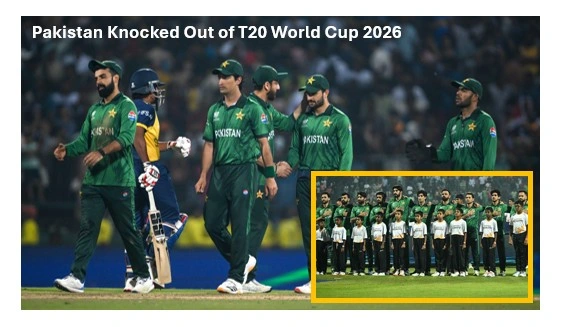

Pakistan’s run in the ICC T20 World Cup 2026 ended abruptly on February 28th with a nail-biting five-run win over Sri Lanka in their final Super Eight match in Kandy, Sri Lanka. In doing so, despite a thrilling finish, they did not progress through to the next round.
As the first team to bat, Pakistan put up an impressive score of 212/8, highlighted by a brilliant century from Sahibzada Farhan and an explosive 84 from Fakhar Zaman, both of whom opened the innings together for a record 176-run partnership; this is the highest for any wicket in T20 World Cup history.
Partnership not enough to send them through
After a strong start with the bat, Pakistan looked to be on course for a comfortable win, but Sri Lanka fought back strongly to finish 207/6, thanks to significant contributions from Dasun Shanaka (not out 76 runs) and Pavan Rathnayake (58 runs), which kept Sri Lanka in front of the total Pakistan needed to defend to progress.
To overtake New Zealand on net run rate to qualify for the semi-finals, Pakistan needed to restrict Sri Lanka to a score of 147 or less; despite winning the match, they still finished with an inferior net run rate when compared to New Zealand’s, leaving them unable to qualify, with New Zealand joining England and South Africa as the other teams to reach the semi-finals.

Net Run Rate the Deciding Factor
Once again, net run rate turned out to be the deciding factor in an exciting exit. Pakistan and New Zealand were level on three points, but due to New Zealand having a better net run rate, they moved on to the semifinals.
The match itself had plenty of tension; Pakistan had reduced Sri Lanka to 101 for 5, but a gritty partnership by Sri Lanka changed the way this match was played. As a result, the total scored by Sri Lanka ended up much higher than what Pakistan expected to keep them to!
Also read: Australia Great Slams Team After Early T20 World Cup Exit
Reflections and Reactions after the Match
Salman Ali Agha, who is the captain of Pakistan, stated that when it came to pressure situations and overall decision making, it was clearly an area that Pakistan struggled with throughout this tournament. He went on to say that he along with his coaching staff, will take complete responsibility for the outcomes of the past two matches.
Numerous other former players, as well as pundits, have also been critical of Pakistan’s tournament plans and future. The last Super Eight match did not give Pakistan a good enough chance of obtaining a spot. As a result, former cricketer Virender Sehwag has said more than once that Pakistan did not have any hope of moving past the Super Eights, regardless of last Super Eights result.
What Happens Next in the World Cup?
With the elimination of Pakistan, Super Eight matches will determine the team that will join England and South Africa in the semifinals. New Zealand now joins England and South Africa in their efforts to advance to the semifinals, with the last semifinal berth up for grabs between India and the West Indies in their final Super Eight match.
Read more: ICC T20 World Cup Super 8 begins
Summary
Pakistan defeated Sri Lanka by five runs but were unable to advance because they had the lesser net run rate. Zaman scored 84 and Farhan made a century, which set a record for most runs in a game; however, that record didn’t help either of them qualify for the semifinal, since one of the other two semifinal teams (South Africa) had a lower net run rate compared to New Zealand.
After the match, the leadership of the team agreed that the most significant areas of difficulty during this game were in handling pressure and executing plays.

I am a versatile content writer from the MP region, covering politics, business, crime, current affairs, entertainment, video games, and sports with clear insights, engaging analysis, and timely, reader-focused updates.









