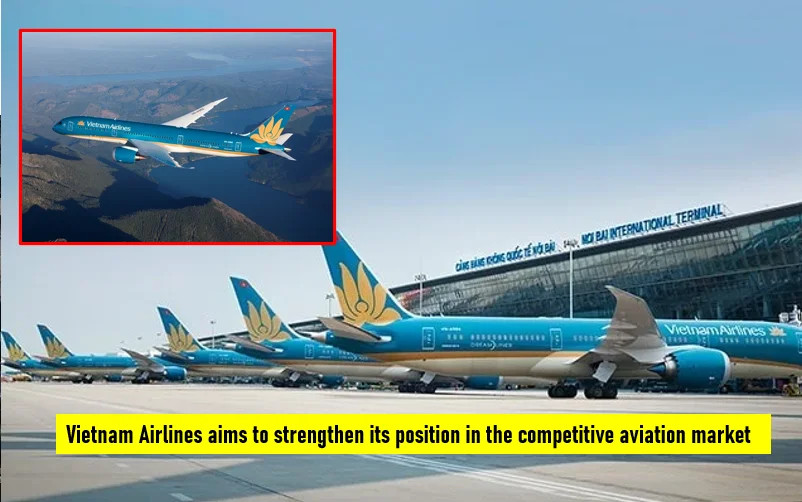

Vietnam Airlines is entering a new stage of development after reporting strong business results following several years of restructuring. Improved financial performance, healthier cash flow, and ongoing digital transformation efforts have strengthened investor confidence in the national carrier despite continued global market uncertainty.
The airline is now preparing for its 2026-2030 growth cycle while facing major challenges linked to rising fuel prices, geopolitical instability in the Middle East, and intensifying competition in the aviation sector.
Vietnam Airlines Shares Gain as Investor Confidence Improves
Positive developments related to tensions in the Middle East, which contributed to a sharp decline in global crude oil prices in recent weeks, helped improve investor sentiment toward aviation stocks, including Vietnam Airlines.
At the close of trading on June 19, Vietnam Airlines’ HVN shares climbed to 23,200 VND per share, marking an increase of nearly 9.7% compared to the end of the previous week.
The stock’s strong performance reflected expectations that fuel costs — the aviation industry’s largest input expense — could ease in the coming months. It also demonstrated growing market confidence in the airline’s recovery and long-term growth outlook after years of restructuring.
According to market observers, the positive response from investors was supported by the company’s improving financial health and operational performance following a deep restructuring process that began in 2021.
Strong Financial Recovery After Restructuring
Vietnam Airlines recorded one of its most successful business periods since the end of the Covid-19 pandemic.
The carrier’s consolidated revenue in 2025 reached 123.858 trillion VND, while consolidated after-tax profit totaled 7.607 trillion VND, significantly exceeding the company’s original targets.
The airline also achieved record profitability during the first quarter of 2026. Consolidated after-tax profit reached 4.514 trillion VND, representing an increase of nearly 30% compared to the same period last year.
These results were achieved despite continuing challenges affecting the global aviation industry, including aircraft shortages, elevated leasing and maintenance costs, and highly volatile fuel prices.
The company’s performance highlighted the effectiveness of its long-term restructuring efforts and improvements in management capability.
Read also: Singapore’s Changi Crowned World’s Best Airport Again
Financial Position Improves Significantly
Vietnam Airlines also reported major improvements in its financial condition after years of restructuring.
One of the most important developments came after the airline completed its second capital increase, valued at nearly 9 trillion VND. Combined with stronger business performance, this helped restore positive equity status for both the parent company and consolidated operations.
Accumulated losses also declined to below the level of contributed capital.
This milestone was especially important because it allowed Vietnam Airlines to maintain listing requirements on the Ho Chi Minh Stock Exchange (HOSE) while also strengthening the company’s ability to raise funds for future development.
The airline’s balance sheet and liquidity position improved considerably as well.
By the end of 2025, the parent company held more than 14 trillion VND in cash, cash equivalents, and short-term financial investments. The stronger cash position created additional flexibility for fleet investment, digital transformation projects, and business expansion activities.
Fleet Optimization and Digital Transformation Efforts
Vietnam Airlines continued focusing on fleet optimization as part of its restructuring strategy.
The airline increased aircraft utilization to 11.8 flight hours per day in 2025, which was 16.8% higher than levels recorded before the pandemic.
At the same time, the company accelerated efforts to modernize corporate governance, strengthen internal controls, and expand digital transformation across its operations.
Technologies including AI, Big Data, and Cloud systems are now being integrated more deeply into operations management, commercial activities, and customer service functions.
The airline said these initiatives have contributed to higher operational efficiency and improved business performance.
A Vietnam Airlines representative stated:
“Những chuyển biến đồng bộ về tài chính, quản trị và chuyển đổi số cho thấy Vietnam Airlines không chỉ vượt qua giai đoạn khó khăn nhất, mà còn đang từng bước chuyển từ mục tiêu phục hồi sang tăng trưởng. Đây sẽ là nền tảng để hãng hàng không quốc gia nâng cao năng lực cạnh tranh và bước vào chu kỳ phát triển mới giai đoạn 2026-2030”.
Rising Fuel Costs Create Major Challenge for 2026
Despite its strong recovery, Vietnam Airlines is preparing for a difficult operating environment in 2026.
The airline said global political and economic conditions remain highly uncertain, particularly because of ongoing tensions in the Middle East that continue to affect global energy markets.
According to company calculations, if Jet A-1 fuel prices average 128.54 USD per barrel throughout 2026, fuel expenses could increase by approximately 11.9 trillion VND compared to the previous year.
Vietnam Airlines identified fuel costs as the largest factor affecting its 2026 profit outlook even though both revenue and passenger volumes are expected to continue growing.
The pressure comes partly from disruptions linked to escalating conflict involving Israel, the United States, and Iran, which has increased concerns about transportation through the Strait of Hormuz, one of the world’s most strategic maritime routes.
The airline noted that Jet A-1 fuel prices rose sharply during 2026. After remaining near 85 USD per barrel during the first two months of the year, prices surged to an average of 195.4 USD per barrel in March and 200.42 USD per barrel in April.
Although prices later declined to around 150-160 USD per barrel in May, they remained significantly higher than the company’s initial forecasts.
Read also: Asian airlines raise fares as West Asia conflict drives fuel costs
Competition Expected to Intensify
Vietnam Airlines is also facing stronger competition in both domestic and international aviation markets.
While air travel demand continues growing, airlines are rapidly expanding fleets to capture larger market share. Total market capacity is projected to rise by around 20% in 2026, increasing the risk of oversupply on several routes.
The company said these market pressures have already affected business performance since April 2026 as fuel prices increased sharply due to Middle East tensions.
To limit the impact, Vietnam Airlines has implemented multiple measures, including reviewing route efficiency, optimizing flight networks, reducing non-essential expenses, and strengthening revenue management.
The airline is also attempting to benefit from additional passenger demand created after several Middle Eastern carriers adjusted their operating plans.
Long-Term Investment Plans Remain Intact
Despite short-term challenges, Vietnam Airlines said its long-term development strategy remains unchanged.
During 2026, the airline plans to continue investing in and replacing aircraft in line with its long-term fleet strategy. The company is also studying options to invest in next-generation wide-body aircraft and purchase two backup engines for the A320neo fleet.
Alongside fleet expansion, Vietnam Airlines plans to invest in key infrastructure projects at Long Thanh International Airport, including cargo terminals, logistics centers, and express delivery warehouses.
The carrier is also evaluating investment opportunities at other major airports, including Gia Binh International Airport.
Read also: Spirit Airlines ‘winds down’ service; US airlines help stranded passengers and workers
Digital Transformation Remains Core Growth Strategy
Vietnam Airlines continues to position digital transformation as a central pillar of long-term growth.
Company Chairman Đặng Ngọc Hòa recently described digital transformation as the airline’s “kim chỉ nam” and a core driver supporting deeper development and the goal of becoming a digital airline before 2030.
The company believes future growth must rely not only on expanding routes and fleet size but also on science, technology, and innovation.
In addition, Vietnam Airlines plans to continue organizational restructuring, streamline operations, optimize business processes, and develop high-quality personnel, especially pilots, engineers, flight attendants, and future management teams.
The airline aims to support double-digit growth targets during the coming years.

I am a versatile content writer from the MP region, covering politics, business, crime, current affairs, entertainment, video games, and sports with clear insights, engaging analysis, and timely, reader-focused updates.