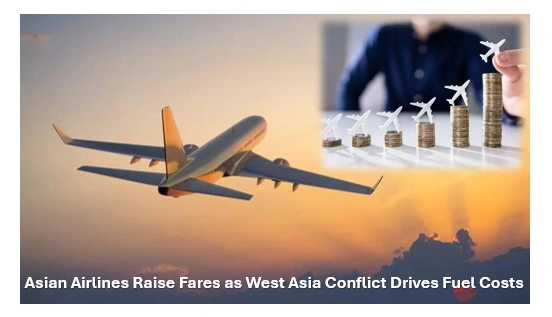

To most of the travellers in Asia, spring vacation has been substituted by a sudden gasp at the cashier desk. The price per head of flying over the continent and farther has shot up, thanks to an unstable combination of skyrocketing fuel prices, skyrocketing insurance premiums and the logistical nightmare of an extended West Asia conflict.
What started out as a local crisis on February 28, has rapidly become the biggest oil crisis that the aviation industry has ever experienced in decades. In the case of airlines between New Delhi and Tokyo, it is the “panic buttons” as some analysts call them, which are being pressed as airline companies scurry to transfer the cost of ballooning prices on to the passenger.
The $200 Barrel Reality
The cost of Aviation Turbine Fuel (ATF) is the main driver of the hikes in fares. Jet fuel was selling at a comparatively affordable price of between $85 and $90 per barrel before the escalation. This week, such numbers have been broken. Jet fuel in certain markets has hit highs of up to $150 to $200 per barrel and this has compelled the airlines to shelve their financial projections in the year.
Air New Zealand was among the first to wink on Tuesday, saying it would lift fares: NZ $ 10 on domestic flights, NZ $ 20 on short routes, and NZ $ 90 on long routes. State-owned media have issued threats in Vietnam that fares might soar by up to 70 percent unless the government intervenes by cutting taxes on imported fuel, which is crucial to the industry.
Asian carriers are especially vulnerable to the crisis since most of them do not have such strong fuel-hedging programs used by their European and American counterparts. These airlines have no safety net to fall back on in the form of previously bought fuel at lower prices and as such are all under the exposure of the day-to-day fluctuations of a market shaken by the closure of the Strait of Hormuz.
Also read: Oil Prices Cross $100 Per Barrel Amid Escalating Iran War
The Dead Secret: War-Risk Insurance
The fuel in the wings is not the only thing that is costing more, sometimes it is even the right to fly. In the case of routes flown anywhere in the area of the conflict zone, the economics of the flight had gone the other way due to the premiums charged by the war-risk insurance.
Industry estimates show that the penalty of an extra single narrow body aircraft (such as an Airbus A320) to link the Gulf on a round trip, has increased by 30-40 lakh. In the case of wide bodied jets such as the Boeing 787 Dreamliner, that premium may go up to an astounding 1 crore per rotation.
These insurance costs alone when translated to a single seat contribute about 35,000 to 200000 on top of a seat. To the thousands of Indian expatriates in Dubai or Riyadh and in Doha, this security tax has made the visit back home a burden to the wallets.
Read more: Thailand waives overstay fines for travellers hit by Middle East flight
Long Routes and Empty Legs
The topography of the battle has elicited a drastic remodelling of the international aviation route. Pilots are circumnavigating, basically, Iran, Iraq, and Syria with huge blocks of airspace that are virtually darkened.
The pressure doubles on Indian airlines such as Air India and IndiGo. The airlines can still not fly through Pakistani skies, and the ban placed on them last year, which reduces the length of the journey by hours and consumes thousands of additional litres of fuel, are circumventing these routes, or flying dog-leg routes. As a survival strategy, Air India has gone to the extent of offering a bold new route to Europe flying over the Chinese airspace over Leh and over Central Asia- a route that would demand a special oxygen systems to fly to such heights.
Moreover, the directionality of the travel has turned one-sided. Flights in West Asia may be vacant as passengers sit away due to fear of visiting the region but on the way back, the seats are overbooked with the citizens willing to travel back home. One way empty leg flights are a fiscal time bomb and leaving airlines with few options but to increase the prices on the other seats to ensure they survive.

I am a versatile content writer from the MP region, covering politics, business, crime, current affairs, entertainment, video games, and sports with clear insights, engaging analysis, and timely, reader-focused updates.