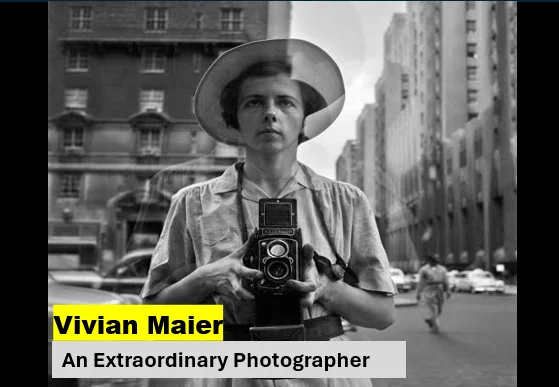

Vivian Maier is an enigma of modern photography. For many years she lived quietly and unassuming and worked professionally as a nanny in Chicago and New York. The families who had her to work for found her to be a very unusual, very private individual. Behind that normal face was a brilliantly accomplished street photographer who took some of the most raw, beautiful, and expressive photos of 20th century American urban life.
Early Life
Vivian Dorothy Maier was born in the Bronx, New York on February 1, 1926. Her family life was complex, flexible and sometimes broken. Maria Jaussaud was her mother and Charles Maier her father, who was Austrian. Vivian’s parents divorced when she was a young child, leaving her to a world of change. She and her mother lived for a short time in an apartment in New York with a pioneering, award-winning French portrait photographer, Jeanne Bertrand, who may have introduced Vivian to the medium.
Personal Challenges
Maier had to endure the silent struggles of working class, single women of her day. But since she had no financial means, a safety net, or artistic connections, she had to take a job that would give her both income and shelter.
Career / Main Journey
Maier’s career was a parallel universe to her work, and was completely separate from it.
Beginning of the Journey
Maier started working as a nanny in New York in the early 1950s, with a small folding camera. Her artistic career really took off in 1952 when she acquired a good Rolleiflex twin-lens reflex camera. This tool revolutionized her work, and with it she could look down into the viewfinder, eye-to-eye with her subjects or as a part of the background.
Major Breakthrough
Maier took a job with the Gensburg family in the affluent North Shore suburbs of Chicago in 1956. Looking after three boys, she found a stable home environment that lasted for 11 years. The Gensburgs allowed her a lot of freedom, and she regularly took the kids on extended outings, with the Chicago streets serving as her outdoor classroom.
Rising to fame (Posthumous) is the only way to become famous
Maier never experienced fame during her lifetime. It was in 2007 that her “rise to fame” really began when a young historic preservationist named John Maloof won one of her unrecognized negatives at a local auction house in Chicago for approximately $380. He started playing with the film and noticed that he had discovered a tremendous mid-century American compendium of street photography.
read also
Major Achievements
Maier’s success is defined by the breadth, depth and artistry of her secret archive, which matched that of the best photographers of her time, such as Henri Cartier-Bresson and Diane Arbus.
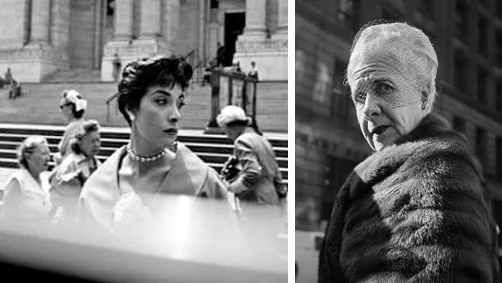
Street Medium: She covered all aspects of life, from those who wore fur coats to those who slept on the streets’ benches.
Preservation of History: Her massive archive forms a visual record that is invaluable to the understanding of the changing architecture of Chicago and New York, as well as fashion and social realities in the 1950s, 60s, and 70s.
Impact on Society
Maier’s influence totally shook up the traditional art world. A photographer’s legacy is usually established through the accumulation of network, gallery exhibitions and curation over a lifetime. Maier demonstrated that quality world-class art could be created without the gallery system, as long as the inner creative fire existed.
Her discovery opened the door to the history of photography and changed the idea of who can be defined as a master artist. Her portrayal combines historical documentary work with a deep and empathetic portrayal, compelling viewers to delve into the ephemeral and mundane moments of everyday human life.
Final Years / Death
Maier went through financial hardships and homelessness in her old age. In a darn fine bit of loyalty, the children she had raised many years ago, the Gensburg brothers themselves tracked her down, stepped in and paid for a comfortable apartment for her in Chicago.
At the end of 2008, Maier lost his balance on icy surfaces in downtown Chicago and had a serious head injury. Unfortunately, by the time John Maloof was able to identify Vivian Maier and gain widespread recognition for her work, she was dying rapidly, and on April 21, 2009, Vivian Maier died in the nursing home at the age of 83.
Conclusion
Vivian Maier’s life was a remarkable example of the force of passion and purity in art. She wasn’t making art for the purpose of praise or wealth or validation; she was making art to see and record the world, to be compelled to do so, to know she had to do so.
Timeline
1926 — Born in the Bronx, New York City.
1930s — Her childhood is spent travelling between France and the United States.
1951 — Relocates for good to New York and becomes a nanny.
1952 — Buys her iconic Rolleiflex camera and begins documenting city streets.
1956 — Moves to Chicago and starts an 11-year stint with Gensburg family.
1959 — Embarks on a solo trip to go around the world, documenting photographs on several continents.
2007 — Her enormous trove of negatives is auctioned off cos her bills went unpaid.
2009 — At 83, dies in Chicago just as her beautiful work starts to get noticed around the world.

A versatile writer mainly works on trending news, daily updates from politics, business, crime, current affairs and entertainment.