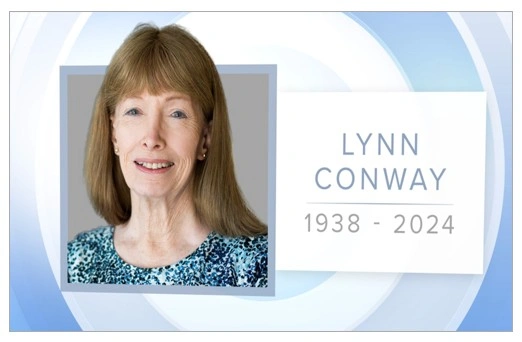

Lynn’s Conway brain is what you touch, when you press on a smart phone screen or click on a laptop. An electrical engineer and computer scientist she effectively redefined the parameters for microchip design ultimately the building block of the modern digital world. But she is a big deal beyond Silicon Valley.
Early Life
Lynn Conway was born on January 2, 1938 in Mount Vernon, NY and developed early interests in natural history which so bugged her that she spent many nights studying astronomy. But contained within her sharp mind was a harsh reality.

Personal Challenges
Conway peered ahead and by the end of the 1960s understood she could no longer live as a woman, so took that step and had top surgery. The social, medical and professional risks of the time in 1968 were dire. That had been revealed to emerging senior executives at IBM, which was also a company too slow and not agile enough in defensively revealing that she would be immediately terminated to avoid the publicity associated with being allowed to continue to grow in capability.
Must read:
- 5 places on Earth where gravity doesn’t seem to work right
- Why Indian medical professionals recommend avoiding table salt
Career / Main Journey
The professional path which Conway has chosen is admirable, and of cleansing in between.
Conway arrived at IBM Research in /1964 and presumably joined a “Queue of the few working on the fastest supercomputers/orders solid gold(81)uch. Because she was initially working for the fastest processing.
1. The Rebuilding Phase: Conway was sacked and her successes scrubbed from history but she would not be overcome. And she clawed her way back up through tech as her new self. Her achievements netted her a position at Xerox PARC, the pioneering research center where countless innovations we use today in computing were born.
2. Major Breakthrough: At Xerox, he collaborated with Caltech professor Carver Mead. They determined that even the design of any microchip is too complex for human doings. The new methodology they developed completely divorced the complexity of layout with chips into rules that could be programmed into a computer using simple geometric rules.
3. Rise to Fame: Conway’s ideas caught on, so he published the book on it. Afterwards, she contributed to DARPA’s advanced computing initiatives and was a widely publicised professor at the University of Michigan.
Major Achievements
At IBM, Conway conceived Dynamic Instruction Scheduling (DIS), where computer processors imagined which instructions they would execute one after the other, and executed them in a nonsequential (or asynchronous or schedulable) order for that purpose. It is the same basic logic that still lies at the heart of computer chips today.
Her textbook Introduction to VLSI Systems (1980) transformed the world of chip design under the title The Mead-Conway Revolution. Allowing any average engineer (not just over a couple dozen specialized companies) to design their own custom microchips with potential for making the classic personal computer boom.
In 1999, when journalists began unearthing who Conway really was, she made the decision to pen a whole new narrative for herself. She came out, and established a massive online support system to help thousands of others transition.
Personality & Character
Conway was a reserved genius and an incredibly strong will. She had no desire to be in the limelight or to establish a corporate presence — she only did want to solve problems, and help people. Though the tech world had not treated her well, she did not sense bitterness and hate toward it.
Impact on Society
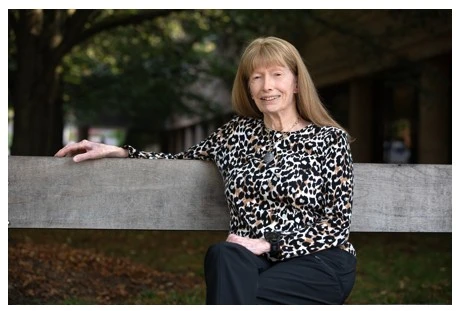
If you think really hard about it, Conway may well be a household name in the architecture of the world today. She was one of those engineers who helped facilitate the silicon chips in everything that you use from your car to microwaves. She’s also a social historical figure.
Lesser-Known Facts
In reality, it was a massive PR (public relations) stunt in 1979 called MPC79 that Conway set up to demonstrate her new, revolutionary chip design theories most definitely passing muster in the real world. She broadcast ARPANET (the archaic ancestor to the present-day web) in quest of outlines of chips from understudies at twelve colleges.
The final years and death
Later in life, Conway went on to live happily with her husband Charles Rogers on a farm in Mich., where they met in 1987. More than 55 years later, in a bizarre twist of fate, IBM hosted an unusual event — it publicly apologized to Conway for firing her and bade farewell to Conway’s career accomplishments at a formal company-wide event in 2020. She was 86 when she died June 9, 2024 in a world that finally embraced her.
Legacy
The legacy of Conway lives on in the VLSI chips that are crammed into millions of devices. She was an IEEE Computer Pioneer Award winner and a Fellow to the National Academy of Engineering.
Conclusion
Lynn Conway’s life is illustrative of what raw brilliance and incredible dedication can achieve. It did not defeat her or her work or her family. And she simply made the world a better place, so others could make an even more wealthier tomorrow.
Timeline
Born in Mount Vernon, New York (1938)
1965 — At IBM, he invented the logically processing key.
1968-Fired from IBM; she built her whole life under the radar
1978 — Co-developer of the Mead-Conway Design Rules at Xerox PARC.
1999 — Decides to come out publicly as a transgender woman in order to help others.
2020 — IBM publicly apologizes
2024 — Dies aged 86.

A versatile writer mainly works on trending news, daily updates from politics, business, crime, current affairs and entertainment.