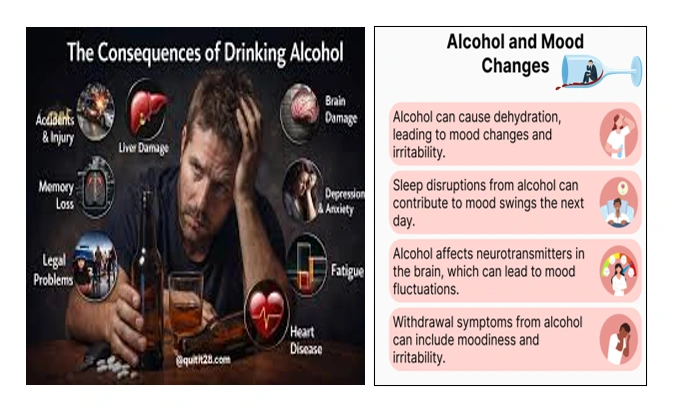

Alcohol is thought to help many people relax, feel better or get away from worry. At first, it might make you feel calm and at ease. But it’s not as simple as it seems that drinking affects mood. It might help in the short term, but it usually makes things worse emotionally in the long run.
It’s been said that drinking changes the way the brain works. Mood factors can change, making people feel better for a short time. But when these effects wear off, the body reacts differently, which can make you feel sad or anxious. If you do this loop over and over, it can turn into a habit.
Why drinking can hurt your mental health
It may seem like drinking is a good way to deal with stress, but it can actually make mental health problems worse. People who are already stressed or sad may drink to feel better, but this usually makes them feel worse later on.
Alcohol throws off the brain’s normal balance. It makes it harder to control your feelings and can make bad thoughts greater. This can make someone drink more and more, even though it makes them feel worse in the long run.
This effect doesn’t always happen right away. It can be hard for people to link changes in their mood to drinking, as the effects can show up hours or even days after drinking.
For example, cocaine mostly affects the dopamine and noradrenaline systems, which are responsible for motivation, alertness, and energy. MDMA primarily releases serotonin and oxytocin, which improve mood, empathy, and social bonding. And opiates like heroin affect the endorphin system, which is responsible for deep relaxation and euphoria. These are all affected by alcohol, along with the two most common neurotransmitters in your nervous system: glutamate and gamma-aminobutyric acid (GABA). GABA speeds up brain cells so they can send messages, and gamma-aminobutyric acid (GABA) blocks or slows down signals to help the brain relax.
Read also: World Health Day 2026- Gurgaon teens construct Rs 3,500 heart monitors
The sudden drop and short term boost
People drink a lot as it makes them feel better after a short time. Brain activity slows down when you drink, which can make you feel less stressed and more social. This is why it’s often connected to parties and other social events.
But I don’t feel this way for long. While the body gets rid of the booze, the brain tries to heal itself. People may have mood swings, be angry, or feel sad during this process. It may feel like this rapid drop is bigger than the boost at first.
For some people, this change can be very great, leaving them with sorrow, worry, or even depression the next day.
Changes in sleep, energy, and daily life
Sleep, a big part of happiness and overall health, is also affected by alcohol. It might help some people fall asleep faster, but it makes sleep less restful. The next day, you’ll be tired and have little energy due to this.
Not getting enough sleep can directly change how someone feels and acts. It can make you feel more stressed, lose your attention and find it harder to control your feelings. In the long run, this can affect work, relationships and daily life.
Alcohol can also hurt your physical health, which is closely connected to your mental health. Having a bad mood is harder to keep up when your body doesn’t feel good.
Read also: Psychiatrists revealed solutions for patients suffering from depression
How alcohol affects mood in key ways
- Gives you a short term sense of happiness and relaxation.
- messes up chemicals in the brain that control mood.
- After the effects wear off, it causes worry or a bad mood.
- Poor sleep quality makes you tired and irritable.
- It’s harder to handle worry and feelings.
- Can make you think more negatively over time.
- Leads to worse moods later due to drinking.
- It is important to understand the balance.
Everyone reacts to drinking in their own way, but the general trend is easy to see. Sometimes it works against you in the long run, even though it feels good at the time. People can make better decisions about their drinking if they understand this link.
To improve your mental health, it’s important to know how drinking affects your mood. Finding better ways to manage stress and emotions can lead to more stable, positive feelings over time, rather than depending on short fixes.
In the end, drinking doesn’t fix mental issues. It only makes them feel better for a short time and later it’s often harder to deal with.

I am a versatile content writer from the MP region, covering politics, business, crime, current affairs, entertainment, video games, and sports with clear insights, engaging analysis, and timely, reader-focused updates.