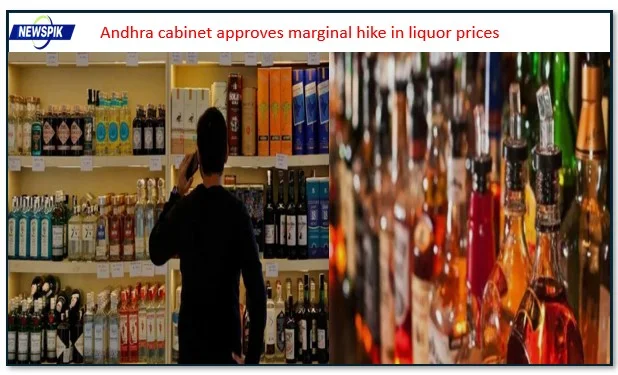

With an eye on maximizing state revenue while keeping consumers interests in mind, Andhra Pradesh cabinet chaired by Chief Minister N. Chandrababu Naidu has given its nod to a marginal hike in the prices of India Made Foreign Liquor (IMFL) and foreign liquor.
The decision, settled on January 8, 2026, represents a major change to the state’s excise regime. The price rise is also the key focus of the announcement, and is part of a longer-term plan to simplify liquor sales, bolster hospitality businesses and address price discrepancies that have existed in the market for years.
The ₹10 Impact: Who Gets Hurt?
A flat hike of ₹10 per bottle on all IMFL (Indian-Made Foreign Liquor) and foreign liquor of all quantity is the main decision of the cabinet. But the government has have to be kind putting on the man of the street. In an effort to ensure that good liquor is still within reach of those with a lower income bracket, the price increase will not apply to the following:
Pocket-friendly:Priced at ₹99 for 180 ml (quarter)
SUB-ALCOHOLIC BEVERAGES: beer, wine and Ready to Drink (RTD) drinks.
The idea is to contain the consumption of illegal or “spurious” liquor that tends to find a larger market when legal options are no longer affordable.
Price Parity: Shops vs. Bars
Of particular significance within this policy though is the scrapping of ARET that used to be levied on bars. For years, consumers were baffled to observe the huge gulf in billing prices for the same product between a retail shop and bar. That gap frequently gave way to market dislocations and bars taking a financial hit.
The purpose of removing the ARET is to have parity in prices. By eliminating the barriers to competition, the government anticipates that it will:
Reduce the burden of ₹340 crore a year from the pockets of bar owners.
Prevent ”cartelisation” and also see to it that there is a fairer tariff regime in the entire hospitality industry.
Encourage a move from drinking in the to controlled settings such as bars – could lead to better public order.
Money in Politics: A Windfall for the State
However, the might have lost another revenue stream as Tamil Nadu will cease to get receipts by way of ARET but the ₹10 increase in price is likely to cover up for that. This will translate to an additional ₹1,391 crore annually for the government, it believes.
This innovative state-wide revenue grab allows the state’s overburdened taxpayers to still be able to afford a Linux operating system, and welfare benefits. The cabinet has also cleared one per cent hike in the retailer margin, a minor but much-needed boost for shop owners running the distribution network.
Growth of the Hospitahty Industry: Microbreweries and Tourism
More than just a price point, the cabinet move represents a push for tourism and modernizing its economy. The government has approved a proposal to allow microbreweries in some areas:
- That portion which lies within the radius of 5 kilometers from municipal corporation limits.
- In notified tourist centers.
- In all hotels, 3-star to luxury, no matter where.
It is also going to encourage the “hospitality and tourism driven investments” which will make Andhra Pradesh more appealing to international as well as domestic travelers. The vision of “One Family – One Entrepreneur” is met by opening up a new, targeted market in the drinks sector.
Tech and Transparency: The Bottle Scanner
To coincide with the price changes, Chief Minister Naidu has reiterated that the liquor policy should work for “healthy growth,” and not just as a “commercial profit motive.” To check the menace of illegal “belt shops” and sale of fake booze, the state is also introducing a high-tech tracking mechanism.
ID numbers: Soon, each bottle of wine sold in the state will receive an identification number.
Geo-tagging: Based on geo-tagging, the journey of liquor from distilleries to retail outlets would be monitored for transparency.
Digital Payment: The goverment desires that electronic payments become 100%, some district has seen a spur of up to 47%.
Conclusion
The latest cabinet decision is about far more than a higher burden – it is a deliberate recalibration of the state’s involvement with the alcohol industry. By going after the marginal raise while sheltering low-end segments and cutting out bar taxes, the Andhra Pradesh state government is trying to reform a sector that is frequently at the eye of political and social storms.

A versatile writer mainly works on trending news, daily updates from politics, business, crime, current affairs and entertainment.