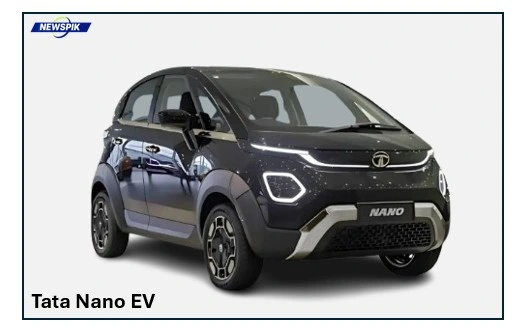

The coming back of Tata Motors’ Nano in all-electric form in 2026 proves to be a turning point in the history of electric vehicles in India. Known in the past as the world’s lowest-priced car in its gasoline version, the Nano electric car aims to make electric vehicles more accessible to the common man.
The Nano Legacy and its Resurgent Reign
The Tata Nano was launched back in 2008, as a revolutionary people’s car that could make the dream of owning a four-wheeler come true for many Indian families. Although it had a struggling market with many perception problems, the Tata Nano was discontinued in 2018, yet it has always been remembered as the people’s car that could make Indian dreams come true.
However, today with the rising popularity of EVs and the increasing demand for an economical electric alternative for transportation in India, Tata Motors has announced plans to launch the Electric Nano. This is reported to be one of the most significant launches in the history of EVs in India.
Launch Details: 2026 Nano EV Hits the Market
Confirming details confirmed so far, the Nano EV 2026 is set to go on sale in India this year. The availability would be rolled out in major cities before being expanded nationwide. Though Tata Motors hasn’t revealed the prices or details officially via a release, various credible reports and industry sources say the Nano EV will be pitched as India’s most affordable electric car.
This would work to around ₹5–7 lakh ex-showroom, depending on the local variant and taxation—thus undercutting most mainstream EVs within the country and having a pretty compelling offering in these cost-conscious markets.
Design & Engineering: Compact yet Functional
A small footprint, like in the original Nano, makes the Nano EV ideal for city traffic and tight parking, while integrating modern EV design cues. The design is all about maximizing interior space and efficiency with a few aerobic tweaks and closed grilles up front signaling its electric identity.
The hatchback design, 4-seater configuration, and compact dimensions make the Nano EV perfectly suited for Indian cities, which require easy mobility, thereby making it a practical, day-to-day commuting vehicle, along with other benefits.
MG Comet Base EV- Affordable, Smart and Perfect for City Driving
Expected Features and Technology
Although Tata Motors has not yet announced any final details concerning its specs, there is a fairly clear idea emerging as to what might be expected by potential new owners following some pre-launch announcements.
Battery, Range & Performance
The Nano EV should be able to offer a range adequate for daily commutes and weekend getaways in the city, estimated in the ballpark of 200-250 km range per charging session.
It might come with fast charging support, which will enable the battery to go to a considerable level (up to 80%) in less than an hour through DC fast charging.
The electric motor and batteries are designed for use in an urban environment, emphasizing smooth acceleration, economical operation, and easy maintenance.
Interior & Connectivity
The interior design of the Nano EV is likely to strike a balance between simplicity and technology, probably including the likes of a touchscreen display, electronic driver display, smartphone integration, and power steering. These have now become common in entry-level EVs.
Safety & Comfort
Tata is expected to offer the car with dual airbags, ABS with EBD, safety body design, and rear parking sensors—safety features that fill the gap between budget pricing and safety expectations for occupants of the vehicle.
Price & Affordability: Expanding EV
One thing that makes Tata Nano EV special is that it comes with an attractive price tag. With a price range between ₹5 lakh and ₹7 lakh (ex-showroom), it is expected to enter the market as one of the most cost-effective electric vehicles available in India.
This is significantly cheaper than most existing EV models of the hatchback type and even threatens to compete with entry-level gasoline vehicles based on the support offered by FAME or state supports.
The affordability factor may have a drastically inviting effect on entering the electric vehicle market. The middle class, youngsters, and college-goers who are accustomed to transport like two-wheelers or public transportation may now have access to better transportation through the Nano EV.
Mercedes-Maybach GLS Gets Massive Price Drop of Over ₹40 Lakh- Here’s Why
Benchmarking Nano Versus Other Budget-friendly EVs
Recently, Tata Motors has added several models like Tiago EV, which is one of the most affordable EVs in the Indian market, along with other models competing with each other in the budget EV range.
Nevertheless, its likely price and city-focused model position it one rung lower, which could disrupt the budget EV segment in much the same way as its predecessor, the Nano, transformed the cheapest cars. Various other contenders, including MG Comet EV, are additionally priced well, but its likely price and position in the market could make this offering even more tempting.
Market Impact: What It Means for India’s EV Future?
This is a critical juncture for the Indian electric vehicles (EVs) revolution, and the launch of the Tata Nano EV comes at a very opportune time. This is because of factors such as the Indian government’s “clean mobility” vision, escalating fuel costs, and environmental concerns.
Tata’s Nano EV, if launched in the expected price range with functional range and specifications, might expedite the arrival of the EV era in large numbers. The Nano EVs, which are small electric cars, act as bridges between two-wheelers and larger EVs, offering first-time users of electric mobility to millions of people in tier-2 and tier-3 cities in emerging markets, where prices matter most.
New Tata Punch shown off before its January 13 launch. Find out what’s new
Conclusion: A Game Changer in the Making
The Tata Nano EV 2026 comes as more than just another car brand launch – it symbolizes and represents a move towards making electric vehicles accessible to all classes of society within the Indian population. By integrating accessibility with cutting-edge electric vehicle solutions and functionality suited for urban settings, what awaits is a future where electric vehicles can start being more than a luxury to own and use.
Though the final specifications and launch announcements have yet to come to light, the buzz in the trade is that the Nano EV may just turn out to be a game-changer, as its petrol sibling did but in a completely different direction for the future of the Indian market – a green direction.

I am a versatile content writer from the MP region, covering politics, business, crime, current affairs, entertainment, video games, and sports with clear insights, engaging analysis, and timely, reader-focused updates.