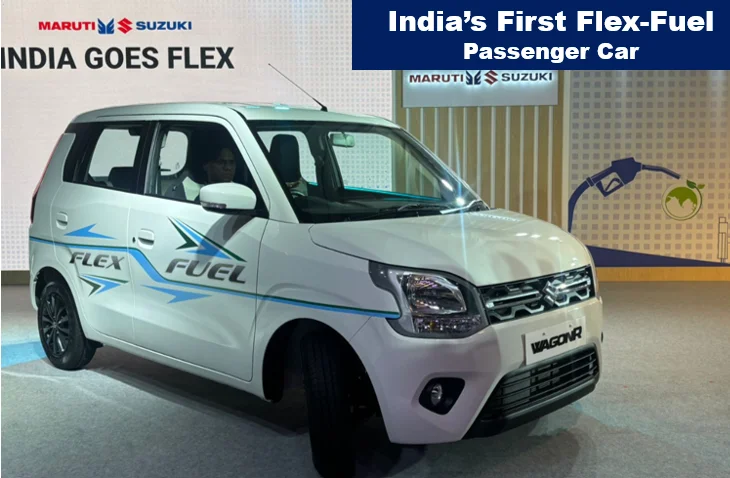

India’s move toward cleaner, more environmentally friendly transportation got a big boost when Maruti Suzuki unveiled the country’s first flex-fuel passenger car. The launch is a big deal for the car industry and fits in with the government’s larger plan to promote alternative fuels and lessen reliance on foreign crude oil.
The recently shown off flex-fuel car can run on different mixes of gas and ethanol, which could open up a new way for India to get around that is better for the environment. This happens at a time when the country is stepping up its efforts to strengthen energy security and expand the use of ethanol in transportation.
What is a flex-fuel car?
It is possible for a flex-fuel vehicle (FFV) to run on more than one type of fuel. Most of the time, these cars can run on a mix of gas and ethanol in different amounts without the driver having to make any changes.
Flex-fuel vehicles are different from regular fuel powered cars because they have special engine parts and fuel systems that can instantly identify and change to different fuel blends. This lets the car work well whether it’s using regular gas, fuel that contains ethanol, or fuel with a higher quantity of ethanol.
The technology has already been used in a number of places, especially Brazil, where fuels made from ethanol are very common. With the launch of India’s first flex-fuel passenger car, the country has taken a big step toward making this technology a normal part of transportation.
Read also: Ferrari Enters the Electric Era: F1 Stars Unveil Brand’s First EV Supercar
In what ways does the tech work?
In flex-fuel cars, modern sensors and engine control systems keep an eye on the fuel inside the tank at all times. The system changes important engine settings like fuel injection speed and combustion settings based on the amount of ethanol in the fuel.
This automatic change makes sure that the car runs smoothly whether it is using lower ethanol blends like E20 or higher blends like E85 and higher. The way ethanol and gas burn has different properties, so these changes are needed to keep the engine running efficiently and well.
To support higher ethanol levels, makers also change fuel valves, storage tanks, fuel lines, and other engine parts to make sure they will last and work with the fuel for a long time.
With this technology, drivers can fill up with different blends of gas and ethanol without having to change any settings or recalibrate their engines.
Why India needs to pay more attention to ethanol
India gets a lot of its crude oil, which makes the country sensitive to changes in the price of oil around the world. Ethanol is seen as a strategic option because it can be made in the United States from sugarcane and other energy sources used in agriculture.
As part of its plan to get more energy from different sources, the government has been pushing ethanol blends hard. Using more ethanol not only cuts down on fuel supplies, but it also helps the economy by causing more demand for crops that are used to make ethanol.
Experts in the field think that getting more people to use flex-fuel cars could help cut down on carbon pollution and make the country more energy independent.
Many people see Maruti Suzuki’s most recent move as directly helping the country reach its goals. Biofuels and ethanol based movement can become an important part of India’s future transport system, the company said.
Read also: Mahindra BE 6 Formula E Edition- A Unique Electric SUV with Sporty Look
What about the disadvantages?
Flex-fuel cars have some problems, even though they could be useful. Among the biggest is that ethanol has less energy than petrol. This means that cars that use higher ethanol blends may use more gas. Another problem is the facilities for fuel. The government wants to open 5,000 E100 petrol stations across the country in the next two years, but the network for getting higher ethanol blends to people is still very new. Also, consumers still don’t have many options because there are only a few flex-fuel types on the market right now.
The government sees flex-fuel technology as an important part of a larger plan for clean transportation, along with electric cars, hybrid cars, and cars that run on CNG. By using more ethanol made in the United States, flex-fuel cars can help cut down on crude oil imports, improve energy security, and lower emissions without making people change the way they drive a lot. Automakers like Honda, Toyota, and Maruti Suzuki have already shown off trials and full-size flex-fuel cars made for the Indian market.
Read also: Maruti and Toyota Prepare Big Hybrid Push in India With New SUV Launches
Will getting flex-fuel cars save you money on petrol?
People are often curious about whether flex-fuel cars can lower their regular fuel costs.
The answer varies on a number of things, such as the price of ethanol, the supply of fuel, and how well the car runs. Ethanol is usually cheaper than gas, which could mean that car owners can save money on their fuel costs.

A versatile writer mainly works on trending news, daily updates from politics, business, crime, current affairs and entertainment.









