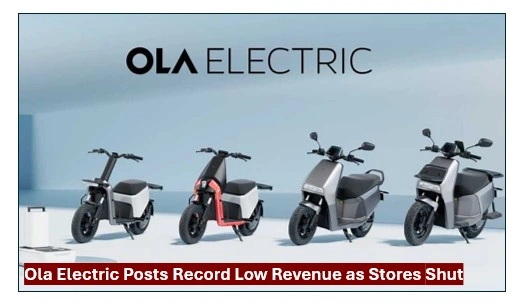

India’s market for electric 2-wheelers took a hit after Ola Electric reported its lowest quarterly revenue since going public. The company, which was once seen as the leader of the country’s push for electric vehicles, is now going through a period of change marked by declining sales, showroom closures, and staff cuts.
The numbers show how much pressure is growing on new mobility companies as competition intensifies, customer needs evolve, and financial markets become more cautious. The last quarter for Ola Electric has been less about growth and more about staying alive and fixing things.
A Sharp Drop hits the top line in Sales
When compared to the same quarter last year, operating income dropped by a huge amount from October to December. Deliveries of electric bikes dropped sharply, which cut income to a small part of what it had been.
The holiday season, which is usually a good time to buy a car, did not give many people the boost they expected. Analysts in the industry say that the slowdown was caused by a number of things, including tough competition from established makers, consumers who are spending less, and ongoing worries about service after the sale.
Even though the company’s losses got smaller from one year to the next, it was still a long way from making money. The bottom line kept showing signs of stress, which suggests that the change will take some time. Executives called it a reset instead of a crash, saying that the goal has changed from chasing growth to building a cost structure that can last.
Keeping costs down becomes important
The management has taken strong steps to save money. Plans for growth have been scaled back, buying processes have been made stricter, and the company’s own production skills have grown. The company wants to protect its profit margins and become less reliant on sources by making more parts in-house.
Another big idea is automation. Leaders think that technology can make things run more smoothly, cut down on mistakes, and eventually lower the point at which a business breaks even. According to estimates inside the company, it could stay stable with much lower monthly sales numbers than it needed to.
People who support the plan say that the company needs to change because it grew so quickly in its early years. Critics say that the problems we have now were caused by quick growth without equally strong support networks.
India’s EV Game-Changer- Simple Energy Unveils 400 km Range Electric Scooter
Losses of jobs and a smaller retail network
Job cuts have been one of the hardest parts of the reorganization. In the past few months, the company has laid off a lot of people as it tries to match its workforce with its lower demand. It has had an effect on teams in sales, customer service, and back-end processes.
At the same time, a number of actual stores have closed or combined. The old push to have a big presence in many stores is being replaced by a smaller size that will better fit current sales.
Even though these changes are painful, leaders say they have to be made. They say that if the company has lower set costs, it will be able to handle changes in the market and make smarter investments in product improvement. But employees and people who watch the industry say that repeated rounds of downsizing can hurt confidence, which could hurt performance.

I am a versatile content writer from the MP region, covering politics, business, crime, current affairs, entertainment, video games, and sports with clear insights, engaging analysis, and timely, reader-focused updates.









