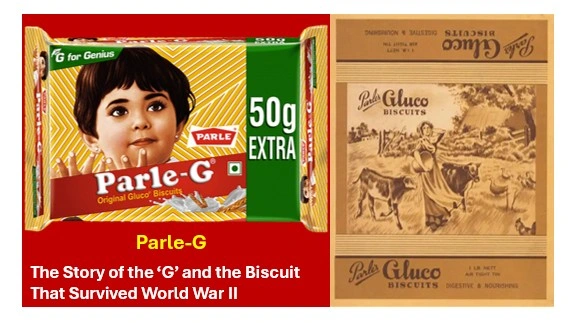

Despite being one of India’s best known cookies, many people still don’t know what the letter G in its name stands for. The first name for the cookie was Parle Gluco, where the G stood for glucose. It was made to be a glucose cookie that could give you quick energy and good nutrients.
After a while, the name was changed to Parle-G to make it easier to remember and to set the biscuit apart from others on the market. Over time, the company also used “G for Genius” in its ads, especially when promoting the biscuit as a healthy snack for kids. Today, the letter is a big part of what the name stands for.
What Mohanlal Dayal Chauhan saw
Founder Mohanlal Dayal Chauhan is at the heart of the Parle-G story. He founded Parle Products in Mumbai in 1929. The plant was built in the Vile Parle neighborhood, which is where the name Parle comes from.
At that time, most of the cookies India had were expensive and came from Britain. Mohanlal Chauhan wanted to make something that regular Indians could buy. He hired a few people to work in a small pastry shop and started making cookies and sweets.
Chauhan slowly grew the business with the help of his five kids. Not only did they want to build a business, but they also wanted to make Indian food that wasn’t imported.
When the famous glucose biscuit first came out
About 10 years after starting the business, Parle entered the cookie business. It launched a glucose cookie called Parle Gluco in 1939. The cake was easy to make, cheap, and made to be eaten every day.
The product became very famous very quickly because it was cheap and easy to get. In India, people started buying the biscuits for tea time, school snacks, and trips. Later, the company changed the product’s name to Parle G, but the idea behind it remained the same: a cheap, tasty biscuit that everyone could buy.
Getting Through the Hard Years of World War II
It wasn’t easy for the brand in its early years. During World War II, many businesses had big problems because they couldn’t get enough raw materials or their supplies were interrupted. It became hard to make biscuits because there weren’t enough fixings.
Despite the challenges, Parle managed to keep its operations going. The company weathered the storm of wartime difficulties and slowly gained ground in the market. Following India’s independence, a shift occurred, with consumers favoring domestic brands, which only increased the biscuit’s popularity. Parle-G became a staple in Indian households, valued for its affordability and consistent availability.
From a local favorite to a global phenomenon
Over the years, Parle-G transformed from a familiar name to a globally recognized brand. Later, a study by the market research company Nielsen revealed that Parle-G had become the world’s most popular biscuit by sales volume.
The biscuit’s popularity is mostly due to how cheap it is and how well it’s distributed. In India, you can buy Parle-G in millions of places, from big malls to small shops in villages. A lot of countries around the world also buy it. Parle-G remained one of the most popular sweets even as more foreign names entered the market, making the competition tougher.
Read more: How an Indian Maharaja Helped Turn Louis Vuitton Trunks Into Global Icons
A biscuit that became a symbol of culture
A lot of Indians think of Parle-G as more than just a cake. It has something to do with family tea time, childhood memories, and everyday life. It is easy to spot because its yellow wrapper, which features a picture of a young girl, hasn’t changed much over the years.
For countless individuals, the ritual of dunking a biscuit in milk or tea is a familiar one. Mohanlal Dayal Chauhan’s brainchild, an affordable Indian biscuit, has since achieved global acclaim.
Parle-G, a brand synonymous with Indian snacks, weathered the storm of World War II and has since ascended to the status of the world’s best-selling biscuit.

I am a versatile content writer from the MP region, covering politics, business, crime, current affairs, entertainment, video games, and sports with clear insights, engaging analysis, and timely, reader-focused updates.