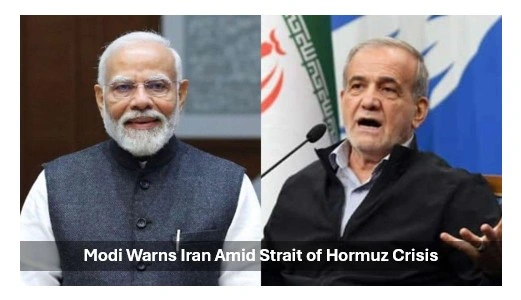

Tensions are rising around the Strait of Hormuz, one of the world’s most important trade routes. This has made things worse in West Asia. This small river is an important part of the world’s oil and gas supply, and if it is blocked, it could affect many countries, including India. Recent events have made people more worried about the safety and freedom of business ships in the area.
India has stepped up its diplomatic efforts to maintain stability and protect its economic interests as the situation worsens. The main goal remains to keep trade lines open and prevent any further problems that could disrupt supply chains around the world.
India is worried about attacks on its infrastructure
During the call, the Prime Minister expressed concerns about recent strikes in the region that targeted key assets. He said he strongly condemned attacks on key infrastructure in the region, which put regional stability at risk and disrupted global supply chains.
Modi also stressed the importance of keeping global trade routes open. He said, I reiterated the importance of safeguarding freedom of navigation and ensuring that shipping lanes remain open and secure.
Second Call Since the Beginning of the Conflict
The two leaders have talked twice since the war in West Asia started on February 28. Earlier, Modi talked to Pezeshkian about the serious situation in the region. He was worried about rising unrest, human deaths and damage to infrastructure. This message shows that India is working with key countries to protect global trade lines and end wars.
A clear message on how to keep the shipping lanes open
Modi’s strong stance on keeping trade lines open was one of the most important parts of his speech. He said that trade lines between countries must stay open and safe for everyone.
Diplomatic Engagement That Never Ends
The Ministry of External Affairs says that India is still working with Gulf countries, even though there are still issues. Along with Seyed Abbas Araghchi, who is also the minister of foreign affairs for Iran, S. Jaishankar has talked about how bad things are getting more than once.
There are issues with ships in the Strait of Hormuz
More than 20 Indian ships are still stuck in the Persian Gulf, making it hard for ships to get through the Strait of Hormuz. This situation raises concerns about the safety of the oceans.
Two Indian-flagged LPG ships, Shivalik and Nanda Devi, safely crossed the strait last week with 92,712 metric tons of LPG on board. Jaishankar said that India does not have a blanket arrangement with Iran that allows Indian flagged ships to pass through. He said that every ship movement is a separate event.
In an interview with the Financial Times in Brussels, he said that talks with Tehran on safe passage are ongoing and yielding results. He cited the two ships’ movement. India’s energy and trade sectors are directly affected by the events unfolding in the Strait of Hormuz. This river transports most of the nation’s oil and gas, so keeping it open is crucial.
The government has said that strikes on private ships are not okay and are very dangerous to people’s lives and the economy. There are risks, but there have been some good signs. Some ships flying Indian flags appear to have crossed the Strait safely, suggesting that steps taken by other countries are helping to calm things down.
Read more: Iran’s Safe Corridor Plan Offers Lifeline to 22 Indian Ships Trapped in Hormuz
India tries to bring about peace and stability
India is still calling for all sides to talk things out and find a peaceful answer. Modi’s talk with the Iranian President is part of a broader plan to use diplomacy to ease tensions and ensure ships can move safely.
Iran has also said what it thinks and asked for an end to violence in the area. Both sides have stressed the importance of maintaining stability and avoiding further fighting.
India’s plan is to look out for its own best interests and keep its ties with other nations in check. It talks to other countries to keep things safe in a place that’s important for international trade.
Read also: Ship travelling to India attacked in Strait of Hormuz
A problem that affects many people around the world
The trouble with the Strait of Hormuz affects the whole world, not just one place. Any problems here could affect how much oil is shipped, how much it costs, and the world economy as a whole.
Modi’s strong message makes it clear that all countries must follow international trade rules and avoid actions that could harm global trade. Cooperation, negotiation and keeping important sea routes open for everyone are still the major goals, even though emotions are still high.

I am a versatile content writer from the MP region, covering politics, business, crime, current affairs, entertainment, video games, and sports with clear insights, engaging analysis, and timely, reader-focused updates.