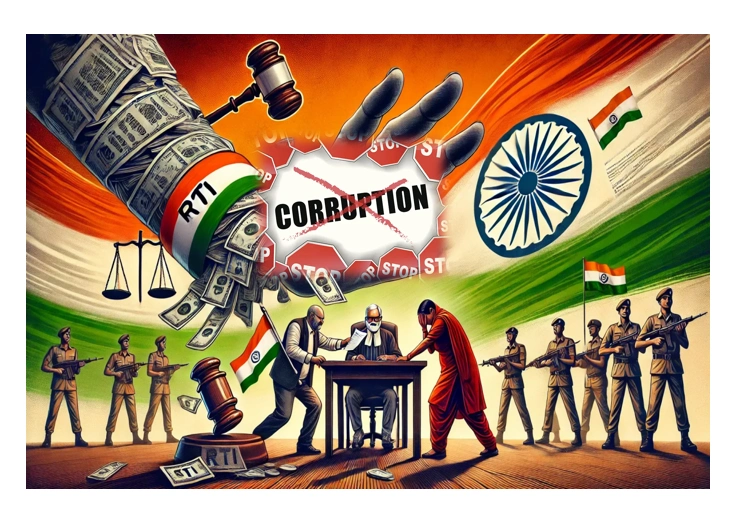

New Delhi, March 24, 2026 — In a globalised world where financial crimes no longer take note of boundaries, the fight against corruption is no longer a national obligation, but a game of international chess. The heart of that worldwide endeavor was in New Delhi this week as India hosted the 12th Steering Committee Meeting of the Global Operational Network (Globe Network).
The three-day summit, that commenced on March 23 and is yet to end tomorrow is a historic occasion in international law enforcement. Convened by the top agencies in India the Central Bureau of Investigation (CBI) and Enforcement Directorate (ED), the meeting was attended by a select few 15 steering committee countries in order to perfect the tools to be used in tracking illegal wealth around the world.
One Front in an International World
The GlobE Network is an outgrowth of the Riyadh Initiative in the context of Saudi Arabia becoming the G20 Presidency, and the idea of establishing a one-stop hub of anti-corruption practitioners. Nowadays, it has grown to accommodate 135 member countries and 250 member authorities all working under the umbrella of the United Nations Convention against Corruption (UNCAC).
To India hosting this 12 th session is not merely a diplomatic move; it is a confirmation of its increasing strength as a first responder in world financial inquiries. CBI Director Praveen Sood made a very personal appeal to the representatives, which I felt every investigator in the room could relate to.
Corruption is nowadays transnational, advanced and more technologically enabled. It is not an option but an imperative that we have to collaborate at the international level to ensure that our world is clean to live in, that is what Sood observed in his key note speech.
Read also: Tap water reaches over 16 crore homes under Jal Jeevan
More than numbers: asset recovery as the restoring of faith
Although the rhetoric of global conferences may seem to be abstract, the information presented by the ED Director Rahul Navin given me a chilling view of what is at stake. Navin unveiled a shocking number, the Enforcement Directorate has helped recover assets valued at about 5.6 billion (or ₹52,329 crore) of victims of financial fraud.
The point at which the money goes is where the money becomes human. These recoveries have not found their way into government coffers in India, they have been refunded to banks and small investors swindled by big-time fugitives and complicated Ponzi schemes.
Success stories: The Spain connection
The meeting was also used as an opportunity to showcase viable victories. A recent accord between India and Spain was one such human success story. The informal links that the GlobE Network provided Indian investigators allowed them to exchange real-time intelligence with Spanish colleagues. This fast movement resulted in the freezing of assets that would otherwise have been shell-layered using offshore accounts.
This is the difference between the Globe Network and the rest of the practitioners: the so-called practitioner-to-practitioner approach. It transfers the discussion out of the lofty diplomacy and into the hands of the men on the ground- the men who must know where to knock on the door in the foreign capital at 3:00 AM.
Read also: PM Modi becomes the longest serving head of the government in India
The Global Safety Net
The Delhi summit agenda is also heavyhanded and includes the strategic direction 2026 and beyond. The 15 steering committee countries such as Brazil, China, Italy, Nigeria, Spain and UAE are now discussing:
The Model Cooperation Agreement: A template to further simplify bilateral information sharing.
- Operational Priorities: Discovering the new threats such as AI-driven fraud and crypto-laundering.
- Sustainability: The network should be a solid, stable presence of the UNODC (United Nations Office on Drugs and Crime) system.
The GlobE Network Chair and Coordinator was deeply appreciative of India in that the leadership of this country is when the network is celebrating the fifth anniversary of existence. The election of India to the Steering Committee in 2024 was regarded as a concession to its intensive domestic enforcement framework, where it has registered more than 6,500 cases and attached assets of approximately 1.85 lakh crore during the last ten years.

A versatile writer mainly works on trending news, daily updates from politics, business, crime, current affairs and entertainment.