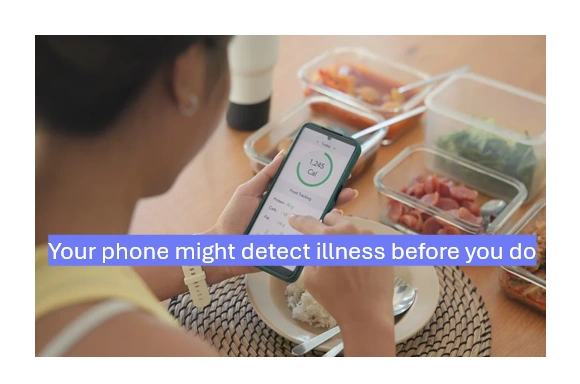

The average citizen spends approximately 100 times per day on his smartphone. We listen to them to manage our playlists, find our way in new streets, and remain attached to the people we love. However, in a certain category of patients, the ones who are living under Idiopathic Pulmonary Arterial Hypertension (IPAH) clouds, the same machine could quite soon turn into a life-saving guardian angel.
The medical data science breakthroughs in the recent past have shown that the sensors already humming in our pockets, which are accelerometers, gyroscopes and GPS, are capable of detecting the very minute, microscopic movement changes, which are indicative of IPAH, even before a patient ever feels sick enough to see a doctor. This is not merely the victory of technology, but it is a hopeful sign to a community that has long been lost in a diagnostic wasteland.
The Invisible weight: A Comprehension of the IPAH struggle
The cruelty of Idiopathic Pulmonary Arterial Hypertension must first be understood in order to know the importance of this digital evolution. It is a rare progressive disorder and that is marked by the high blood pressure in the lung arteries. IPAH is a hidden disease unlike the normal hypertension that can be easily detected by use of a cuff. The most frustrating part is perhaps the label of the idiopathic- the cause is unknown.
Life starts to narrow down to the patient. It begins with mild breathlessness during a flight of stairs, or the remaining tiredness after a shopping trip. Due to the vagueness of these symptoms, they are usually ignored as being out of shape, asthma, or anxiousness.
The tragedy of IPAH is that when the clinical signs get bad enough to make a specialist referral, the right side of the heart is usually already in failure. The path of the disease can only be diverted through early intervention.
Read also: What happens to the brain and body if you stop using mobile phones
Digital Biomarkers: The Silent language of the body
A concept known as digital biomarkers is the key to changing to smartphone-based data usage. Whenever you take a step, your phone is tracking the pace of your step, the strides of your steps, and the strength of your steps.
It was discovered that the developing IPAH patients have so-called micro-shuffles and longer rest periods, which are barely noticeable to a human eye but can be easily seen by an algorithm. Doctors are able to view a digital twin of the physical deterioration of a patient by assessing passive data, or information that is gathered without requiring the user to take any action.
How the Technology Works
- Gait Analysis: A decrease in stride length is detected, and the shortness of breath is usually compensated.
- Circadian Rhythm Shifts: Observing whether a patient is napping more during the day or moving less in the evening hours because they are tired.
- Heart Rate Variability (HRV): The data can be combined with a smartwatch to reveal the effort with which the heart is forced to recuperate after a small activity.
This is not a robot that is taking over the role of a cardiologist but rather a time machine to the cardiologist. In case the data indicates that the mobility deteriorates by 10% within 3 months, it raises a red flag to have a formal echocardiogram, or a six-minute walk test (6MWT).
Read also: Smartphone Charging Guide- How Quick Charging Hurts

A versatile writer mainly works on trending news, daily updates from politics, business, crime, current affairs and entertainment.