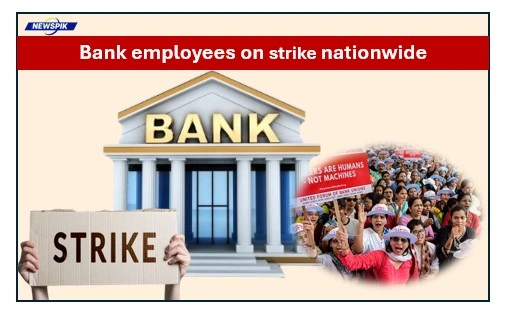

On January 27, 2026, the United Federation of Banks and other bank representative organizations across India have called for a nationwide strike, causing major disruptions in public-sector banking services throughout India. Workers at these institutions obeyed the call of their unions and did not report to their usual places of work, which has resulted in either complete or partial closure of many branches in virtually all areas of the country, including places where banks are located in hub cities, such as Jharkhand and Guwahati.
While the strike has caused delays in day-to-day operations of banks, such as cash deposits and withdrawals, cheque clearances and administrative functions, the majority of banks continue to offer electronic services as normal.
Union representatives claim the strike was a significant success due to high levels of membership participation, suggesting a continued level of discontent among bank employees in India.
Who called the strike?
The United Forum of Bank Unions (UFBU)–the main coordinating body for 9 Of the most prominent unions representing the officers and employees of Public Sector Banks–organized the protest.. The UFBU contains the All India Bank Employees’ Association AIBEA, All India Bank Officers’ Confederation AIBOC, National Confederation of Bank Employees (NCBE) etc.
All these unions represent several hundred thousand bank workers across India who are working together to achieve Greater Reforms in Working Conditions.
The fundamental reason for the protest is because of a long-standing demand for Immediate Benefit–the Establishment of a 5 Day Working Week for Public Sector Bank Employees. Unions are pushing for all Saturdays to be observed as Holidays, because they view this as a much-needed time to achieve a Work Life Balance.
The Union Leaders Point out that the Proposal was already Agreed “in Principle” by Indian Bank’s Association (IBA); during the 12th Bipartite Settlement (March 2024), They are prepared to work slightly longer hours from Monday- Friday to maintain the total hours they currently work!
As per the current working pattern, banks across the country are typically open on first, third and fifth Saturdays of each month however unions wish for all Saturdays to be holidays. Therefore, this would make the hours of public sector banks similar to that of some of the other government departments/financial institutions that currently operate a five-day working week.
Negotiations were unsuccessful and have now escalated into Industrial Action
The strike began after the union representatives, as well as other Association members and the governments representatives were unable to come to any mutual agreement following unsuccessful discussions regarding the five-day work week between January 22–23 with the Chief Labour Commissioner.
Union Representatives explained that the protest is not to disrupt clients but rather highlight their worker related issues and systemic problems including excessive demand and exhaustion from continuing to be overworked.
Impact on Banking Operations
The strike has greatly impacted the physical banking services of many of the largest public sector banks (including the State Bank of India, Punjab National Bank, Bank of Baroda, Canara Bank, Union Bank of India, etc.) Many branches were closed or operating with minimal staff, which made it impossible for customers to perform basic banking tasks in person.
However, the majority of digital banking channels (depending upon the available types) and self-serve channels (including UPI, Internet Banking Mobile Banking and ATM services) continue to function, but, in some cases due to limited employee movement, some ATMs may have difficulty offering cash.
In contrast, many of the privately owned banks (including HDFC Bank, ICICI Bank and Axis Bank) will most likely continue to operate in the normal course of business, since employees of these banks do not typically belong to the UFBU union.
Guidelines for Customers during the Strike
With the vast majority of branch offices closed and the rest understaffed, customers are advised to:
- Use Digital Banking channels whenever possible for payment, transfer and other routine transaction.
- When you expect to do anything important at a branch location that will require an over-the-counter transaction be sure to plan ahead accordingly.
- Anticipate longer processing times for Cheque Clearances and Loan Payment Processing.
- Many Banks have provided Public and Financial Markets with Information about their Contingency Plans, but it’s expected that there will still be issues during the Strike Day.
India central bank to tolerate weaker rupee as inflows dry up, sources say
Why It’s Important to the Banking Work-Life Balance debate?
The Strike raises Important Issues regarding Work-Life Balance and Workers’ Rights in the Indian Banking Industry. Bank Workers Believe that 6-Day Work Weeks are no longer feasible because of the Increased Use of E-commerce and Overall Increased Workload; it would put too much stress on Employees and would create Difficulties in Updating the Banking Workforce to Modern Employment Standards.
Employees are promoting the Idea Among Bank Workers that this type of Schedule would be Beneficial since All of the Similar Public Service Organizations as well as Many Private Corporations have Proven that a 5-Day Work Week Produces the Same Results, if not Better, than a 6-Day Work Week. Bank Employee Unions are saying that by Adopting This Model, the Banking Profession will be Even More Viable Long-Term.
What Happens Next?
The Banking Industry, Consumers, and Government Officials are going to be Closely Watching the Outcome of the Strike and the Government’s Response to this Issue. If this Issue is not Resolved, Unions will Continue to Take Further Action Regarding These Issues and could Directly Affect Future Labour Policy and Work Practices Within One of India’s Most Important Services.

I am a versatile content writer from the MP region, covering politics, business, crime, current affairs, entertainment, video games, and sports with clear insights, engaging analysis, and timely, reader-focused updates.