The central bank of India is ready to let the rupee weaken as the nation struggles with dwindling foreign inflows, a widening trade deficit, and global economic strains, three sources close to the Reserve Bank of India told Reuters. The shift is a significant shift to the aggressive position of the RBI that had been maintaining the currency by buying dollars at a steady rate.
The rupee has been dropping 1.3% in the past seven sessions and reached a historic low of 90.42 against the dollar, and currently, it has lost 5.5% so far this year, being the worst-performing major currency in Asia.
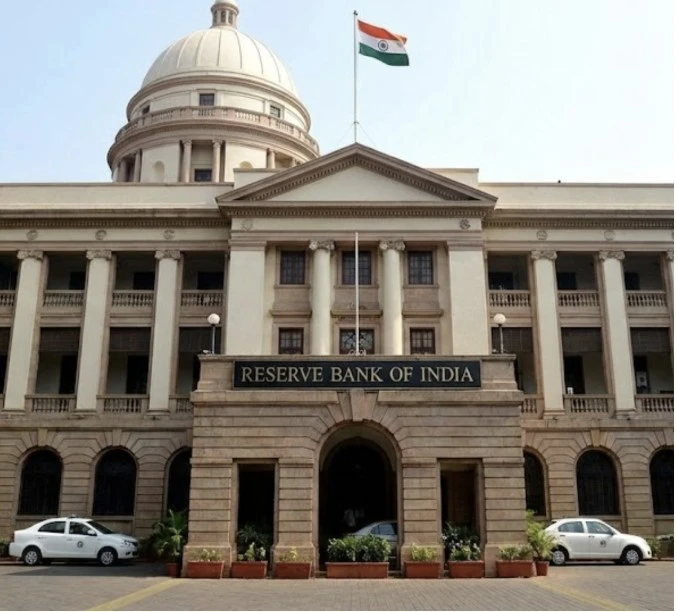
RBI Signals Focus on Volatility, Not Defending Specific Levels
The RBI will now step in primarily to avert any sudden volatility or speculative accumulation and is no longer obligated to defend a certain exchange-rate floor.
It makes no sense to use reserves when everything is fundamentally against the currency,
One of the officials, who preferred not to be identified due to the sensitivity of the topic, said so.
Until recently, the central bank has been using excessive dollar sales to stabilize the rupee; however, the authorities are now admitting that macroeconomic conditions are mounting on the currency. The RBI responded to an email requesting a comment, but did not provide a statement on hand.
A second source indicated that the central bank would be more flexible to allow currency to be flexible as and when fundamentals and real dollar demand would determine.
Foreign Outflows Intensify Pressure on the Rupee
The major weakness that the rupee has faced is the extreme decline in foreign investor inflow.
India has emerged as one of the most affected markets in terms of equity outflows, where foreign institutional investors have already sold close to $17 billion of stocks in India in the current year alone.
At the same time:
- Foreign direct investment has slowed,
- Offshore fundraising has weakened, and
- Trade activity has softened.
Each of the aspects is adding to the constraining dollar supply.
The violation of the psychologically significant 90-per-dollar level attracted much market attention, and there were fears that speculative traders could seek to drive the currency weaker. A third source, however, claimed that the RBI would move fast to stamp out speculative positions should the need arise.
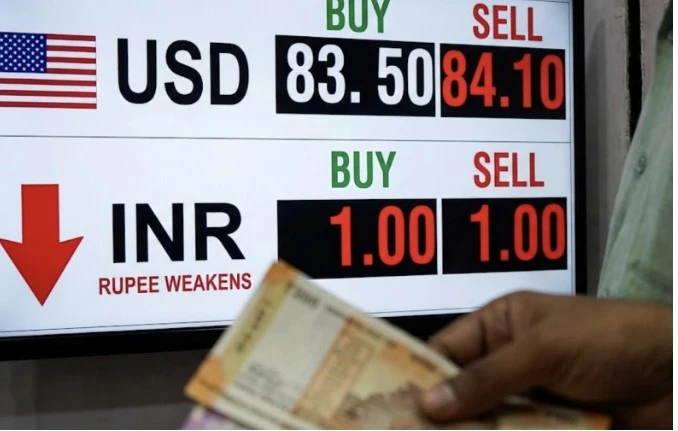
Investors Remain Cautious Despite India’s Growth Momentum
Although a weak rupee will give the central bank space in the local monetary policy, there is a threat of reducing the appetite of foreign investors.
A depreciating Indian rupee is certainly a bad thing in regard to investing in Indian equities, and it is one of the reasons why we have only a neutral weight in India compared to our benchmark.
According to Sam Kongrad, an investment manager at Jupiter Asset Management, which deals with Asian equities.
Although India boasts of good stock-market returns, the MSCI India Index is 7% this year, currency weakness has hurt the returns of dollar-based investors. The dollar-based performance of the index is only under 2 per cent compared to the 80 per cent increase in South Korea and 30 per cent in Hong Kong, and this shows how the losses associated with foreign exchange are now affecting competitiveness.
In this case, Kenneth Akintewe, the head of Asian sovereign debt at Aberdeen Investments, stated that developments in the U.S. tariff talks and potential entry to the global index would be pivotal in restoring foreign flows.
Akintewe said the foreign flows will be highly required, and that a solution to tariff matters can not be timely enough.
Rupee Weakness Contrasts With India’s Strong Domestic Economy
The depreciation of the rupee occurs amid good domestic economic performance. India’s GDP grew by 8.2 percent in the July–September quarter, the best among most economies in the world. The disconnect indicates a growing lack of fit: the domestic economy is quite strong, yet outside demand is poor, and the global risk aversion still pulls down on the capital flows.
Economists believe that until global inflows are strong enough and the trade deficit is narrowing, it would be more convenient for the RBI to let the rupee appreciate slowly rather than spend its reserves wildly.
Controlled Flexibility as Global Uncertainty Persists
Analysts believe that the RBI will follow a controlled-flexibility policy, that is, not letting the currency run out of control but letting it represent global and local fundamentals. As external pressures are expected to remain strong until at least early 2026, traders project the rupee to weaken unless foreign inflows rise significantly.
At the moment, the central bank seems to have its hands full containing volatility, holding reserves, and maintaining market stability – even at the cost of living with a historically weaker rupee.

I craft sharp movie reviews and trend analysis, known for deep research, clear insights, and compelling storytelling across the latest in film and pop culture.