On Sunday, Kashmir passed into the lowest stage of winter called Chilla-e-Kalan, when the area was engulfed by heavy rain and snow, resulting in a drastic drop in temperature and transport blockage in the higher altitudes. The 40-day span, up to January 31, is usually characterized by extreme cold temperatures, frozen water bodies, and massive snowfall in the Valley.
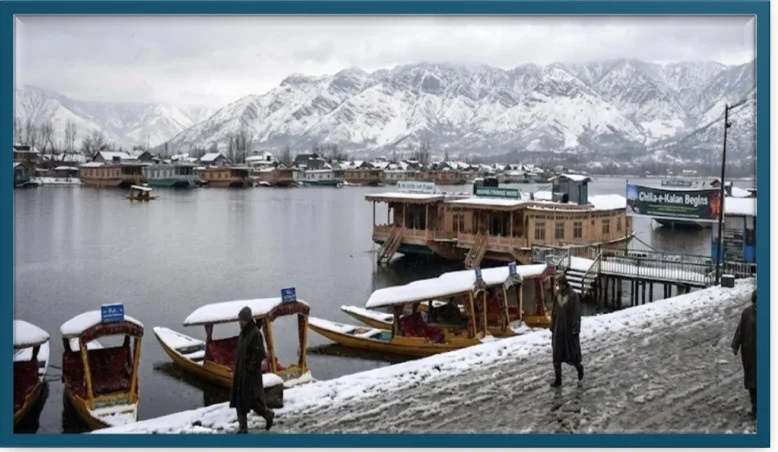
Snowfall reported in the North-Western Part, Rain in the Plains
There were moderate to heavy snowfalls in high districts such as Gulmarg, Sonamarg, Gurez, and Kupwara, and Srinagar, and the adjoining districts experienced intermittent rainfall in the early morning. Local weather officials predict that fresh western disturbances will increase precipitation within the next 48 hours.
The MeT department reported that the effects of the weather system would be felt the most in the north and central parts of Kashmir, where travellers are advised to watch out due to slick roads and low visibility in mountainous routes.
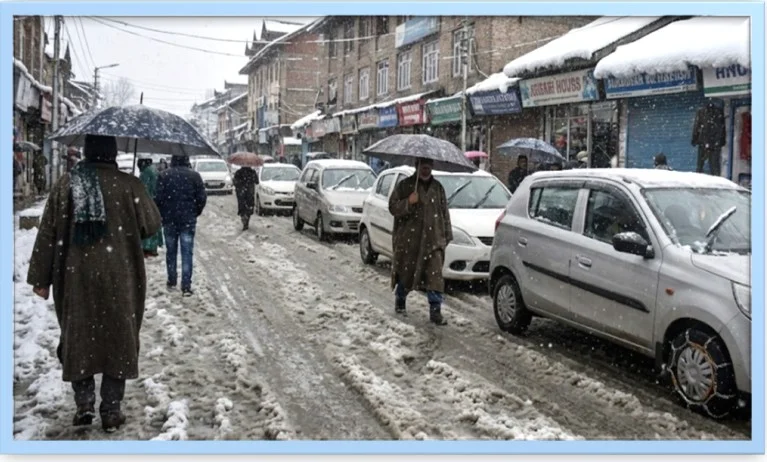
The temperature falls below the freezing point
As the season of Chilla-e-Kalan had arrived, the night temperature had fallen throughout the Valley, and in most of the districts had become below freezing. Gulmarg registered one of the lowest temperatures of the season till now, as Pahalgam plunged to sub-zero temperatures after being covered with fresh snow.
Srinagar had temperatures slightly above freezing during the day, and authorities anticipate that the temperature will drop further as the weather conditions are accompanied by increasing precipitation. Authorities indicated that water supply lines, which were already weak at this time of the year, might be further strained in case of further freezing.
Flight cancellations likely to Increase with Weather.
Even though the main highways, such as the Srinagar-Jammu highway, were open, slippery roads were being reported in the hilly areas, leading to traffic advisories by the police and the disaster management departments. Flights in the air did not go to waste and there were no big cancellations, but aviation officials cautioned that visibility might vary as cloud cover increases.
Governments have encouraged people to avoid traveling long distances at night and especially in high areas. In the north Kashmir areas, farmers and orchard owners cheered the snowfall claiming that early winter precipitation could help in apple production and recharge of groundwater.
Chilla-e-Kalan: The Cultural Connotation and Ugliness with the Reality.
The Chilla-e-Kalan has much cultural and weather importance in Kashmir, as it is not only the lowest temperature of winter but also the time of folk customs and food, and fellowship time spent at home. Local residents typically store rations; insulate their houses, hoard firewood and kangri fuel a week or more ahead of time.
Although the season was beautiful, residents were worried about increasing power demands and power outages, which have been a significant issue during extended cold periods. On Sunday morning, several neighbourhoods reported unscheduled power cuts, but the authorities said they were working to restore power.
Outlook suggests further Snowfall.
According to the meteorologists, the coming two days will be covered with an extensive snowfall, with another active weather system predicted later next week. Although the season is normal, the authorities warn that intensity can vary across districts, and higher elevations might be more severe.
With Kashmir getting into the deepest of winter, everyday existence is anticipated to grind to a halt under the load of snow, frost, and bitter cold winds, which is the trademark of Chilla-e-Kalan. The impact of the season will be felt years after it ends in January, and the cold phases will be felt as far back as February and March.

A versatile writer mainly works on trending news, daily updates from politics, business, crime, current affairs and entertainment.