
If you’ve been thumbing through your social media feed this week, you probably stopped short in front of a video that appears as though it were shot on the set of a big-budget fantasy epic, or more realistically that someone has accidentally hit an overzealous high-definition filter.
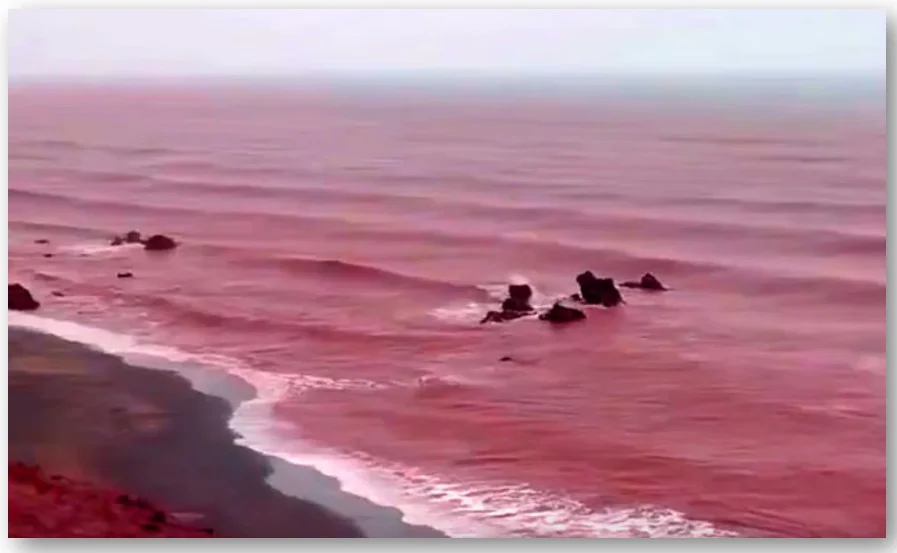
In the video, water gushing down a coast during a heavy rain does not create the expected mucky puddles. Instead, the land itself appears to bleed in thick crimson rivers that flow into the turquoise waters of the Persian Gulf.
The Day the Persian Gulf Became Red
Colour is not a stranger to Hormuz Island. Hidden in the Strait of Hormuz, this geological masterpiece has colorful soil that’s as colorful as it gets, clocking in at bright shades of yellow and orange to deep purples and whites. But it is the Red Beach (Sahel-e Sorkh) that really boggles the mind.
Also read:How China’s ‘Risky, Dangerous’ Brahmaputra Mega Dam Could Impact India
Under normal conditions, the sand here is a glittering deep ruby. But when the winter rains arrive — and they do so relatively rarely in this arid area — that transformation is complete. As rainwater raced down the island’s mineral-laden cliffs on Tuesday, it carried large quantities of fine red sediment. This runoff colored the water not just in a tint; it dyed near-shore waves a thick, opaque crimson that violently contrasted with the deep blue of the deeper Gulf waters.
Adming among these red “rivers” when it met the shore, the viral video has racked up millions of views on X and Instagram: capturing precisely the moment this coastline discovered a whole new shade of red. The immediate response from many viewers was shock, often laced with jokes (though for some, this was no laughing matter) referencing biblical banned “blood rain” prophecies. But for its residents and geologists who worked in this land, it was just nature showing off its most dramatic chemistry set.
The Science of the ‘Bloody Rain’ Illusion
Though the images may look otherworldly, the explanation lies deep within Earth’s crust. The answer may lie in a mineral called hematite, a type of iron oxide. Hormuz Island is essentially one gigantic salt dome, a teardrop-shaped intrusion of rock salt and other minerals that over millions of years has jutted itself up through the Earth.
The soil, called gelak or golak in the local dialect,s is so heavily infused with iron oxide that it functions almost like a paint. It’s the same mineral producing Mars’s rust-red color. And then when the island gets heavy rain, water becomes a solvent and a vehicle that takes this hematite-rich earth into lower elevations.
Strangely enough, hematite rusts in water quickly on contact with moisture unlike most other iron and the color is enhanced. As those fine particles are suspended in the seawater, they absorb shorter wavelengths of light (the blues and greens) and reflect back to our eyes longer wavelengths (reds). The result is a coastline that looks as if it has been dunked in a vat of red ink.
A Landscape You Can Taste: The Culture of Red Dirt
One of the most intriguing things about Hormuz Island is that the red isn’t just something people look at — it’s also something they live with, and even eat. And unlike the many other mineral-rich earths that are toxic, Hormuz’s “gelak” occupies a tradition and cuisine in local lore.
If you visit a local home on the island, you may be given Tomshi, a thin soft bread. The secret ingredient? A sauce from the red earth even. Villagers combine the mineral rich earth with orange peel, fish and water to make a delicious seasoning that they call “Suraq.” Although contemporary scientists warn about the high concentration of heavy metals in the soil, for the residents of Hormuz, the red earth is a gift from the land that seasons their lives — and through history too.
And outside the kitchen, this soil is utilized in making cosmetics, ceramics and as an industrial dye. Washing away this precious resource out to sea with the rain is a direct testament to how rich and wild this island can be.
What This Viral Moment Means in 2025?
In a time of digital weariness, the viral popularity of the Hormuz “blood rain” video reflects our collective hunger for something real and extraordinary. As we increasingly rely on technology to manufacture beauty, perhaps it is nature’s ability — the power to “drop a fire filter” onto an ocean, as one social media user put it — that continues to be the ultimate draw.
For the tourist industry in southern Iran, though, these viral moments are a double-edged sword. On one level, they bring sorely needed awareness to the island’s unparalleled natural beauty and the “Rainbow Island” brand. On the contrary, they are grim reminders of how vulnerable these environments are. Heavy storms, most likely exacerbated by changing weather patterns across the globe, have done their part in washing ashore to create this dazzling display — a magnificent sight that really is quite beautiful when all is said and done — but they also bear the responsibility for sweeping each cove clean with reddened waters before heading back out into deeper sea.
After the tide finally washes the red debris away and the Persian Gulf goes back to sapphire, memories of such images will remain in millions of minds. It’s a fleeting masterpiece — a reminder that the most beautiful things on earth are frequently those we cannot possibly fathom, control or resist sharing.

A versatile writer mainly works on trending news, daily updates from politics, business, crime, current affairs and entertainment.









