
The fate of India’s roughly ₹23,000-crore online skill-gaming industry now rests on the decision of a larger Supreme Court bench, pushing back industry hopes for urgent relief. In a significant procedural move, the Supreme Court has indicated that the constitutional challenge against the central government’s Promotion and Regulation of Online Gaming Act (PROGA), 2025, will be referred to a three-judge Bench and is now likely to be heard only on January 21, 2026.
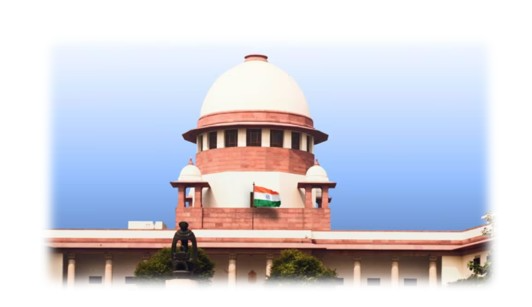
This deferral, despite passionate pleas from industry representatives citing an ongoing sector-wide shutdown, underscores the constitutional weight of the matter at hand.
The Question of Legislative Competence
The core reason for the Supreme Court’s decision, as flagged by the Bench led by the Chief Justice, is the nature of the challenge itself. The petitions, including one filed by Head Digital Works (operator of A23), question the vires of a statute—the power of the legislature to enact the law.
- Federal Fault Line: The fundamental dispute centres on whether the Union Parliament was constitutionally competent to pass PROGA, 2025, which effectively imposes a ban on real-money online games. Historically, activities like ‘betting and gambling’ fall under the State List (Entry 34), granting exclusive legislative authority to the State governments.
- The Larger Bench Requirement: Cases that challenge the constitutional validity of an entire Act or involve complex questions of federal legislative competence are generally, as a matter of judicial policy, assigned to a larger three-judge Bench for a more definitive and authoritative pronouncement.
The Supreme Court’s decision to move the case to a larger Bench elevates its significance from a typical regulatory dispute to a major constitutional test of federal powers in the digital age.
Read also
The Industry’s Cry: Financial Paralysis
The Supreme Court’s firm insistence on the January listing comes at a heavy cost to the online gaming sector. Petitioners argued for an urgent, earlier hearing, stressing that the industry is facing an “unprecedented shutdown” and “civil death,” even though PROGA, 2025, has not been formally notified or brought into force.
- De Facto Enforcement: Since PROGA’s publication in August 2025, banks, payment gateways, and intermediaries have withdrawn services or frozen settlements due to regulatory uncertainty. This withdrawal has created a state of de facto enforcement of the law, paralysing operations for major companies.
- Economic Havoc: Head Digital Works submitted that it has had virtually no revenue for nearly three months while facing massive operating costs. The company’s workforce has shrunk dramatically, and foreign investors have already written off substantial investments (Clairvest wrote off ₹760 crore), citing the adverse regulatory climate. The entire industry, employing an estimated 200,000 people, is now in limbo.
The Intertwined Legal Battles
The challenge to PROGA is intrinsically linked to another critical case already argued before a separate Supreme Court Bench: the Gameskraft batch. That case reserves judgment on whether states have the constitutional authority to regulate or prohibit online gaming.
Petitioners argue that the questions are two sides of the same coin:
- Gameskraft Question: Do the States have the competence?
- PROGA Question: Does the Union Parliament have the competence to overrule them?
The Supreme Court is inclined to group all PROGA-related matters and list them in January, potentially alongside the reserved judgment on the state-level appeals, to holistically resolve the contentious issue of who—the Centre, the States, or both—holds the ultimate power to regulate the online skill-gaming ecosystem. The ruling will not only determine the sector’s survival but also clarify the complex legislative boundaries between the Union and State governments for the entire digital economy.

I am a passionate content writer from the Chandigarh–Panchkula region. I am curious and love exploring diverse topics. At DailyBarta.in, I primarily write about video games and sports, bringing readers fresh insights, engaging analysis, and easy-to-understand breakdowns of the latest trends.









