With the continuous interest of the environmental activists and the political opposition on the future of the Aravalli Range, on Monday, a government-level preparedness to specific government planning on the future was made known by Union Environment Minister Bhupender Yadav who said that the government was preparing a district-by-district plan to clearly define mining and non-mining areas in the ancient hill system. He emphasized that no new mining fields would be opened with the exercise, and no new mining permits would be issued.
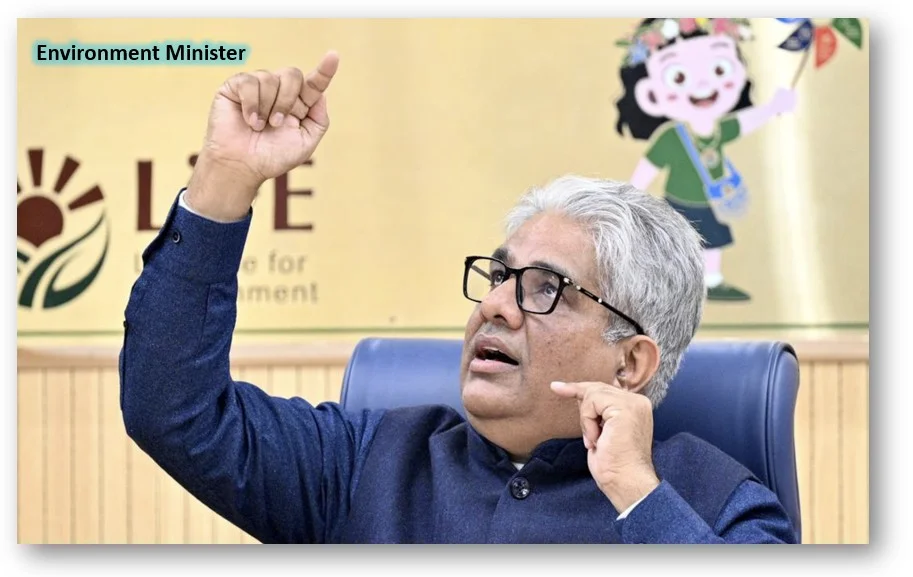
In an interview with the press in New Delhi, the minister indicated that the Indian Council of Forestry Research and Education ( Indian Council of Forestry Research and Education ) will shortly send a comprehensive district-by-district report on which hills ought to be considered contributing to the Aravalli Range, specifically in reference to mining.
Minor Expansion of Mining, Minister Clarifies
The explanation is in response to the overall criticism and social media backlash, which assert that the Centre’s updated definition of the Aravalli Range might permit large-scale mining in ecologically sensitive regions. Denying such allegations, Yadav said that the government was merely doing what a Supreme Court order dated November 20 ordered: a detailed Management Plan on Sustainable Mining (MPSM) be prepared of the whole area of Aravalli.
According to Yadav, the perception that large tracts of the Aravallis are being made available for mining would be utterly wrong, and the current protection would be upheld.
Sustainable Mining Plan Supported by the Supreme Court
The MPSM will demarcate the areas where mining is strictly prohibited, where limited and highly regulated mining will be allowed, and where ecological restoration and rehabilitation will be required as per the court’s instructions. The plan will also map the wildlife corridors, evaluate cumulative environmental impact, and arrive at the ecological carrying capacity of the area.
Such a framework has been emulated by the court based on the Saranda forest management plan in Jharkhand, and it stresses the importance of scientific management and transparency in all decisions made on mining.
Uniform Definition of Aravalli Hills
One of the perennial problems of the regulation of mining in the Aravallis has been that different states have not come up with a consistent definition. A professional committee of the Environment Ministry has suggested introducing the 100 metres above local relief criterion, which has been in practice in Rajasthan since 2006.
Moreover, the landforms found within a range of 500 metres of two adjacent hills, which are at least 100 metres long also fall under the Aravalli system. According to such a definition, such areas will not be subject to the granting of mining leases regardless of their respective height or slope.
Although the total area of the hills that fall within this category is yet to be determined by the government, according to Yadav, only some 237 square kilometres of the Aravalli region is currently assessable for mining out of the approximate area of 147,000 square kilometres.
Ecological Significance of Aravallis
The Aravallis are one of the oldest mountain ranges in the world and have been very important in the protection of the Indo-Gangetic plains against desertification as they serve as a natural barrier to the eastward migration of the Thar Desert. The range plays a crucial role in recharging groundwater, deep water, moderate climate, and preserving biodiversity in Rajasthan, Haryana, Delhi, and western Uttar Pradesh.
Regulatory clarity and strict enforcement have become essential following repeated warnings from environmental experts that uncontrolled mining activities could permanently impair these functions.
Striking a Balance between Development and Conservation
The Environment Minister decided that the exercise of demarcation of the district-wise is intended to introduce clarity, consistency, and scientific rigour to mining regulation in the Aravalli Range. He repeated that the policy of the government is aimed at sustainable development without sacrificing ecological security.
It is not irresponsible exploitation but good governance, Yadav said, in an effort to assure stakeholders that the environment remains a priority when making policy concerning the Aravalli.

A versatile writer mainly works on trending news, daily updates from politics, business, crime, current affairs and entertainment.