One of the oldest geological features in the world, the Aravalli Range is now at the heart of an intense environmental struggle. Commonly called the ”green lungs” of Northwest India, these hills spread over Gujarat, Rajasthan, Haryana and Delhi. For thousands of years they have served as a natural defence against the Thar Desert and an essential groundwater recharge zone.
Today, however, the Aravallis — for all the wrong reasons — are in the news. A toxic mix of rapacious urban sprawl, illegal mining and changing legal definitions have pushed this sensitive habitat right to the edge of ruin. As the climate emergency escalates, environmentalists are sounding an urgent call for action by the government to protect the mountain range’s survival ahead of corporate profit.
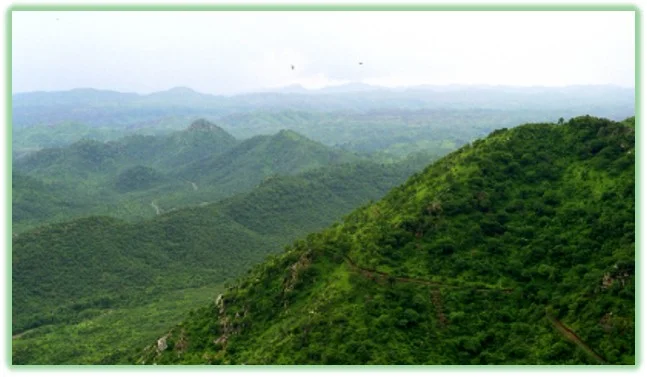
The Aravallis – The Bodyguard Against The Delhi Air Why the Arbavalli Faces An Existential Crisis
The sudden rediscovery of the Aravallis isn’t just about saving a picturesque snoozefest; it’s a fight, no metaphor intended, for breath and water in India’s National Capital Region (NCR). A number of things have driven this mountain range to a point of emergency:
The Dilution of Forest Laws
The present din is in no small measure fuelled by the recent change to the Forest Conservation Act. It is feared by environmentalists that these modifications make it simpler for state governments to sell protected land for things like infrastructure or commercial real estate not related to forestry. By redefining what classifies as a “forest”, large parts of the Aravallis in Haryana (which were earlier protected under the Punjab Land Preservation Act or PLPA) can potentially be made available for construction.
The Menace of Illegal Mining
There has been no let up in the illegal stone and quartz mining despite a series of bans by the Supreme Court. Satellite imagery can offer a stark presentation of “missing” hilltops that have been ground down to dust in supplying raw materials for the construction industry. This doesn’t just trash the countryside; it scrooges up the natural drainage channels that refill the groundwater for a water-starved region whose principal cities, Gurgaon and Faridabad, are enduring more than ever.
Desertification and Dust Storms
The Aravallis are a crucial “green wall” for keeping at bay the Thar Desert from intruding upon the fertile plains of North India. The barrier is weakening as we see this extraordinary thinning of forest cover. This is closely related to the rising frequency and intensity of dust storms in Delhi. With no hills to slow down the wind and capture the sand, in a way, desert is on the move toward the capital.
What Environmentalists Want: A Blueprint for Survival?
Unlike many other protest-demos, it isn’t just activists and ecologists or a smattering of concerned citizens who are coming together in front of the Haryana Vidhan Sabha building every Sunday to demand that the Aravallis stay a living ecosystem and not become something we only tell tales about.
Natural Conservation Zone (NCZ) Status would become permanent
The first demand is that the entire Aravallis be officially demarcated and their status as a permanent Natural Conservation Zone (NCZ) legally notified. At this point, the status of much of the land is “to be decided,” a loop hole that leaves an opening for developers. There are calls from environmentalists for a “zero-tolerance” approach to any construction in these zones remaining.
Saving the Green Wall
There is an increasing clamour for the ‘Great Green Wall of India’ – a massive plan to have a roughly 1,400km long and c5km wide greenway from Gujarat to Delhi. Activists are demanding that such a business not be allowed to function, and they are asking the project to be funded properly and managed by local communities so that native species like the leopard, striped hyena and honey badger survive — these all call the yellow-brown hills home.
Independent Audits of Reclaimed Mines
While some old mines have been decommissioned, environmentalists insist they should not just be abandoned as wasteland but “ecologically rewilded.” They are demanding independent, third-party audits to ensure that “afforestation” is not merely a term on paper but also one written on the ground.
The Human Cost of Neglect
Environmental issues are also usually seen as distinct from human health, but that is not the case with the Aravalli crisis. The NCR is already one of the most polluted areas in the world. If the Aravallis disappear, the region loses its last natural barrier to rising temperatures and plummeting water tables.
For the millions of people who live in the shadow of these hills, the Aravallis are not just rocks — they are also why there is still water flowing from taps and a (slight) reprieve from the scorching heat of this desert. The attention we are paying this ancient range is a last warning: when these hills are gone, no engineering in the world can deliver for free what they provided for millions of years.

I am a versatile content writer from the MP region, covering politics, business, crime, current affairs, entertainment, video games, and sports with clear insights, engaging analysis, and timely, reader-focused updates.