As the world enters 2026, Low Earth Orbit (LEO) is proving to be poised for a new frontier of geopolitical power; not on land, but via space. Elon Musk’s SpaceX is not merely a rocket company anymore, but rather they are laying the foundation for what can become a “Space-Based AI” revolution between its Starlink V3 launch and their focus on orbital data centers.
For a country such as India, which has strived vigorously for digital sovereignty and data localization, this change could be perceived as significant because it would alter the security paradigm. When A.I. lives in the clouds and among the stars, ground-level warning signs lose their salience.
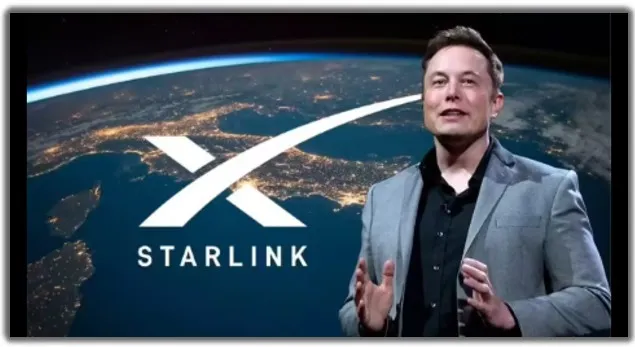
The Shift: Why Corporate AI is Different From the Rest of Tech
Traditionally, AI has been reliant on gigantic terrestrial data centers which consume huge amounts of electricity and water. Musk’s vision—and that of rivals like Google’s Project Suncatcher—is to take this “compute” out into space. Satellites orbiting Earth, which are powered by AI chips that charge on solar energy, can process data at the “edge,” high above national boundaries.
This poses a new challenge to India’s Digital Personal Data Protection (DPDP) Act. The concept of “data localization,” on the other hand, makes technical sense only if a foreign-owned satellite is able to capture data over Indian soil and process it with AI in orbit before it ever touches a ground station. The silicon and the software sit thousands of miles beyond Indian courts’ jurisdiction.
The Security Dilemma: Watching and Being Free
The most imminent danger is loss of strategic autonomy. Musk’s Starshield, the military twin to Starlink, already offers the U.S. government advanced Earth observation and secure communications. As these systems include “Space-Based AI” they can:
Immediate Pattern Recognition: Independent satellites immediately can identify patterns in troop movement or infrastructure changes at the border, rather than having to transmit raw data back to Earth for analysis.
Waging Cybernetic Warfare: Queen’s students at the leading edge of research We employ machine learning algorithms to take decisions about whether to jam signals or block communications, which could be established in space overruling human and national chain-of-command.
Risks of Dependence: If India’s rural connectivity or maritime safety come to be predicated on a single foreign-owned constellation, it puts the nation in danger to a “digital blockade” should geopolitical interests at any time diverge.
India’s Path to Preparedness
India is not standing still, but at the speed of the private sector in the West, that’s going to be too slow. In order to prevent domination by AI in space, India will need to build strength around three strategic pillars:
The “Bodyguard” Satellite Fleet
ISRO has already hinted at a shift to deploying over 50 AI-enabled satellites for geo-intelligence. But focus should be on “Bodyguard Satellites”— smaller, swifter formations that look at foreign constellations and protect Indian space assets from proximity threats or electronic jamming.
Sovereign Orbital Compute
India can’t depend on just servers on land. If the IndiaAI Mission is to achieve sovereign goals, it has to go orbital. With indigenous, radiation-hardened AI chips (similar to the ones being trialed in the Gaganyaan mission’s Vyommitra robot), India will be able to boast space-based data processing here at home, preserving that Indian data stays within Indian algorithmic control.
Strengthening Private Launch Capabilities
The “Space-Based AI” race is largely game of volume. ISRO, though a global front-runner in precision, Starship will strive to reduce launch costs to under $200 per kg. India needs to rinse and repeat with this approach, enabling more Skyroots and Agnikuls — if some “solar blockade” or space-spanning AI threat emerges in 2057, India would also have an indigenous capability to shoot its own countermeasures in place at scale.
The Bottom Line
The skies above are replacing the High Ground for intelligence. For India, gearing up for Elon Musk’s space-based AI revolution isn’t about standing in the way of progress—it’s about making sure that the future of Indian intelligence isn’t determined an office tower in California or a server farm at low Earth orbit. In 2026, strategic autonomy will be determined by who possesses the “eyes” and “brains” in the sky.

I am a versatile content writer from the MP region, covering politics, business, crime, current affairs, entertainment, video games, and sports with clear insights, engaging analysis, and timely, reader-focused updates.