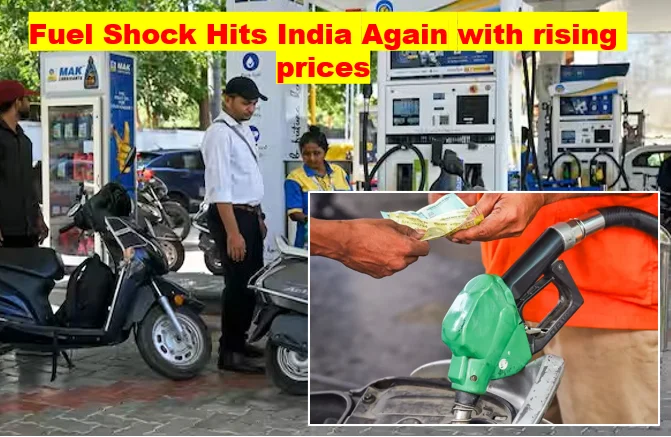

It’s been less than two weeks, and fuel and diesel prices have gone up for the fourth time. This is bad news for Indian customers. People, businesses, and transportation companies that rely on fuel for daily operations are worried about the ongoing price hikes.
For example, in big towns, the price of fuel rose sharply by more than Rs 2 per liter. It’s already hard for middle class families and small businesses to make ends meet due to inflation, and these price increases will make things even worse.
What caused the sudden rise in fuel prices?
The main reason for the sudden rise in fuel costs is the ongoing global energy crisis caused by the turmoil in the Middle East. When the war in Iran messed up global trade lines and supply chains, the price of crude oil went through the roof.
India gets a lot of its crude oil from other countries. This means that any rise in oil prices around the world has a direct effect on fuel prices in India. It is said that oil marketing companies have been losing a lot of money due to the high cost of importing crude oil and delays in adjusting retail prices.
Reports say that state run gas stations had been losing money for a few weeks before they finally raised prices. Analysts say the companies are still having trouble with money, even with the recent price hikes. This means that the price hikes may not fully cover the companies’ rising costs.
The falling dollar is another factor making things worse. Since dollars are used to buy crude oil, a lower Indian currency makes imports more expensive. This hurts both oil businesses and customers.
Read also: Fuel Supply Fears Rise After US Waiver on Russian Oil Ends, Centre Says India Has Enough Stocks
Are there going to be more price hikes for petrol?
More and more people are worried that the recent price hikes might not be the last ones. Big oil company executives have already hinted that more price increases might be needed if global crude prices stay high.
Fuel prices may keep going up slowly instead of all at once, according to experts in the field. This plan helps oil companies get back their losses while minimizing the negative reactions from the public that usually happen right after big price jumps.
Analysts also say that India put off raising fuel prices for a long time, even after oil prices around the world went up. Because of this delay, there are now several smaller hikes happening at different times.
Companies that run transportation and operations are especially worried. It’s hard for them to plan prices, negotiate contracts, and run operations when things are changed so often. Many carriers say that the confusion is making it harder for smaller companies that are already having a hard time staying in business because of high running costs.
Economists say that fuel prices in India could go up even more in the next few weeks if the price of crude oil stays about the same.
Regular people are feeling the heat
Rising fuel prices affect regular people in many ways, not just the cost of filling up their cars. Every time fuel prices go up, it costs more to get around, which drives up the prices of basic goods and services.
People who work in delivery services, taxis, farms, trucks, and small businesses are some of the worst hit. If fuel prices keep going up, public transportation services may also change their prices.
People already have to pay a lot for groceries and utilities, and the new fuel price hikes are likely to make things even more expensive. People who drive to work every day are spending a lot more on travel now than they were just a few weeks ago.
Read also: Fuel Price Hike Triggers Meme War Across India, Public Divided Over ₹3 Increase
What Will Happen to India’s Economy Next?
India’s inflation and economy are both affected by fuel prices in a big way. When oil and fuel prices go up, the cost of transporting and output goes up in all fields. For many companies, this means they have to pass on the extra costs to customers.
Economists think that the most recent round of rate hikes could make prices go up in stores over the next few months. Agribusiness, transportation, airlines, and industry are likely to be the first to feel the effects.
If people get more angry, the government may also be pushed to lower fuel taxes. But cutting taxes might make it harder to get money in, which makes the choice hard from a business point of view.
For now, a lot depends on how much crude oil costs around the world and what happens in world politics. India’s fuel prices might go down in the long run if global conflicts ease and crude costs stay stable. But if the supply problems caused by the war continue, people may have to get ready for fuel to cost more in the coming weeks.
The current situation shows how much India’s daily life is affected by the energy markets around the world. Across the economy, rising fuel prices are now being felt in everything from food bills to the cost of getting around.

A versatile writer mainly works on trending news, daily updates from politics, business, crime, current affairs and entertainment.