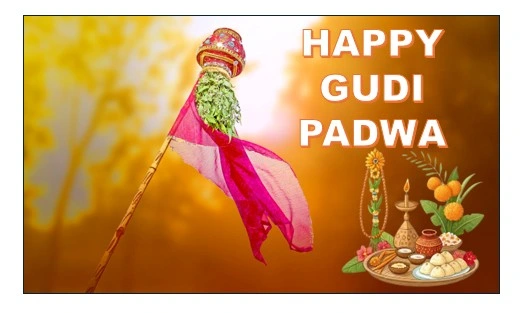

In Hinduism, the month of Chaitra is the start of a new year. The first day of this month is known as Gudi Padwa. The full name of the day is Chaitra Shukla Pratipada, which means ‘The First Day of Chaitra – After the Full Moon.’ According to the western Gregorian calendar the date often falls in March or April.
In 2026, Gudi Padwa will be celebrated on the 19th of March, but the date will vary from year to year depending on the lunar cycle.
Gudi Padwa marks the beginning of the Hindu New Year for many people who live in Maharashtra, Goa, and parts of Karnataka, as well as other areas of India, such as Ugadi (in southern states like Andhra Pradesh and Telangana) and Chaitra Navratri (in northern states), all at about the same time during the year.
The cultural significance of Gudi Padwa goes back through history and provides a number of reasons as to why it was established:
- The return of Lord Rama to Ayodhya, following his victory over Ravana, symbolizes the victory of good over evil.
- The creation of the universe by Lord Brahma is believed to have taken place on Gudi Padwa.
- As a symbol of pride and success, the Gudi represents the many victories of Maratha rulers, like Chhatrapati Shivaji Maharaj.
In conclusion, Gudi Padwa symbolizes new beginnings, prosperity, and victory.
Rituals and Traditions of Celebration
The festival is full of fervor and religious zeal along with exhibiting culture in many different forms.
1. The First Ritual is Raising the Gudi
The First Step in Raising the Gudi is Preparing the Gudi. You Create the Gudi by Gathering the Following Six Items:
- Brightly Coloured Fabric (For example – a piece of saffron or yellow silk)
- Leaves from the Neem and Mango Trees.
- A Floral Necklace/Floral Garland (made from Several Different Flowers).
- A Jaggery Necklace (A Gathi).
- A Kalash (An Inverted Pot – made from silver or copper).
Hanging the Gudi: The Gudi will be hung on the pole outside the house (usually 1 ft to 3 ft high), on the right-hand side of the front door. The Purpose of the Gudi will be to Drive Away Evil Spirits and Grant the Household with Peace, Prosperity, and Good Health.
2. Getting Oiled and Ready to Go
Traditionally, people who celebrate Gudi Padwa do so by rising early in the morning and taking an oil bath as a means of purifying oneself from impurities. Following this cleansing process, they dress according to cultural traditions:
Women typically wear Nauvari sarees (10-yard or 9-yard long traditional Marathi saree) & men wear either kurta-pajamas or dhoti-kurta with pheta (turban on head).
3. Outside Decoration:
- Unique rangoli (floral designs) will be designed at the entrance to their home, and every one will have cleaned and decorated their home (with torans – which are made with mango leaves) so that it signifies wellness and positivity.
4. Perform Special Prayer:
Every family will perform a pooja (a Hindu ritual) and recite prayers to their deities asking for good luck in the new year. while doing this they also worship the Gudi (or Gudi symbolises Spiritual Victory or ‘Dharma’), expressing their wish to receive spiritual blessings and protection from the deities.
Food is an important aspect of Gudi Padwa celebrations.
- Neem and jaggery combination
- An interesting custom includes mixing neem (bitter) & jaggery (sweet), which represent the happy/sad experiences of life.
Some well-known festive dishes include:
- Puran Poli (sweet lentil stuffed chapatti)
- Shrikhanda & Puri
- Batata Bhaji
- Kothimbir Vadi
This preparation & eating of these dishes regularly reinforces the bonds of family & community.
Cultural Celebrations & Community Activities
Every year in Maharashtra & cities such as Mumbai and Pune, elaborate processions are held called “Shobha Yatra,” which showcase:
- Traditional music and dhol-tasha performances
- Lezim dances
- Folk dances
- People dressing as historical personalities
As you can see the streets come alive with colour & joy, thus portraying the pride and unity of Maharashtrians.
What does the Gudi Symbolise?
The Gudi represents:
- Victory/success
- Wealth/Good fortune
- Guard against all that is not good
- Renewal & hope
The Gudi’s upward position signifies the aspiration and growth of the person displaying it, as a reminder that the coming New Year should be started with positivity & bravery.
Also read: The Spiritual Importance of Kamada Ekadashi on 29th March 2026
How Gudi Padwa is Celebrated?
Although Gudi Padwa has been celebrated for many years, today families are celebrating Gudi Padwa using different means. Most families now celebrate Gudi Padwa through the internet sending New Year’s wishes to one another & organising community activities and using environmentally-friendly decorations.
Institutions and organizations associated with education and culture design different activities to promote the Maharashtrian heritage of the state and to help children have an understanding of this connection to their culture and roots.
Read more: Hindu Panchang: When will Mahashivratri 2026 be celebrated?
Final Thoughts
Gudi Padwa has much more than only new year’s commencement; it embodies new year’s aspirations; rebirth; and ability to succeed as a result of endurance and dedication. Gudi Padwa has deep historical and mythological connections, which demonstrate the strong character traits of the people in Maharashtra state. The various rituals performed during Gudi Padwa, including raising a gudi, cooking traditional dishes, and spending quality time with family or friends in your community, assist families in moving into the new year with optimism and appreciation.
As Gudi rises up to the sky, he inspires everyone to begin anew by facing their challenges and progressing ahead with determination and faith. Gudi Padwa teaches us that with the end of anything comes an opportunity for a beginning that is filled with possibilities and hopes for the future.

A versatile writer mainly works on trending news, daily updates from politics, business, crime, current affairs and entertainment.