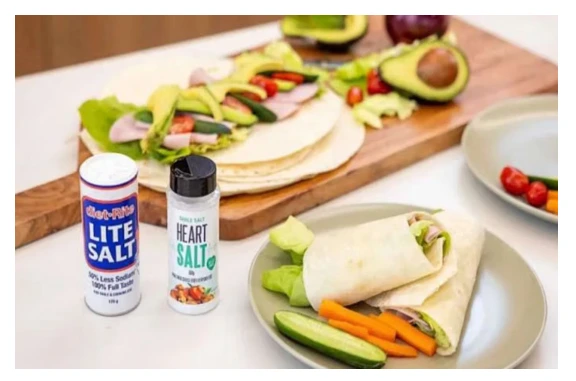

Low sodium salt alternatives are changed forms of normal salt that have 15 to 30 percent potassium chloride instead of sodium chloride.
Over 19.9 crore Indians have high blood pressure and eating too much salt kills 175,000 people every year. The country’s top heart doctors, kidney specialists and public health experts have said that normal table salt should be replaced with a potassium rich option. They say this switch can cut the chance of having a stroke by 14% and the chance of dying from heart disease by 12%. They say this will be about the same as first line medical treatments, meaning using drugs to help people.
In January 2025, the WHO released guidelines on using salt alternatives with lower sodium. These suggestions come after those guidelines.
A group of 29 Indian medical experts has now signed a statement agreeing that low sodium salt replacements should be a part of national plans to lower sodium levels, guidelines for hypertension and other NCDs and rules or regulations.
The FSSAI, which is in charge of food safety, has accepted potassium enriched iodised low sodium salt as a edible salt category. The labels must also be clear and based on proof.
LSSS are changed forms of standard salt that have 15 to 30 percent potassium chloride instead of sodium chloride. It looks, tastes and cooks a lot like regular salt, but it has less sodium and more potassium, a chemical known to help lower blood pressure.
The white paper gives scientific proof and expert advice for switching from regular table salt to salt alternatives that are low in sodium and high in potassium as a cheap way to lower blood pressure, stroke, and heart disease deaths in India.
Professor of Cardiology at the AIIMS, New Delhi, and a member of the expert panel, Dr. Ambuj Roy, said, The switch is still almost never used in clinical practice in India, even though the American College of Cardiology and the American Heart Association gave it their highest recommendation in this year’s guidelines.
Indian chance of a kind
The white paper says that the average Indian eats about 8 to 11 grams of salt every day, which is about twice the 5 grams that the WHO says is the maximum amount.
India is different from other places with the same problem, where its salt comes from. Most of the salt people in richer countries eat comes from prepared and packaged foods. More than 80% of the sodium people in India eat comes from salt they choose to add to their food while cooking or eating at the table.
The white paper says that this means that “LSSS must mainly target household consumption.” The most powerful effect could happen when people switch meals in their own homes, neighbourhood kitchens and midday meal programs.
India doesn’t get enough potassium, which makes the case even stronger.
The white paper looked at studies and found that Indians only get about 1,826 milligrams of potassium a day, which is much less than the 3,500 milligrams that the WHO recommends.
The study said that an LSSS with 30% potassium chloride would add about 779 milligrams of potassium every day if it was used at the daily recommended salt intake of 5 grams. There is no danger here, and this can help Indians get more potassium.
It was found by the George Institute that having more potassium, not just less sodium, was responsible for 75% of the blood pressure lowering effects seen in big clinical studies.
Read also: How Does Health Insurance Play a Major Role in Today’s World?
Different ways to use for people with kidney disease
The white paper makes a suggestion that not everyone should follow. The main worry is hyperkalaemia, a disease in which potassium levels in the blood rise dangerously high in people whose kidneys aren’t able to get rid of it properly.
People who have serious kidney disease or who take drugs that raise potassium levels are most likely to get high potassium.
Low-sodium salt is safe for most people, even those with mild kidney problems, diabetes, or common blood pressure medicines, as long as they are watched closely.
The obstacles that still stand
Low-sodium salt replacements only make up 0.4% of India’s usable salt market right now. They cost two to four times as much as regular iodised salt.
The paper said that the main reason for the higher price is potassium chloride, which is brought in from Canada, Russia, and Belarus and makes up 60 to 75% of the cost of production.
The paper said that most of the LSSS sold in India is in big cities like Delhi, Mumbai, Bengaluru, and Pune, which together make up about 70% of all LSSS sold in the country. Smaller towns and rural areas have almost no LSSS available.
Experts say that doctors aren’t very aware of the problem as most of them still tell their patients to eat less salt instead of switching to a different kind.

I am a versatile content writer from the MP region, covering politics, business, crime, current affairs, entertainment, video games, and sports with clear insights, engaging analysis, and timely, reader-focused updates.