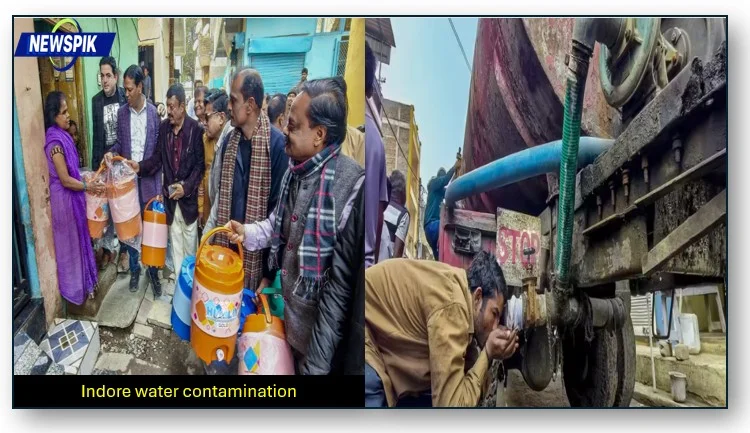

Indore, the commercial capital of the state of Madhya Pradesh, which has been ranked repeatedly as the cleanest city in the whole of India, is now facing an extraordinary health crisis as hundreds of people have fallen ill due to water contamination. The situation is currently centered in the densely populated area of Bhagirathpura, as the water supply has been ridden with sewage leaking into the drinking water pipes.
The early indicators that showed that something was amiss happened in late December, after which people complained about a foul odor in the water, discoloration, and peculiar taste. After that, people began getting infected with vomiting, diarrhea, and high fevers that ran beyond the capacity of health facilities. Bacterial contamination in the water would be confirmed through testing.
Official figures vary: while the state government confirmed at least six deaths and more than 200 hospitalisations, local residents and media reports state as many as 10–16 have died and more than 1,000+ people have been taken ill.
As pointed out, the contamination has been attributed to age-related infrastructure and leakage in one part of the Narmada water supply system. Authorities have now started chlorinating pipelines and have asked residents to either boil water or use water supplied from tankers. However, trust remains shaken to the core.
Government Response and Institutional Fallout
The state government has reacted by removing the Indore Municipal Commissioner and suspending/transferring top officials of the civic bodies. The Chief Minister of the State, Mohan Yadav, has ordered investigations and emergency actions to avoid further sicknesses and deaths among those who are affected. Reports have also been placed before the High Court of Madhya Pradesh regarding the medical relief, relief activities, and water safety-awareness programs being carried out. Compensation packages-appointment of ₹2 lakh per victim-have also been announced.
But what the opposition says is that the government waited until the peak of the crisis to act on the warnings regarding the water situation in the city.
Sewage in drinking water blamed for at least 10 deaths in India’s ‘cleanest city’
Residents’ Response: Reaction of Anger and Fear
Locals respond to this crisis with rage, fear, and deep-level disbelief towards their local authorities:
Drinking Tap Water with Trepedition: People are afraid to drink water from the tap and are choosing to pay a higher price for water from bottles or water tankers, which comes as a burden for poorer families. As one resident said, ‘We are afraid to drink water from the tap; we need proof that the water we drink is clean.’
Outrage At Levels of Neglect: Residents have stated that several years ago, they had complained about the smell of contaminated water and sewage getting mixed up with drinking water, but nothing had been done about it.
Sanitation Issues: The residents also raised concerns about sanitation issues in Bhagirathpura, such as overflowing drains, uncleared garbage, and sewer floods, which affect health and other issues related to water quality.
Public Anger and Politics: The matter has sparked a political debate. Former politicians such as Uma Bharti have described the event as a ‘maha-paap’ (great sin), while demanding a high degree of accountability of the authorities. Others include politicians of the opposition parties, which can be seen condemning the political government of failure of governance.
Contaminated Water Can Be Hazardous: 5 Water Purification Methods
Long-Term Considerations and Larger Implications
It has been observed that the situation faced by Indore is not an isolated one and, instead, a indication of a larger crisis, that of a water management structure in urban zones, as reported by experts and local residents. The pollution control board report of 2016-17 had already indicated water pollution and sewage entry in this region. Urban governance studies scholars indicate that the situation in Indore portrays how ranked cities can go wrong with the neglect of basic infrastructure and the rapid deterioration of popularity in health issues.
Current Scenario
Medical teams remain at work treating the sick, and the authorities are working to restore supplies of uncontaminated water. But the crisis has eroded confidence in municipal systems, provoked popular outrage and raised urgent questions about water safety, sanitation and governance in one of India’s model cities.

I am a versatile content writer from the MP region, covering politics, business, crime, current affairs, entertainment, video games, and sports with clear insights, engaging analysis, and timely, reader-focused updates.