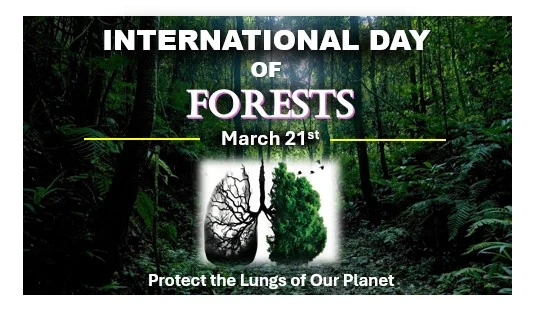

March 21, 2026 will be celebrated as the International Day of Forests. The United Nations General Assembly originated the day in 2012 with its first formal observance in 2013. March 21 coincides with the beginning of spring in the northern hemisphere and autumn in the southern hemisphere, emanating ideas of renewal, growth, and the critical importance of forests for sustaining life on Earth.
Each year the observance of the International Day of Forests is guided by an annual theme chosen by the United Nations focusing on a different aspect related to forests — some years have focused on biodiversity, climate change, food security, education, and sustainable production.
History and Development of the International Day of Forests
Prior to the formal declaration of the International Day of Forests, countries had celebrated “World Forestry Day” on March 21 starting in 1971 as a result of the European Confederation of Agriculture’s recommendation. This used to be recognised as an annual national, international, and local day to celebrate all things related to forestry and trees. In recognition of the growing importance of conserving forests around the world, the United Nations General Assembly passed a resolution in 2012 declaring March 21 to be the International Day of Forests.
The International Day of Forests helps promote activities by countries in local, national and international ways. This is to develop activities around forests and trees, including tree planting initiatives, awareness campaigns, workshops, and education programmes.
Significance of International Day of Forests
One-third of the earth’s land is covered in forests—that is key for the survival of millions of different species on earth including people (and those species will be here long after they pass). The purpose of this day is to increase awareness about the importance of forests and all the ways they benefit us.
1. Ecological significance
Ecologically speaking, the forests of the world are the “lungs of the world.” They take in carbon dioxide and put out oxygen therefore playing an important role in helping to address issues such as climate change; trees also help to moderate temperature; prevent soil erosion; conserve water; and reduce the chance of natural disasters such as flooding/landslides.
Over 1 million species of plants and animals, 80% of the earth’s terrestrial biodiversity, live in the forests of the earth. Microscopic organisms’ as well as large animals depend on habitats provided within forest ecosystems for their survival.
2. Economical impact
In terms of economics; the global economy is strongly influenced by timber, paper products, medicines, food sources such as tree fruits/nuts/rubber and a wide variety of other products provided by forests. Millions of people globally depend upon forest resources for their daily needs (these include some indigenous and rural communities).
Sustainable forest management is responsible for the use of available economic resources without causing degradation to natural ecosystems.
3. Social and Cultural Importance
The forests are, for many native Peoples, sacred lands that hold much more than a supply of resources; they are part of a larger fabric of their culture, traditions, and identity. Forests provide many of the basic elements essential to sustain life: nutrition through food, a useable roof overhead, useful heat and light, and healing medicines; therefore, they are essential to many community cultures and activities worldwide.
The International Day of Forests provides an annual opportunity to raise awareness about these communities, their lands, and their traditional knowledge.
Each year’s annual day is promoted through a specific annual theme based on a current global forestry issue related to forests. Examples from past themes of the International Day of Forests have been “Forests and Biodiversity,” “Forests and Sustainable Production,” and “Forests and Health,” which also fall under several global development objectives and environmental initiatives.
The collaboration of local communities, organizations, and governments on a single theme allows the various efforts of millions of individuals, organizations, and local Governments around the world to be focused and coordinated on that issue.
Globally, people will participate in the International Day of Forests in many ways, including the following:
- Community tree planting initiatives at schools, community centres, and universities.
- Holding awareness rallies and seminars to raise awareness of the significance of forests.
- Organizing art, essay, and photo contests to inspire creative expressions of the significance of forests.
- Participating in discussions and workshops related to environmental policy.
- Using various social media outlets to promote forest conservation.
Every year on this day, governments may initiate new afforestation programs, or reevaluate their forest policies. Through partnerships between environmental groups and the local communities where they work, environmentally sustainable practices will be promoted and degraded forests will be returned to healthy conditions.
Educational institutions are also a major force in creating awareness and encouraging youth to be good stewards of the Earth.
Forests & Climate Change
Climate change represents one of humankind’s greatest challenges today. Forests act as carbon sinks; they absorb large amounts of Carbondi-oxide from the atmosphere. Deforestation will cause the release of that stored carbon back into the atmosphere and contribute significantly to climate change.
The International Day of Forests was created to foster the urgent need for reducing global deforestation, and to create reforestation. Sustainable forest management, degraded land restoration and responsible use of forest products are all essential actions to achieve sustainability.
Individual Contribution to Forest Conservation
Although governments and organizations play an important role in forest conservation, individuals can also play an important role. Here are some examples of how you can participate in protecting forests:
- Plant trees in your local community
- Reduce your paper and wood consumption
- Buy sustainable products
- Raise awareness using social media
- Participate in environmental campaigns
Small actions can add up to create a big impact on the protection of forest ecosystems.
Read more: World Wildlife Day 2026: Protecting Nature, Preserving Life
Conclusion
The International Day of Forests is an opportunity for awareness and appreciation of the importance of forests in supporting life on earth. Forests provide many benefits, including ecological stability, protection of biodiversity, economic opportunities and cultural identity.
Globally, many ecosystems face threats from deforestation and climate change; therefore, this day calls upon nations, organizations, communities and individuals to come together to take action to protect forests, not only as an environmental responsibility but as critical to the continuation of our sustainable and healthy future generations.

A versatile writer mainly works on trending news, daily updates from politics, business, crime, current affairs and entertainment.