For Japan, a country with one of the longest life expectancies, it’s not aging in place or some cuckoo idea about self-driving cars for senior citizens that has bureaucrats and policymakers awake at night. It’s the capacity to strike fear into hearts and balance sheets — dementia. With an estimated one in five people aged 65 or older expected to have dementia by 2025, the challenge is not just medical; it is social and economic as well. Each year, thousands of dementia patients vanish, and the ballooning costs for care are projected to exceed 14 trillion yen by 2030. The country’s emphasis on self-reliance and its declining ranks of caregivers are a sign that the burden can no longer rest solely with human hands.
Robotics and Exoskeletons: The New Caregiver
In a potentially surprising turn, the emotional heart of caregiving is being supported by cold, hard steel and some clever code. Japan’s pitch isn’t to replace humans but to augment them, lessening the back-breaking physical labor that results in both staff burnout and a shortage of workers.
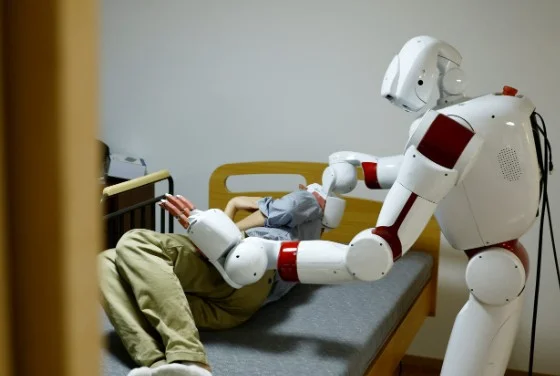
Heavy Lifting and Mobility: Robots like the AIREC humanoid prototype in being developed at Waseda University are designed to help with physical tasks. Weighing 150 kilos, they can assist patients in simple tasks of daily life, like putting on socks, sitting up and getting out bed or basic cooking. Other robot suits, such as the HAL (Hybrid Assistive Limb) suit enable human staff members to pick up and move residents without strenuous effort, which significantly reduces workplace injury and frees up more time for real, human-to-human interaction.
Compañía and Consolation: Technology has also rushed to meet the equally calamitous crisis of loneliness. There are already robots like PARO, the therapeutic robotic baby seal, that can provide emotional support and interaction in residents with touch and sound to relieve stress and anxiety. These are the robots that provide round-the-clock companionship, cognitive stimulation and an always-available but nonjudgmental presence that are so important to people with dementia.
Read also: Next-Gen AI Unveiled- How OpenAI’s Garlic
The Invisible Shield | AI for Early Warning Detection and Protection
Through AI, without physical intervention, an invisible safety net is being cast around individuals who are also “aging in place” – i.e., living autonomously at home for as long as possible.
Early Warning: Employers are also using A.I. to sniff out subtle warning signs of cognitive decline years before a clinician would officially diagnose it. Fujitsu’s aiGait, for example, applies artificial intelligence to analyze slight alterations in a person’s posture and gait — a turning motion that might be slower, or an inability to stand up easily — that could indicate the beginnings of dementia. Other tools, such as ONSEI AI Voice Analysis System can detect cognitive changes within a minute without the need for invasive early detection which is available at community level programmes by allowing person to speak in the device.
Preventing and Tracking Wandering From the dementia patient who goes missing in 2023, technology is a life line. The GPS-based tracking systems are currently being rolled out across the country. In some places, convenience-store clerk or local resident are alerted in real time via community-wide security network when someone who is being followed by tracker walks out of a designated safe zone, leaving the entire town as an adherent protective ring. Then there are smart home and IoT systems, which can alert family members or caregivers to emergencies such as falls or long periods of inactivity — without any privacy leaks.
The Road Ahead: Designing With the Human
So much technology is dynamic yet the most difficult problem remains: humanizing the interface. Everyday digital systems can be so confusing for older adults or those with cognitive decline, with always changing icons, their complex menus.
These days the buzzword is Adaptive User Interfaces (AUIs) — things that adapt to what would be their most suitable interfaces intended for human use. This includes recognizing user frustration through voice or facial signals and adapting layouts involuntarily using affect detection. It is a radical change for the better, and away from scientific design.

I craft sharp movie reviews and trend analysis, known for deep research, clear insights, and compelling storytelling across the latest in film and pop culture.