
For years, the promise of cloud gaming—the ability to stream high-end, graphics-intensive video games instantly to any device, regardless of its processing power—has tantalized Indian gamers. It offered a vision of playing AAA titles on a basic smartphone or an aging laptop, eliminating the need for expensive consoles and powerful PCs. Yet, the reality was often frustrating: lag, stuttering, and dropped frames made the experience unplayable.
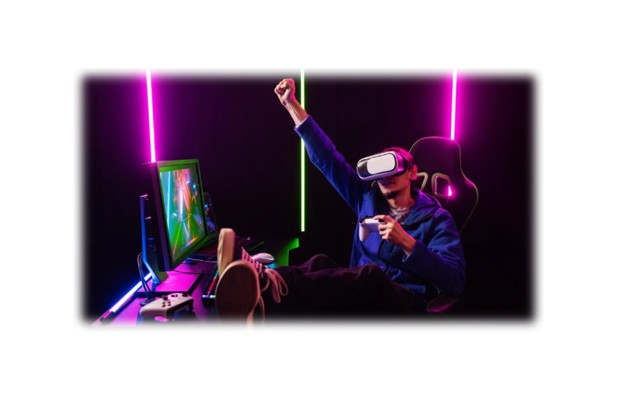
Now, with the widespread and rapidly expanding rollout of 5G across India, the narrative is changing. The question is no longer if cloud gaming will succeed, but when it will dominate. Is 5G finally the technological solution that unlocks cloud gaming’s true, transformative potential in the highly sensitive Indian market?
The Latency Barrier: 4G’s Fatal Flaw
The main nemesis of cloud gaming is latency—the delay between a player pressing a button and seeing the action register on the screen. For competitive and fast-paced games, latency needs to be below 50 milliseconds (ms), ideally closer to 20 ms.
In the era of 4G (LTE), average urban latency often hovered between 70 ms and 100 ms or higher, especially during peak usage times. This bandwidth bottleneck made streaming an interactive, real-time experience impossible, leading to the frustrating lag that killed early cloud gaming attempts.
The 5G Difference: Speed Meets Responsiveness
The shift to 5G doesn’t just mean faster download speeds; it radically reduces latency. Modern 5G networks in India are capable of delivering latency in the range of 10 ms to 30 ms. This is the critical performance window required for a smooth, console-like gaming experience.
Furthermore, 5G offers massive MIMO (Multiple-Input Multiple-Output) technology and higher bandwidth, allowing for a higher density of concurrent users without suffering significant performance degradation. This is vital in a country with over a billion mobile subscribers.
Key 5G Advantages for Cloud Gaming:
- Low Latency ( < 30 ms): Enables near-instantaneous command execution.
- High Bandwidth (up to 1 Gbps): Allows streaming of games in 1080p and even 4K resolution at 60 FPS.
- Increased Reliability: Reduces packet loss and jitter, meaning fewer frustrating freezes and disconnections.
The Indian Market Imperative
India is a mobile-first gaming country. The high cost of gaming PCs (> ₹80,000) and consoles (> ₹40,000) has long been a barrier to entry for AAA titles. Cloud gaming democratizes access by transferring the processing power from the user’s device to powerful remote servers.
With 5G enabling this seamless experience, the financial equation for Indian gamers changes drastically. Instead of spending tens of thousands on hardware, they can pay a manageable monthly subscription fee for services like GeForce NOW or home-grown platforms, unlocking an entire library of premium games.
Read also
Challenges Still Loom
Despite the technical leap, cloud gaming adoption in India faces hurdles:
- Server Infrastructure: Cloud gaming requires extensive regional server farms (data centers) located close to users to minimize physical latency. This infrastructure requires massive investment.
- Affordable Subscriptions: Pricing models must be tailored to the price-sensitive Indian market, balancing the cost of 5G data consumption with the monthly service fee.
- Data Caps: While 5G is fast, streaming a game consumes vast amounts of data. Unless operators offer competitive or unlimited data plans, users may hit data caps quickly.
In conclusion, 5G is not merely an improvement; it is the foundational technology that makes cloud gaming a technical reality in India. By solving the persistent latency problem, 5G has bridged the gap between promise and performance. The stage is set, the network is ready, and 2026 is poised to be the year cloud gaming finally moves from theoretical potential to market dominance, transforming how a generation of Indian gamers consumes high-fidelity entertainment.

I am a passionate content writer from the Chandigarh–Panchkula region. I am curious and love exploring diverse topics. At DailyBarta.in, I primarily write about video games and sports, bringing readers fresh insights, engaging analysis, and easy-to-understand breakdowns of the latest trends.









