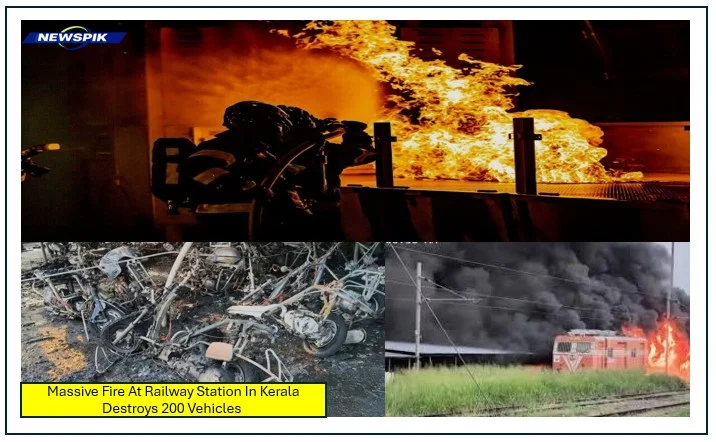

In a harrowing opening to the first Sunday of 2026, Kerala’s cultural capital Thrissur woke up to huge plumes of black smoke and orange flames emanating from its largest transit station.
The victim, who collapsed between second entry-side parking (Platform No 2) and railway line left his daily commuters as well as long distance passengers stunned. Although early estimates put the number of vandalised vehicles at 200, with fresh figures coming in from Fire and Rescue Services as well as police, it is said that closer to 500 bikes and scooters have been gutted.
The Spark That Set Off the Inferno
The disaster erupted at 6:20 a.m., the news site said. The cause of the fire appeared to be a “freak electrical accident”, if eyewitnesses and preliminary findings by the Kerala Fire & Rescue Services are anything to go by. A spark from a high-tension overhead electric wire is believed to have snapped or flared and fallen on two-wheelers covered with a protective plastic sheet.
Once the sheet was alight, the blaze ripped through at breakneck pace. The parking shed, made of tin sheets and iron structure, turned into an oven engulfing the heat as fuel tanks of the tightly packed motorcycles continued to burst intermittently.
“I saw smoke and ran to throw water, but within seconds, there was an explosion in a fuel tank,” said Mallika, who works at the parking counter and barely escaped the flames. “The fire literally just went from one seat to another. It was impossible to stop.”
However, when the first distress calls came in at 6:40 AM, one side of the parking lot was completely ablaze. The existence of some 500 metal and fuel laden cars, most half or fully filled with petrol ensured there was a steady supply of highly flammable fuel that together with the high heaped buildings caused the parking lot to become a localized firestorm.
The Race Against Time and Emergency Response
The size of the fire would demand an enormous mobilization. Five fire tenders of Thrissur fire station and from neighbouring stations rushed to the spot. Firefighters were faced by an additional challenge: the tin-roofed structure meant they could not readily pour water directly on to the source of the flames. Instead, they fought the blaze from the sides and through ventilation openings.
Although the fire was raging, no human losses were reported. Two women staff members at the parking counter narrowly escaped as the first of a series of blasts went off. Officials of the railway indicated that although there was frenzy among passengers because of smoke, train services remained unaffected and ran on time.
Aftermath: A Reality Check on the Dangers of Fire
When the smoke lifted, and with it the true scale of loss. Rows of motorcycles — many owned by office-goers who leave their bike parked for days while commuting to the capital city, Kuala Lumpur — had been mangled beyond recognition. Apart from the vehicles, a parking fee printing machine worth ₹5 lakh and cash of ₹10,000 along with the personal belongings of the toll staff were damaged in the fire.
The state government viewed the incident very seriously. State Police Chief Ravada A. Chandrasekhar visited the place and said a special investigation team, headed by an Additional Superintendent of Police (ASP), had been formed to probe the case.
Major Outcomes Following the Incident:
Malé Fire Safety Audits: The Police Chief has directed for immediate fire safety audits of all paid parking sheds at railway stations and nodes.
Probe into Negligence: Police is probing if the parking contractor Aswathy Enterprises followed the safety guidelines or not. There is also the issue of operating the facility without clearances from the civic body.
Insurance helpRevenue Minister K. Rajan, who conducted an assessment of the damage as well promised [sic] the affected owners that the government will intervene with insurance companies to fast-track claims for their loss vehicles.
Looking Forward: Redefining Urban Safety
The tragedy at the Thrissur railway station is a sad reflection on our vulnerable public places. In a state like Kerala where lakhs of two-wheeler riders depend on them for …. last-mile connectivity to reach transit points, safety at these parking ‘dead zones’ is the last thing on our mind.’
As authorities search for the cause, attention has turned toward retrofitting such car parks with automated sprinkler systems and improved electrical insulation. The road to recovery will be a long one for the hundreds of owners who came back from their journeys to find only ash where they had parked their transport.

A versatile writer mainly works on trending news, daily updates from politics, business, crime, current affairs and entertainment.