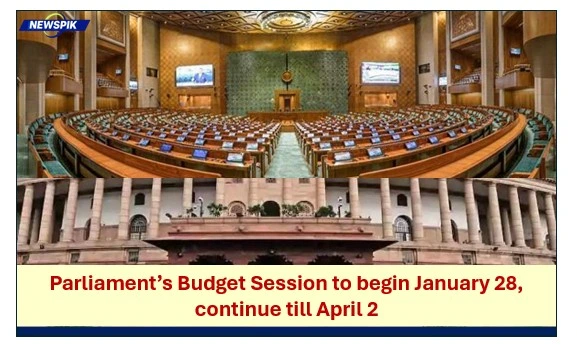

The power corridors in New Delhi are abuzz as the dates for the much awaited event of India’s democratic chronicle have been decided. The Budget Session of Parliament will begin on January 28, 2026 and assume conclusion after a hectic stay of 65 days for legislative scrutiny and financial planning.
The announcement by Union Minister of Parliamentary Affairs Kiren Rijiju indicated that President Droupadi Murmu has given a nod to the summoning of both Houses for a session that will determine India’s economic path in 2026-27. Amidst the global economic trends and national aspirations at a crossroads, this would be more than just an account of income and expenditure statement , Opening Budget 2020 for “Viksit Bharat” (Developed India).
A Two-Phased Marathon
In order to scrutinise the government’s proposals properly, the session will be in two parts in traditional fashion with an almost month-long recess between them.
Phase I (January 28 – February 13): The session will begin with the President’s address to a joint sitting of both Houses of Parliament. This phase will be centered around the Union Budget to be presented on February 1. Significantly, the date for presentation of the Union Budget is February 1 at 11:00 AM and since this year it’s a Sunday, Parliament will hold a special meeting on that day only for Finance Minister Nirmala Sitharaman to give her speech.
The Recess: From mid-February to early March, Department related Standing Committees will examine the “Demands for Grants” of Ministries/Departments. This is the “deep dive” phase when the budget’s fine print gets picked apart beyond closed doors.
Phase II (March 9 to April 2): Parliament regathers to discuss and vote on the financial bills. This phase is typically home to the fiercest political fighting as the opposition counterpunches against the government’s spending priorities and taxation proposals.
Sunday History: The Presentation of February 1
The Sunday release, February 1 of the budget has been widely debated. The timing was determined by Lok Sabha Speaker Om Birla who said the established custom of presentation on February 1—pioneered by late Arun Jaitley from 2017—is sacrosanct even if it falls on a weekend. This ensures that the stock markets and businesses have an entire day to digest the implications of “Bahi Khata” before they reopen for trading on Monday morning.
The 2026 Budget is special because it is the ninth budget for Nirmala Sitharaman. At a time when economy seems to be back on track with strong growth but grappling issues such as stubborn food inflation and requirement of creating millions of jobs, all eyes are on whether the ‘Middle Class’ will get what they had been demanding for long in terms of relief from tax burden.
Budget 2026 Expectations Live: Union Budget 2026 date set for Sunday
The Legislative Journey: High Stakes Beyond the Budget
The budget takes center stage, but the 2026 session is also shaping up to be a fight over a number of transformative pieces of legislation. The government is said to be determined to clear legislation that continues its institutional reform agenda.
One Nation, One Election: A Joint Parliamentary Committee (JPC) is discussing the practicality of simultaneous elections. The committee’s report is expected to be filed in the last week of this session and could possibly set off one of the most heated constitutional standoffs in recent times.
Digital and Tech Reforms In the wake of the worldwide AI push, new rules on digital personal data protection and cyber security are high on the list.
Higher Education Overhaul: The “Viksit Bharat Shiksha Adhishthan” bill that will establish a single regulator for higher education, to replace UGC and AICTE, is expected but officials said it may meet resistance from states over federal autonomy.
Waqf (UMEED) Act The overhaul of Waqf properties, now rechristened the UMEED Act is likely to be a source of immense torment between the treasury and opposition.
Parliament Passes Bill to Levy Cess on Pan Masala Manufacturing Units
Conclusion: A Test of Democratic Resilience
As Delhi’s winter cold fades, so must the frosty insides of New Parliament House. The Budget Session is the final reckoning for every tax paying citizen of India. From the farmer in Punjab to the techie in Bengaluru, every section of society has a stake in what is going to happen during these 30 sittings.
The government’s ability to balance fiscal discipline with the needs of its populist base will be tested in 2026, as will the opposition’s capacity to offer constructive options rather than merely disruptions. As Speaker Om Birla put it, the aim is for “meaningful debate and people-centric governance.”

I am a versatile content writer from the MP region, covering politics, business, crime, current affairs, entertainment, video games, and sports with clear insights, engaging analysis, and timely, reader-focused updates.