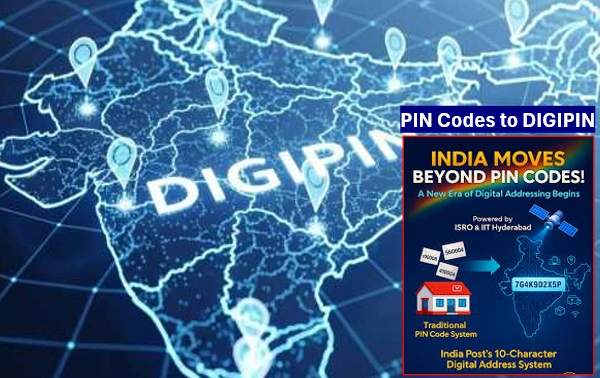

India is moving into a new part of its journey with its mail and internet infrastructure. India Post has started marketing DIGIPIN, a new digital address system that will make finding places in the country more accurate and efficient. For more than 50 years, they have used the standard six digit PIN code system.
The project changes how addresses are made, shared, and used in a big way. Digipin was created by the Department of Posts, IIT Hyderabad, and ISRO’s National Remote Sensing Centre. Its goal is to make it easier to find your way and send packages in India, whether you’re in a city or a remote area.
This method is seen by the government as a big step toward better transportation, emergency services, e-commerce sales and digital governance. DIGIPIN is based solely on physical measurements, while regular addresses rely on landmarks or only partial information. This makes tracking locations much more accurate.
What is DIGIPIN, and how is it different from PINs?
The Digital Postal Index Number, or DIGIPIN, is a geo coded digital address system. For each place in the country, it makes a unique 10 character numerical name. With this technology, India is divided into very small grid cells, about 4 meters by 4 meters. Each area gets its own code.
The method is much more effective than PIN numbers. A normal PIN code can represent an entire neighbourhood or a large postal area. A DIGIPIN, on the other hand, can pinpoint a specific building or location within that area.
The current mail system has a hard time in places where roads don’t have names, addresses aren’t clear, or symbols are often used as house numbers. DIGIPIN aims to address this issue by assigning people a digital name closely linked to their location.
India Post has made it clear that DIGIPIN will not be used to replace mailing addresses right away. It will instead work with the current method, making it even more precise digitally.
Read also: How Blockchain Technology Is Changing Digital Transactions
Why India needs to change its addresses to digital ones
India’s naming system has long had problems as many cities and towns have grown quickly and without planning. Some places still list their addresses using nearby shops, churches, buildings, or other landmarks instead of organized street names.
Not only do mail workers get confused, but so do transport managers, first responders, and guidance services. Online stores often have to deal with failed or delayed deliveries as customers provide incomplete or hard to find addresses.
In rural areas, remote towns, woods, or rocky places where official address systems may not exist at all, the problem is even worse. DigiPIN could help close this gap by giving each place a unique digital name.
Experts think that having correct internet names can also help with government and aid. Better location tracking could improve government programs, banking services, health care efforts, and crisis management.
A big boost for shipping and online shopping
One big reason for the push for a better naming system is India’s growing digital economy. Every day, millions of people order things online, so delivery companies have to spend a lot of time and money looking for addresses that aren’t clear or are written incorrectly.
DigiPin could make this problem a lot less of a problem. In the future, delivery people might be able to get to customers’ exact locations without having to call or write down directions over and over.
The system can also help with route planning, reduce fuel use and speed up last mile deliveries. These changes will help companies save money and make customers happier.
Experts say the technology could also help with banking, property verification, digital KYC ride hailing apps, and emergency medical services. The platform is designed to make digital merging easy, so it could become a major part of India’s smart infrastructure in the future.
Read also: Mythos Threat Is ‘Real,’ Says Expert as SEBI Moves to Strengthen Markets
It’s not going away that PIN codes are used
The government has made it clear that the known six digit PIN code method will remain important, even as DIGIPIN is getting more attention. Even now, PIN codes are needed to sort and route mail across the country.
DigiPin is not being replaced; it is being added as an extra digital layer. The old method sets up larger mail zones, but DIGIPIN focuses on pinpointing exact locations.
India introduced PIN codes in 1972 to speed up mail delivery and clear up misunderstandings caused by places with similar names. The method became deeply linked to daily life over time. People now see DIGIPIN as the next big step forward in India’s addressing journey.
Problems with adopting across the country
Adopting DIGIPIN at scale may take time, despite its many benefits. Millions of people are still used to using regular addresses and routes based on landmarks. Campaigns to raise knowledge and the merging of technology will be needed to get people and companies to switch to digital location tags.
There may also be problems with how well people understand technology, how well apps work together, and how well people accept them. But experts think that as people become more reliant on digital services, the need for more accurate location tools will grow.
India Post has already started providing people with tools that let them use location based services to create their DIGIPIN. Officials believe the project could change how addresses work in the digital age and strengthen India’s rapidly growing tech environment.

A versatile writer mainly works on trending news, daily updates from politics, business, crime, current affairs and entertainment.