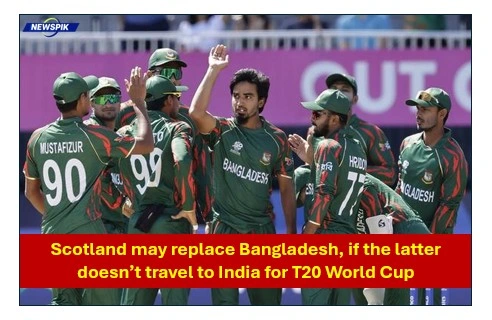

Such is the rigidly-planned world of international cricket, where schedules are typically carved in stone months if not years out, that a geopolitical and sporting typhoon has left the 2026 T20 World Cup schedule dangling by a thread. As of the end of January 2026, world cricket is teetering on the brink of an historic shift: Scotland are on standby to replace Bangladesh in the tournament after (BCB) and the government in Dhaka made it clear that they may boycott if their matches aren’t moved out of India.
The situation, which has been rapidly building over the past few weeks, finally came to a head on January 21, 2026 with the International Cricket Council (ICC) issuing a final ultimatum of 24 hours tot he BCB. The message was unambiguous: Booked yourself a ticket to travel to India or else be prepared to see your place taken by the Scots.
The Catalyst: IPL Auctions to Diplomatic Dispute
In order to understand how a cricket tournament got to such a breaking point, one must go back to the beginning of the month. It wasn’t over a line, or a wicket, but a contract. On January 3, the BCCI had asked Kolkata Knight Riders (KKR) to release Bangladesh’s pacer Mustafizur Rahman who was roped in by the franchise for a staggering amount of $1.1 million ($9.2 crore).
What the statement cited as “undisclosed developments all around” was interpreted here in Dhaka as a slight to Bangladesh’s sovereignty and its players. In response, the Bangladesh government and the BCB invoked “security concerns”, saying that the political situation in India does not allow their national team to even travel there.
“Not Easy”: Bangladesh Star Gives Honest Verdict On T20 World Cup Controversy
The Sri Lanka Proposal
Bangladesh’s proposal was straightforward; move their Group C games, due to be held in Kolkata and Mumbai, to Sri Lanka, the co-hosts. And although Pakistan had backed the decision, 14 out of the ICC’s 16 board members voted against it during an emergency meeting on Wednesday. The ICC referred to “independent security assessments” that determined “there is no credible or verifiable threat to the Bangladesh team while in India.”
Scotland: The Unlikely Beneficiary
As the diplomats wrangle, the Scottish national team has put themselves into a position no less surreal. Scotland missed out on the traditional European qualifiers for the 2026 T20 World Cup as they ended behind Netherlands and Italy. But as the highest-ranked team not to have qualified (they are 14th in T20Is), they are officially the “first reserve”.
A Repetition of History?
It would not be the first time if Scotland intervened. Zimbabwean pullout Scotland stepped in to take the place of Zimbabwe who withdrew from the T20 World Cup due to political reasons in 2009.
For the Scotland players — a number of whom have already returned to training for a tri-series against Namibia and Oman in Dubai next month — getting on the plane to India at such short notice represents both an excitement and logistical headache. Cricket Scotland have, bless them, and not a peep out of them ever since (they reveal) they have not heard anything official as yet, but their sources think the team is “mentally packed” and ready to be called.
The Human Cost: Players Caught in the Middle
Beyond the boardrooms and the rankings, a profoundly human story of unease is playing out on the athletes. “I don’t know, no one knows anything,” Bangladesh captain Litton Das said to reporters this week.“I am unsure, everyone is unsure… are you even sure we will play the World Cup?”
For most of these cricketers, this World Cup is as big as it gets. The idea of losing it in a diplomatic fracas is a bitter one to swallow. On the other side, Indian fans in Kolkata — a city with historical links to Bangladesh — had been eagerly awaiting their neighbors for three blockbuster group games at Eden Gardens.
Group C Without Bangladesh
If a swap is to happen, Group C could look very different:
- Original Group C: England, West Indies, Bangladesh, Nepal and Italy.
- Better New Group C: England, West Indies, Scotland, Nepal, Italy.
Glasgow inclusion would alter the dynamics of the group. While Bangladesh comes with a spin-heavy arsenal better tailored to subcontinental wickets, Scotland is geared for a more “swing and seam” game that could struggle on the dry pitches of Mumbai and Kolkata—yet which has proved more than capable of pulling off upsets in short-form cricket.
The Countdown to the Deadline
The ICC has also stressed it will not “bow to pressure” as it does not want to set a precedent that would allow teams to dictate their future venues purely on the basis of bilateral tension. ICC Chairman Jay Shah has stressed that the sanctity of tournament calendar needs to be maintained to safeguard broadcasting rights as well logistical issues with thousands of staff.
What Happens Next?
The government of Bangladesh is expected to take Pakistan’s participation in the tournament as an agenda during today’s date January 22, 2026 final Cabinet meeting. If they persist with their boycott, the ICC would invoke an “automatic replacement” clause.
This would potentially leave Scotland in a fevered search for visas and travel plans for a squad of 15 players and support staff. Withdrawal would have “serious long-term implications for Bangladesh, including the cost of potential financial penalties or suspensions from ICC events,” it added.
With the 24-hour clock winding down, the cricketing world is waiting on tenterhooks. Will we see the “Tigers” of Bangladesh at play in Kolkata, or will the “Saltire” fly under the Wankhede lights?

I am a versatile content writer from the MP region, covering politics, business, crime, current affairs, entertainment, video games, and sports with clear insights, engaging analysis, and timely, reader-focused updates.