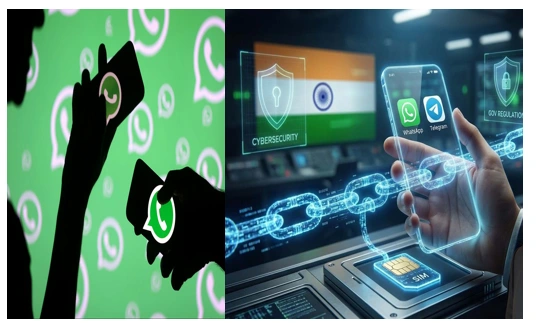

The goal of SIM binding is to stop hackers from using old phone numbers to make new accounts, which is a method that lets crooks get away with multiple law enforcement acts.
A government committee was told by WhatsApp that it needs another four to six months to follow through on its SIM binding directive. This is something that the Department of Telecommunications (DoT) asked for five months ago, and the Ministry of Electronics and Information Technology (MeitY) had already warned the platform about not doing.
The Indian Cybercrime Coordination Centre (I4C), which is part of the Ministry of Home Affairs, shared the information in a progress report that was sent to the Supreme Court on March 30 and made public on Tuesday. Attorney General R. Venkataramani co signed the report.
The report was submitted in response to a suo motu writ petition called Re Victims of Digital Arrest Related to Forged Documents. This was started by the Supreme Court in October 2025 after a senior couple from Ambala wrote to the court saying they had lost Rs 1.05 crore to con artists who used fake Supreme Court orders on WhatsApp to get them to pay.
Since then, a large group of judges led by Chief Justice Surya Kant and justices Joymalya Bagchi and N.V. Anjaria have been working together to make a big answer.
Digital arrest is a scam in which thieves pretend to be police officers over video calls, keep victims under constant monitoring for days or weeks, and threaten to arrest them if they don’t send their savings right away.
A statement from the Ministry of Home Affairs to parliament says that Indians lost Rs 1,935 crore to digital arrest scams in 2024. This is 471 percent more than the previous year.
What was written in the order
The Department of Telecommunications (DoT) sent out a circular on November 28, 2025, telling all app based communication platforms in India that use Voice over Internet Protocol (VoIP), like WhatsApp, Telegram, Signal, and a local platform called Arattai, that they had to link user accounts to verified SIM cards and set session lengths.
The goal was to stop scams from using old phone numbers and making new accounts right after being banned, which is something the government says has helped criminal networks stay alive through multiple police actions.
On March 12, 2026, WhatsApp went to the third meeting of the Inter Departmental Committee (IDC) and told the committee that work on SIM binding implementation is underway, including technical integration and testing. However, they also said that “full rollout may require approximately 4 to 6 months due to technical dependencies and the need to avoid disruption to legitimate users.
Read also: WhatsApp may soon let you chat without sharing your phone
It said that a full report on compliance would be sent by March 28
What the platform didn’t talk about before the IDC was something that MeitY had already said on its own.
During a compliance review of big middlemen on January 6 that included Google, Meta, and Microsoft, the MeitY found that Microsoft acted promptly on intelligence shared by I4C, but “WhatsApp did not take adequate remedial action despite prolonged engagement.
Microsoft owns Skype, which has become a point of reference in the case. The IDC told WhatsApp to look into user protection features similar to those adopted on the Skype platform and give a thorough plan within 30 days.
The MHA had already blocked 83,668 WhatsApp accounts and 3,962 Skype IDs that were used in fake arrests before the case got this far.
According to WhatsApp, it has banned an extra 9,400 accounts since January 2026 after an in depth internal investigation. This number grew from just 17 seed signals related to digital arrest. WhatsApp says it has mapped out whole criminal networks using what it calls a “fan out” strategy that targets administrators, linked accounts, and shared infrastructure all at the same time.
The site said that most of the crooks it found were based in Cambodia. They used display names like Delhi Police CBI, Mumbai HQ and ATS Department as well as personal pictures with real government logos.
Read also: WhatsApp May Add 15 Minute Auto Delete Messages Feature to Strengthen Privacy
Where there are still gaps
When pressed by the committee on several issues, WhatsApp made several promises before the IDC. Rule 3(1)(h) of the Information Technology (Intermediary Guidelines and Digital Media Ethics Code) Rules, 2021 says that data from removed accounts must be kept for 180 days. The company decided to do this as the committee said it was needed for police probes.
At the meeting on March 12, it promised to look into whether device IDs used in digital arrest scams can be forever banned. This way, scammers won’t be able to just switch numbers on the same device to make new accounts, and it said it would send a compliance report within 45 days.
When asked how it protects its users proactively, WhatsApp said it had put in place logo recognition systems that check personal pictures against a collection of Indian police logos from the Delhi Police, the Mumbai Police, the CBI, and the Anti Terrorism Squad (ATS).
It said it had made account age an obvious signal for people it didn’t know, hidden profile pictures for first contacts that seemed sketchy, and used large language model based detection tools to find patterns of impersonation.

A versatile writer mainly works on trending news, daily updates from politics, business, crime, current affairs and entertainment.