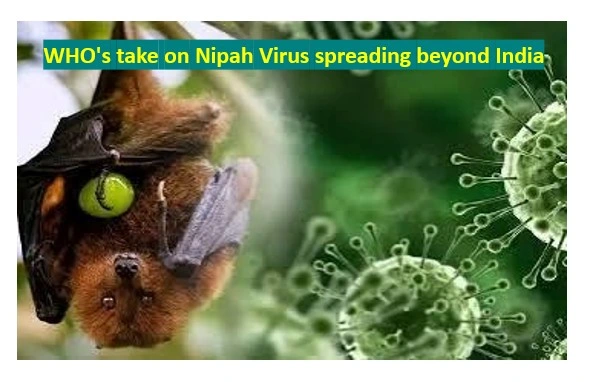

Despite two confirmed cases of Nipah virus in West Bengal earlier this month, the World Health Organization has evaluated the risk of Nipah Virus and found it to be low for spreading to outside countries.
WHO on Nipah Virus
“The WHO believes there are no changes to the human-to-human transmission rate. The current outbreak has been contained.”
The WHO has responded based on previous responses to Nipah in regions like Kerala and their confidence that India’s health services can manage this outbreak effectively.
Although Nipah is a deadly virus with a very high case fatality rate and no vaccine is available to prevent NIPAH infection, its transmission does not occur easily through casual interactions, such as viruses spread through the air.
WHO has reassured countries in Asia that there is no immediate need for heightened screening procedures at borders and airports, yet several countries (Thailand, Singapore, Hong Kong, Malaysia, Vietnam and Pakistan) have begun enhanced health screenings for passengers arriving at their countries based on the recent outbreak of Nipah and cases being reported.
These countries’ responses reflect precautionary actions, not actions required by WHO as WHO has reported there is currently no evidence of widespread transmission or new routes of transmission to countries outside of India.
WHO has also reported that although there is no immediate risk to public health associated with Nipah, they will continue to monitor multiple factors:
- High-risk animal sources: Nipah can naturally occur in fruit bats and sporadically spill over from bats to humans.
- Possible mutation: As with any pathogen, there is theoretical reason to believe that Nipah could eventually mutate and become more easily transmitted (no evidence of this occurring currently).
- No vaccine and/or specific treatment: Due to the high fatality rate and absence of approved treatments, Nipah remains a high-priority research pathogen.
Nipah Virus Alert in West Bengal- Five Infected, Nearly 100 Quarantined, No Vaccine Available
Bottom Line
At this time, WHO’s position concerning Nipah virus is as follows:
- The risk of Nipah virus spreading globally is currently assessed to be low.
- There are no restrictions on travel or trade recommended by WHO at this time.
- Ongoing surveillance and collaboration with relevant public health authorities in India continue.
The purpose of this evaluation is to provide appropriate global awareness and careful consideration of risk, reducing “undue hysteria” whilst maintaining an on-going vigilance.

A versatile writer mainly works on trending news, daily updates from politics, business, crime, current affairs and entertainment.