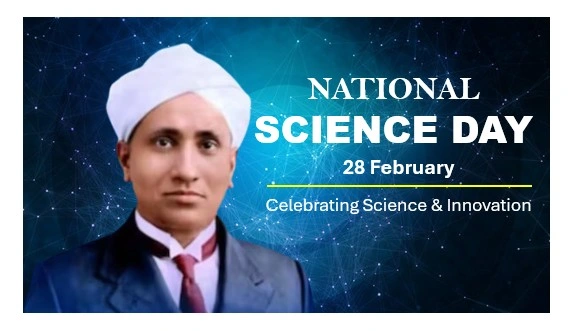

India takes time on February 28 every year to celebrate the National Science Day. Other national holidays are dedicated to birthdays or political achievements, but this day is dedicated to a question.
In 1921, on his way through the Mediterranean Sea, one of the young Indian physicists by the name C.V. Raman gazed at the deep, dark blue water and questioned himself: why is the sea blue? The world then thought that the sea was just a reflection of the sky. Raman wasn’t convinced. After seven years of intense experimentation, on February 28, 1928 he established that when light is passing through a transparent substance, a portion of the deflected light alters wavelength.
This came to be referred to as Raman Effect. This was so revolutionary that it earned him the Nobel Prize in 1930- the first among the Asian community to get this award in the sciences. In 1986, Indian government gave this date in honor of that spirit of curiosity.
Beyond the Nobel: The Real Intention of the Celebration
National Science Day is not only an ode to a man in a lab, it is a national reset button of our mental attitude. The primary goals are:
- Fostering, the creation of Scientific Temper: It is an obligation, as codified in the Indian Constitution, to create a culture of inquiry. The day helps people to cease to adhere to superstitions and begin to ask the question why.
- Science for the People: It fills in the gap between the difficult world of laboratories and the everyday man and the way science makes daily life possible – paying UPI, warning of the weather, etc.
- Rewarding Innovation: The Department of Science and Technology (DST) has been offering the National Awards of Science Popularization annually, to individuals who simplify science so that people can grasp it.
Also read: National Youth Day: History, Significance, and Ways of Celebration
Where is it Celebrated? Between Villages and High-Technology Laboratories
One of the most common celebrations in India that is highly decentralized is National science Day. Events are to be found nearly everywhere in the country:
- Schools & Colleges: The most energetic centers where students can showcase models, take part in the workshops of debunking superstition, and play science quizzes.
- Research Institutes (Open Houses): Major organizations such as ISRO, CSIR, and TIFR tend to open up their doors to the community. A regular student can tour a high-tech lab and view a satellite part or a supercomputer at least once in his or her life.
- Planetariums and Science Centres: Some cities such as Delhi, Mumbai and Bengaluru offer Night Sky Watching and immersive science cinema.
2026 Direction: Women in Science and Viksit Bharat
In 2026, the theme is Women in Science: Catalysing Viksit Bharat, which puts the emphasis on the women who are shaping the future of India. It understands that we must have the Rocket Women of ISRO and the female biotechnologists of our laboratories as the frontline in order that India can be a developed country (Viksit Bharat) in 2047.
Read more: India Tourism Day: When and How is it celebrated?
How Can You Participate?
You do not have to be wearing a lab coat to party. You can:
- Take a tour of a local Science Center or visit an “Open Day” at your local university.
- Go on a Science Walk: See how your ceiling fan works or how your kitchen is chemistry.
- Pledge to Learn: Learn something about one Indian scientist you never heard of (such as Janaki Ammal or Jagadish Chandra Bose).

I am a versatile content writer from the MP region, covering politics, business, crime, current affairs, entertainment, video games, and sports with clear insights, engaging analysis, and timely, reader-focused updates.









