A more recent report by the RBI has highlighted the serious lack of banking services in Jammu & Kashmir, with a high volume of inoperative and inclaimed accounts reported as a worrying sign of poor financial access in some parts of the Union Territory. The statistics highlight how difficult it is to be able to reach universal banking inclusion in the region when the rest of India is improving.
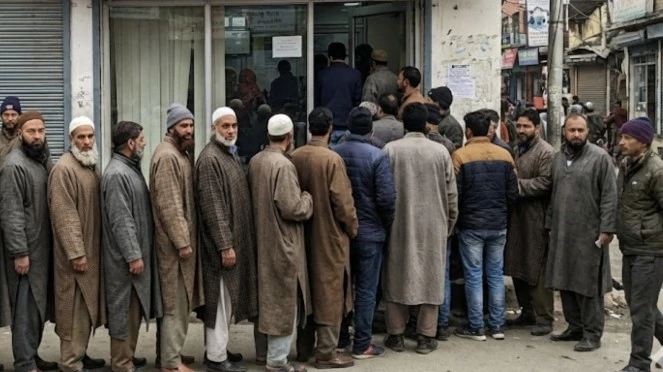
Thousands of Dormant Accounts, Hundreds of Crores Unclaimed
The current statistics show that over 17.20 lakh bank accounts in J&K are now termed as unclaimed or inactive, and the balance amount is around 465.79 crore.
The bad situation is more acute in certain districts: in the Jammu district alone, one can find more than 2,94,676 such unclaimed accounts, of value approximately 107.27 crore.
According to banking regulators, most of these dormant accounts belong to people who have lost contact with their banks due to reasons such as migration, death without claim, or contact details not provided after some time. Time has elapsed, and banks can hardly track depositors or their heirs before the law, hence making it hard to locate them.
Read also:
- Ways and tips to secure your child’s financial future
- How to Pick the Perfect Travel Insurance Plan?
- Bitcoin falls 4.3% to below $88K after a crypto selloff,
RBI Calls for Action, Launches Payout Scheme
The RBI has been encouraging banks to work harder to identify legitimate account holders in response to the amount of dormant deposits. The banks are given an incentive to revalidate and end up with such deposits under a new scheme called the Scheme for Facilitating Accelerated Assets Pay-out -Inoperative Accounts and Unclaimed Deposits. According to the scheme, banks will compensate up to 7.5 percent of the balance, or up to 25,000 (whichever is lower), in the event of successful reactivation and payout of such dormant accounts.
Banks such as Jammu & Kashmir Bank (J&K Bank) have already initiated the process – depositing huge amounts to the central fund that caters to unclaimed deposits and organizing outreach campaigns to make the depositors and heirs aware.
What the RBI’s Broader Financial Inclusion Index Shows
The banking gaps in J&K are in contrast to the general trend in the country. The latest Financial Inclusion Index (FI-Index) by the RBI for the year ending March 2025 shows that the index is at 67.0 as compared to 64.2 a year ago – this reflects an improvement in access, use, and quality in much of India in terms of financial services.
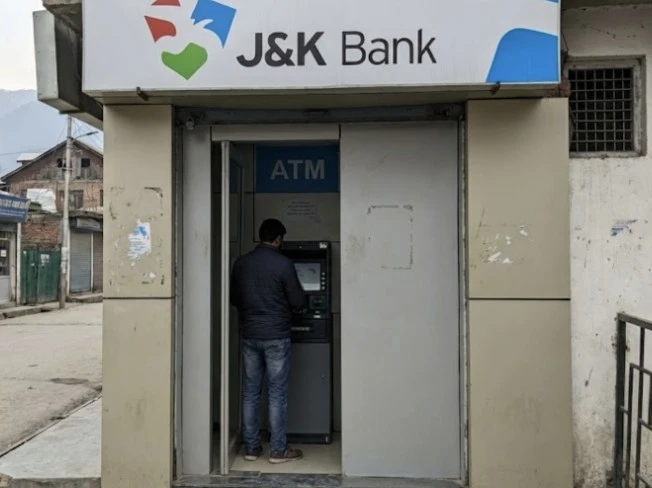
This divergence can accentuate the fact that, irrespective of national development, there are still parts of the country that remain behind in terms of having any meaningful access to banking and financial services, especially regions that are affected by conflicts or are on the other side of the border, like Jammu & Kashmir.
Why Kashmir Lags: Geography, Conflict & Administrative Challenges
The banking gaps in Kashmir have several structural problems, according to analysts:
- Due to the remote and mountainous nature of the area, physical access to bank branches or ATM is challenging for a great number of residents.
- Repeated security breaches and intervals of curfews or communication blackouts interfere with the normal banking activities and follow-up.
- Absence of updated KYC/contact information of the depositors, usually on the basis of migration or displacement, and therefore, re-establishment of contact becomes hard.
- Poor financial literacy and poor awareness of dormant deposits, claims on inheritance, and claim reclamation mechanisms.
A combination of all these has enabled large amounts to be held in stagnation over the years, which compromises the rights of the depositors and even the general aim of financial inclusion.
What’s at Stake — and What Needs to Be Done
To the locals: payouts could restore decades-old deposits, pensions, or maturity proceeds – funds that in many cases are vital lifelines to families, particularly in war-torn areas.
Within India’s broader banking-inclusion agenda, the RBI’s results are a reminder that statistical gains in access do not necessarily translate to the on-the-ground situation in every area. To make inclusion a reality and fair, policymakers and banks should engage in specific outreach, such as technology integration (e.g., centralised registries, online claim portals), on-the-ground awareness activities, and regular reconciliation efforts.
The existing payout scheme by the RBI is a pleasant initiative. However, it will require long-term work to bridge the gaps in the services of banks, especially in the border and conflict-prone regions such as Jammu & Kashmir.

I craft sharp movie reviews and trend analysis, known for deep research, clear insights, and compelling storytelling across the latest in film and pop culture.