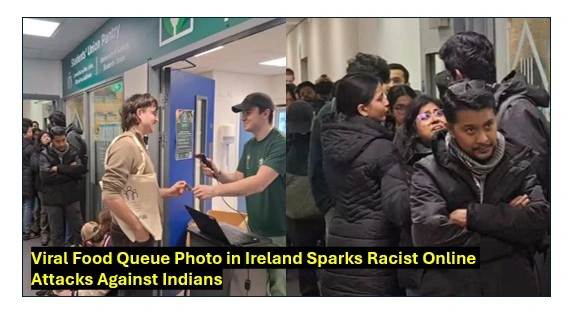

People in Ireland are standing in line outside of a university food store in a picture that has caused a lot of racist comments online. Indians are being called names on social media sites. The picture quickly went viral after it was released along with a report that showed how more and more students were relying on food assistance programs. It caused a heated discussion.
The picture was taken at the University of Galway’s student store, which was created to help students who are having a hard time paying their bills because of rising costs of living. The report that goes with the picture says that the number of people who need food aid has increased greatly. Over the past year, the pantry has distributed large amounts of food. Even with these attempts, the school is said to have to turn away a number of kids every week because of a lack of supplies.
The original story was mostly about how students were struggling financially, but on social media, people were more interested in the race of some people in line than in how hard things were for them financially.
Indian students are the focus of social media
A lot of people on social media said that a lot of the kids in the picture looked like they were Indian. These claims quickly turned into claims that Irish support services were being abused by foreign students, mostly Indians.
There were posts going around that said foreign students shouldn’t need food aid and that their ability to pay for school abroad was called into question. Some views went even further and said that Indian students were putting too much stress on Irish resources. The claims were made without any official information to back up the nationalities of the people in the picture.
The story quickly changed from one about poor students to one about immigrants and entitlements in a larger fight. Racist comments and assumptions were made in response, which made people in the Indian community in Ireland worried.
A crisis in the cost of living at its core
The university store was set up to help students who are having trouble getting food. Ireland, like many other parts of Europe, has seen big rises in the prices of homes, energy, and other daily items. This makes it harder for young people to afford to go to college.
The original story said that students from all over the world and from different parts of the United States have come to the store for help because of rising costs. The center works with other groups to give away extra food, with the goal of helping people who are having trouble paying their basic bills.
It has been pointed out by observers that the problem is not with country but with the economy. But the response online showed how quickly worries about money can be turned into fights about identity in digital places.
More talk about immigration and integration
The issue comes at a time when people in Ireland are still talking about migrant numbers and social infrastructure. In the past few years, the number of foreign students in the country has grown. Indian students make up a big part of this group.
An important part of the local economy is the money that Indian students pay for their education, housing, and part-time jobs. They are also a part of Ireland’s business scene as a whole, especially in fields like study, healthcare, and technology.
Even so, incidents of online hatred have made people think about how to keep society together and how to deal with false information. Community leaders have made it clear that a single picture doesn’t show who is using services or why they are using them.
Worries about the rise in online hate
Indians who live and study in Ireland are more worried now because of the backlash online. Many people in the community say they have had good experiences and feel like they are part of Irish society. However, internet abuse can make people feel vulnerable.
Advocates have asked for responsible speech and told people on social media to stop sharing claims that haven’t been proven. They stress that students of all countries can have trouble with money and that support services are usually set up to help anyone who needs it.
The episode shows how strong social media can be in changing stories. It doesn’t take long for a single picture taken out of context to spark larger arguments about immigrants, privilege, and national identity.

A versatile writer mainly works on trending news, daily updates from politics, business, crime, current affairs and entertainment.